Case study · Industry summit · Resorts World Las Vegas · May 2025
From an empty ballroom to a 96-foot LED stage in two days
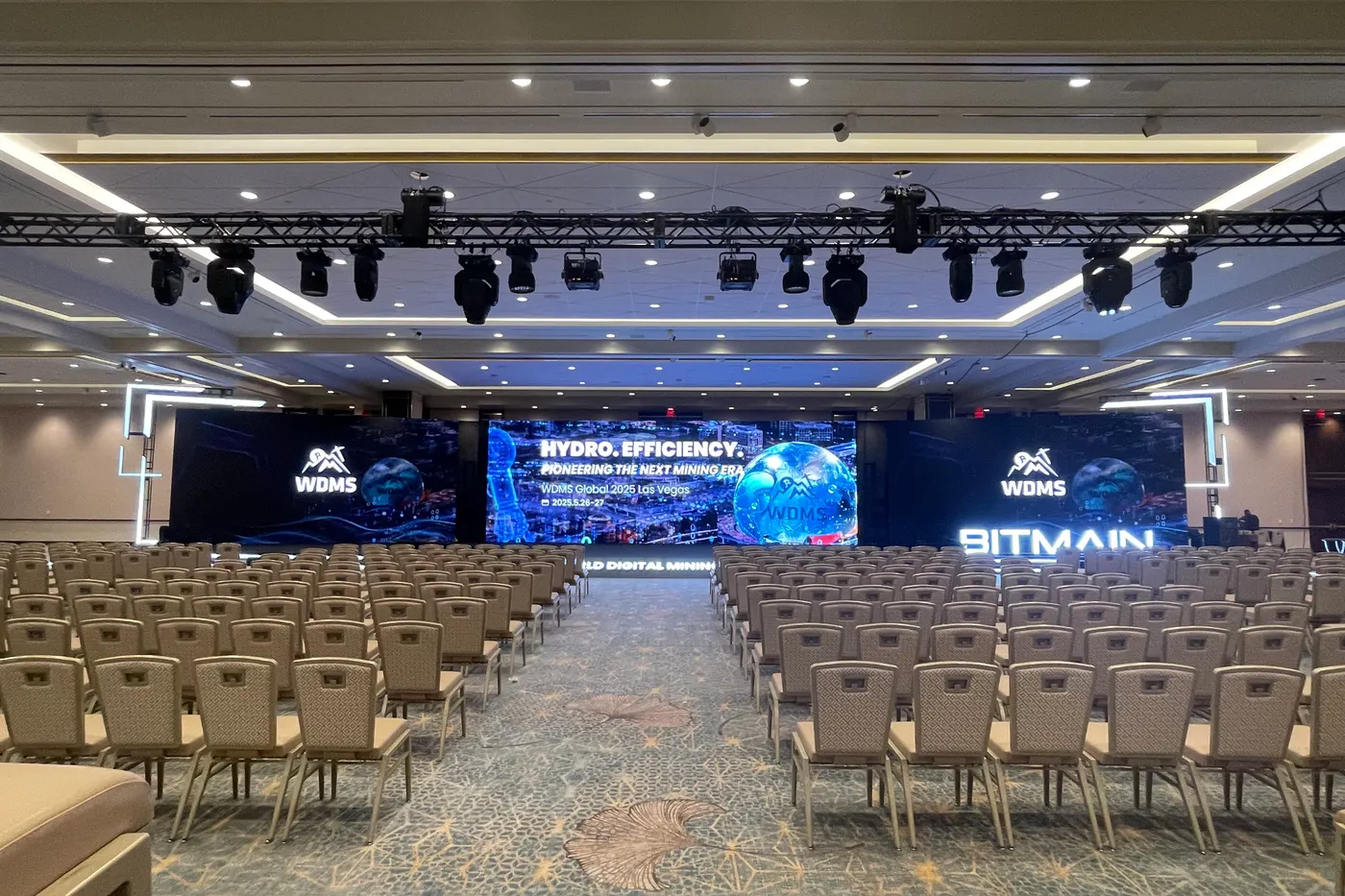
WDMS Global 2025, the World Digital Mining Summit, came to Resorts World Las Vegas on May 26 and 27, 2025. We supplied and ran its LED, lighting, sound and video control, with our own equipment, trucked from our warehouse in Anaheim. We had three weeks from award to show, and no chance to see the room first.
- 3 weeks
- from award to show
- ~112 m²
- of LED, 448 panels
- 56
- lighting fixtures
- 2 days
- to build
In May 2025 PixelPro Productions supplied and operated the LED, lighting, sound and video control for WDMS Global 2025, the World Digital Mining Summit, in the Blossom Ballroom at Resorts World Las Vegas. From our own inventory, trucked from Anaheim, we built about 112 m² of Gloshine P2.6 LED (448 panels) as three screens across a 96-foot riser, 56 lighting fixtures, a line-array sound system, and show control on six NovaStar MX40 Pro processors, two Hirender media servers and a PixelHue U5 console. The room was built on May 24 and 25, ahead of the summit on May 26 and 27, and struck on May 28. We had three weeks from award to show and no site survey; on site, a custom stage that did not match its drawings and a truss position with no rigging points cost six hours of the build. Our show-control operators worked in Chinese and English as the run of show changed.
At a glance
- Event
- WDMS Global 2025, the World Digital Mining Summit
- Venue
- Blossom Ballroom, Resorts World Las Vegas
- Dates
- Summit May 26–27, 2025; build May 24–25; load-out May 28
- Our scope
- LED, lighting, sound, video control, on-site operation
- LED
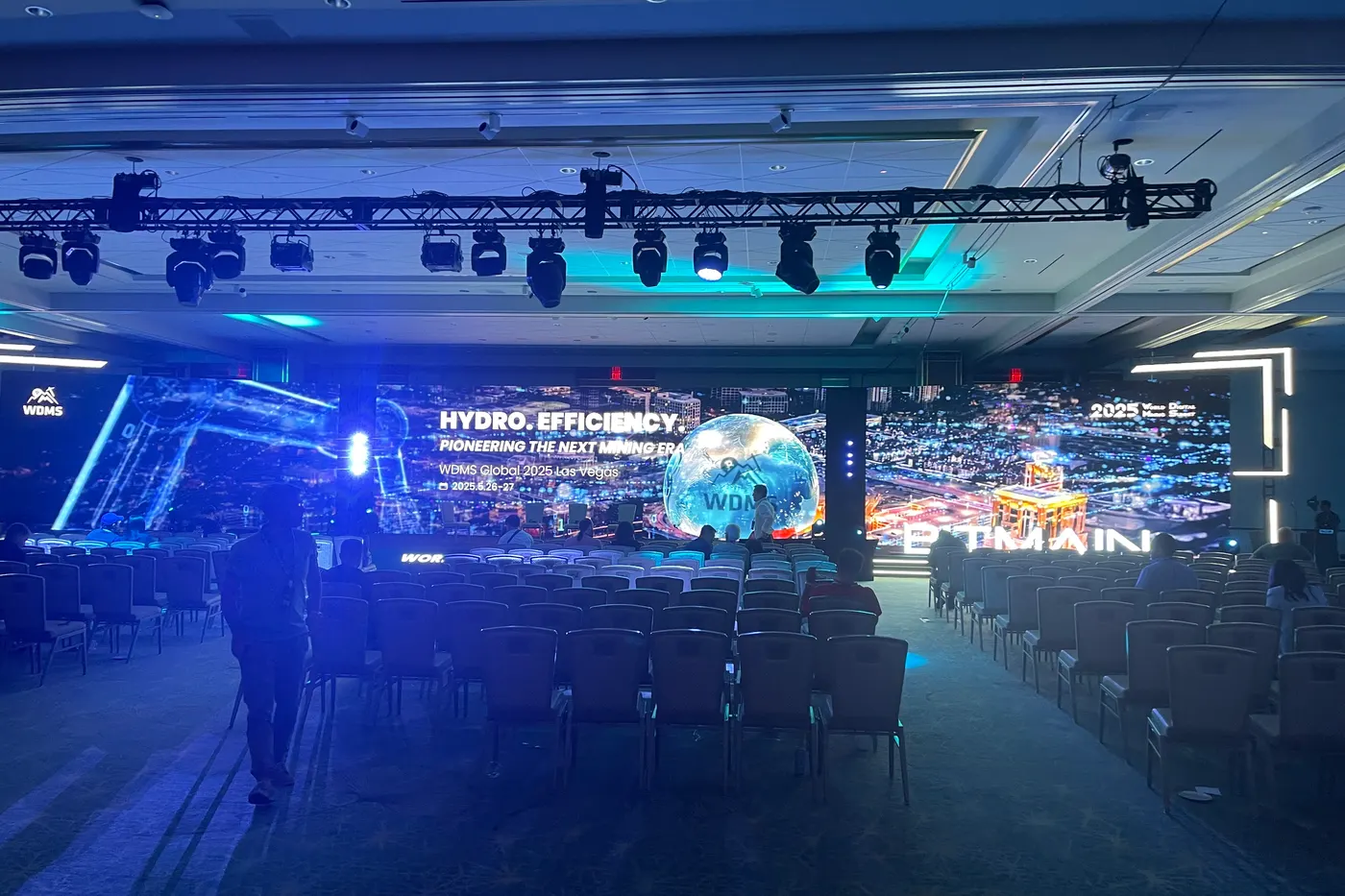
- About 112 m²: 448 Gloshine P2.6 panels (500 × 500 mm, 7,680 Hz refresh) on 28 ground-support frames, as three screens across a 96 × 4 ft riser
- Video
- 6 × NovaStar MX40 Pro, 2 × Hirender media servers, PixelHue U5 console, PixelHue P10 switcher, 4 × 60-inch displays
- Lighting
- 56 fixtures: beams and LED pars flown above the screens, beams and washes on both sides, profiles for front light, 2 lasers
- Sound
- Line-array system, 4 stage monitors, 8 channels of wireless microphones, 8-station wireless intercom
- Power
- Two 400 A house services into our own 120/208 V distribution
- Crew
- 12 on the first build day, 4 on the second, 4 and 6 on the two summit days, 10 for load-out
- Equipment
- Our own, trucked from our Anaheim warehouse
- Lead time
- Three weeks from award to show, with no site survey
- Languages
- Show control run in Chinese and English
Challenge
Three weeks, and no site visit
Like other projects we have done for Chinese clients, this one moved fast: three weeks from award to show. There was no chance to survey the ballroom beforehand, so everything was planned from the client’s drawings, and the first time our crew saw the room was on load-in day.
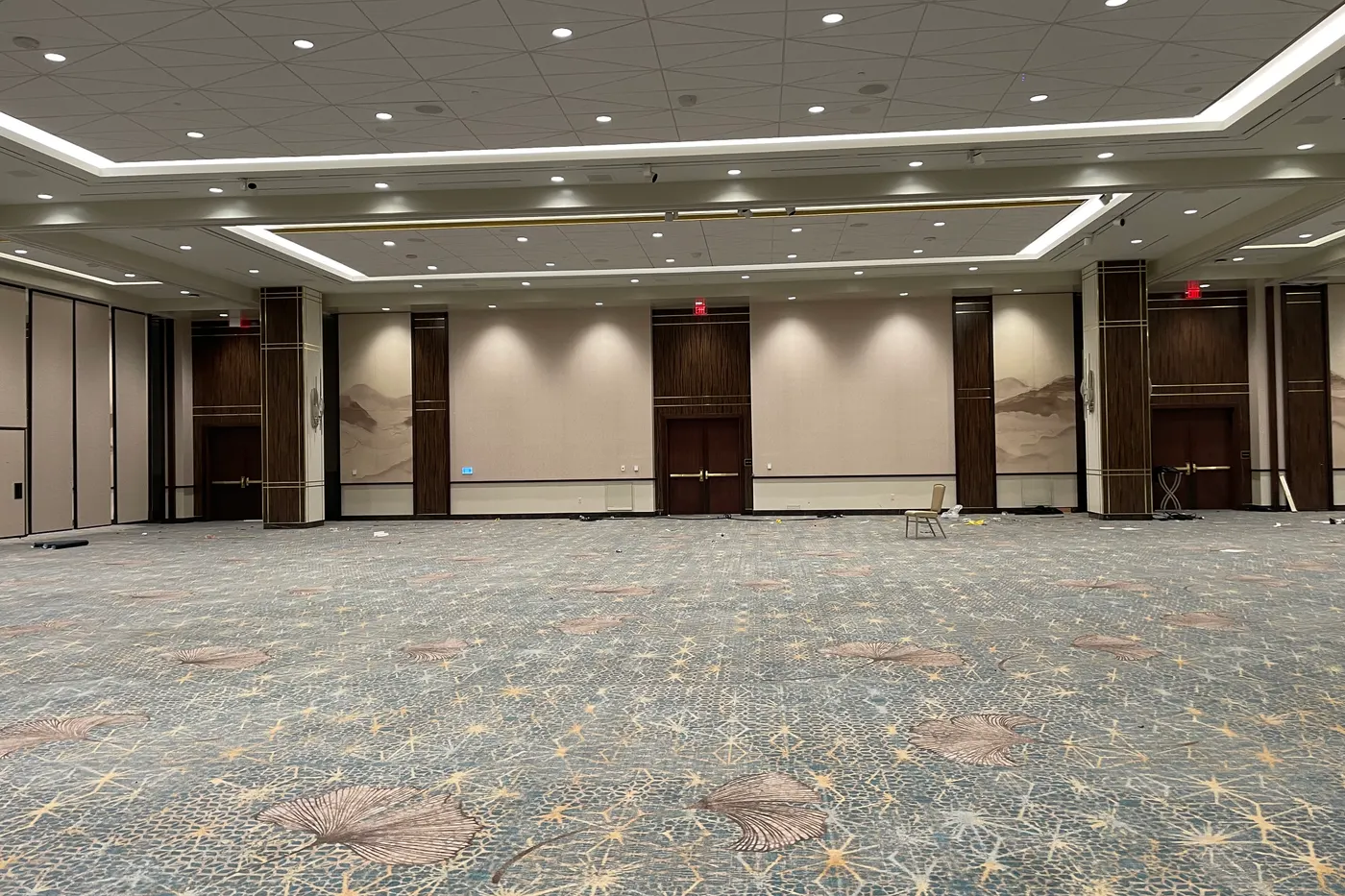
Two days, from an empty ballroom
The Blossom Ballroom was empty when we arrived on Saturday, May 24. Everything that went into it came from our own warehouse in Anaheim, on box trucks driven to Las Vegas.
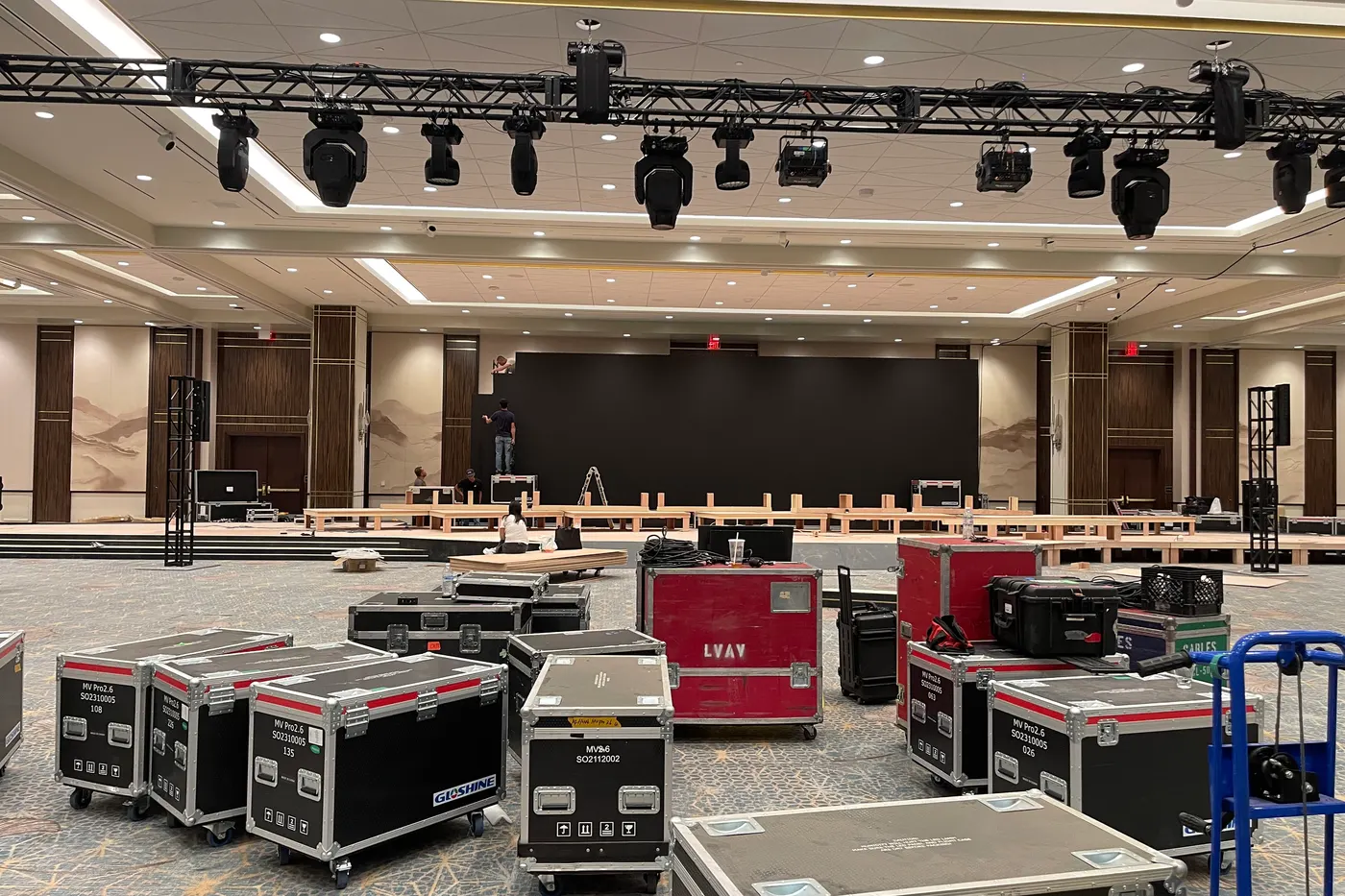
The first build day had the biggest crew of the job: twelve people, including two production managers, a lighting director, an LED director, an LED engineer, an audio technician and five stagehands. A crew of four followed on the second day. Across those two days we flew the lighting truss on hoists and rigging points provided and approved by the venue’s rigging contractor, built the 96-foot riser, stood up the LED and brought up the sound.
Challenge
A custom stage that did not match its drawings
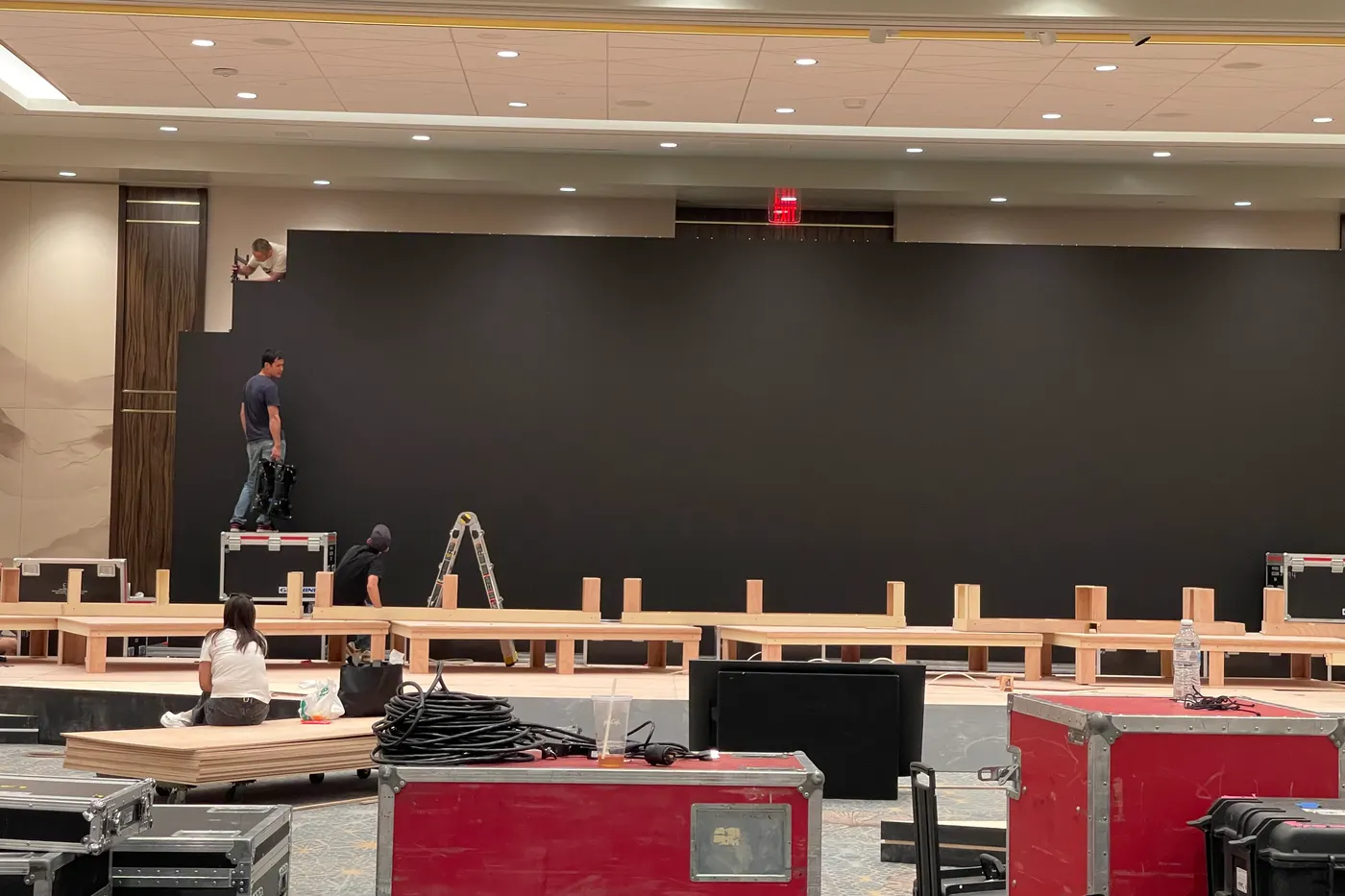
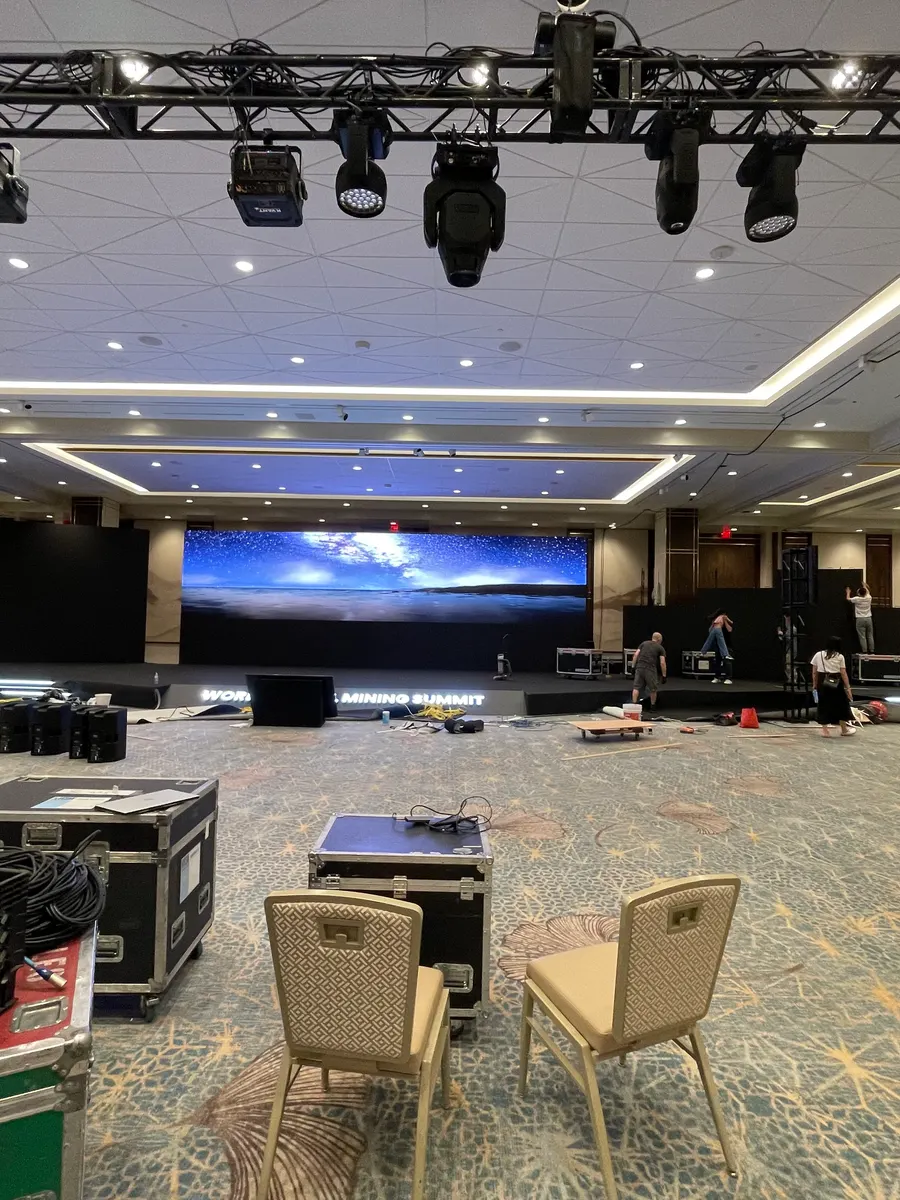
The client designed its own stage, an irregular shape built to order, and the LED had to line up with it. That stage could not carry the weight of the screens, so we brought our own load-bearing equipment stage for the LED to stand on.
On site, the custom stage turned out not to match its drawings, so nothing could be set out from them. We waited until the custom stage was finished, built our equipment stage against it, and only then stood the LED up. It cost four hours of a two-day build.
Challenge
A truss position the hotel could not rig
The design placed the lighting truss where the ballroom has no rigging points, and where it does have points the angles were poor: the room had not been measured accurately when the design was drawn. We waited on site while the client revised the plan, which cost another two hours.
112 m² of LED, standing on its own
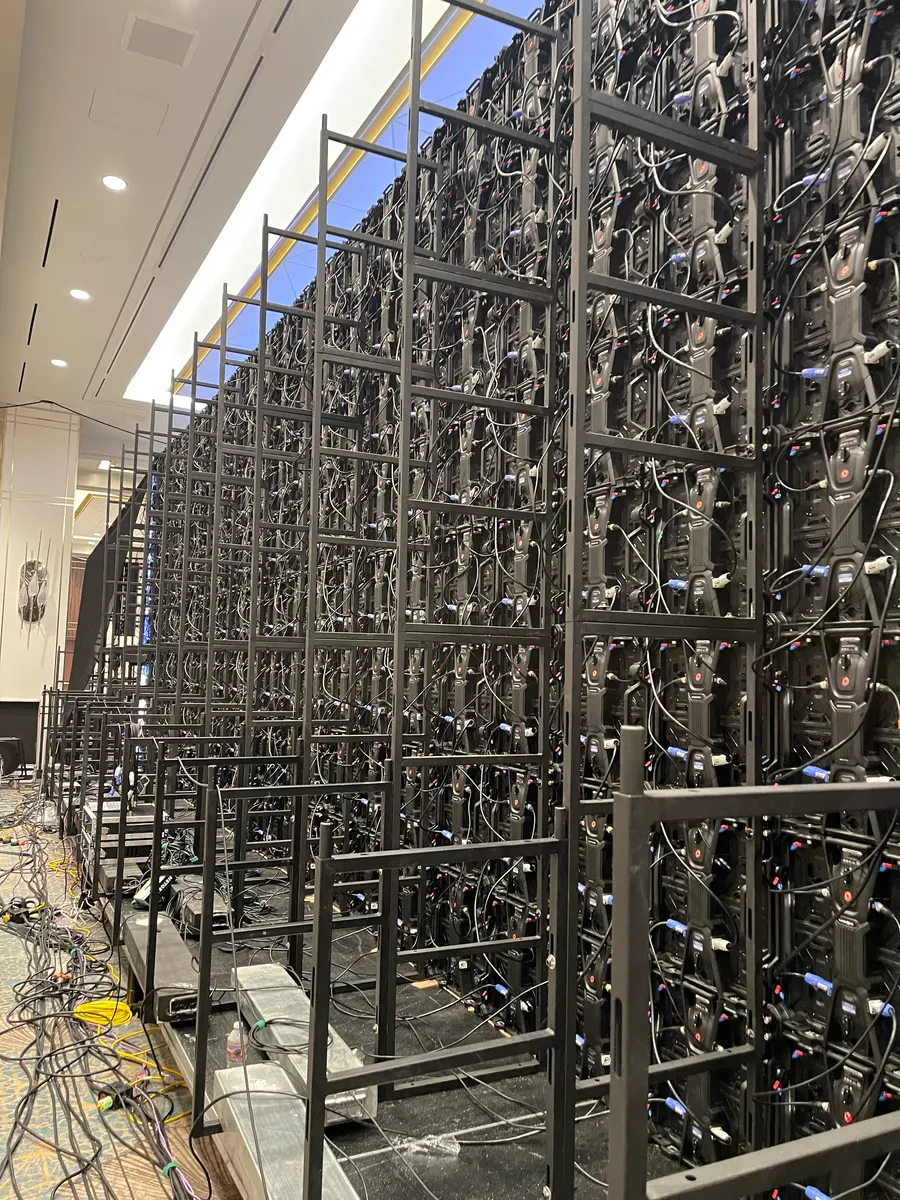
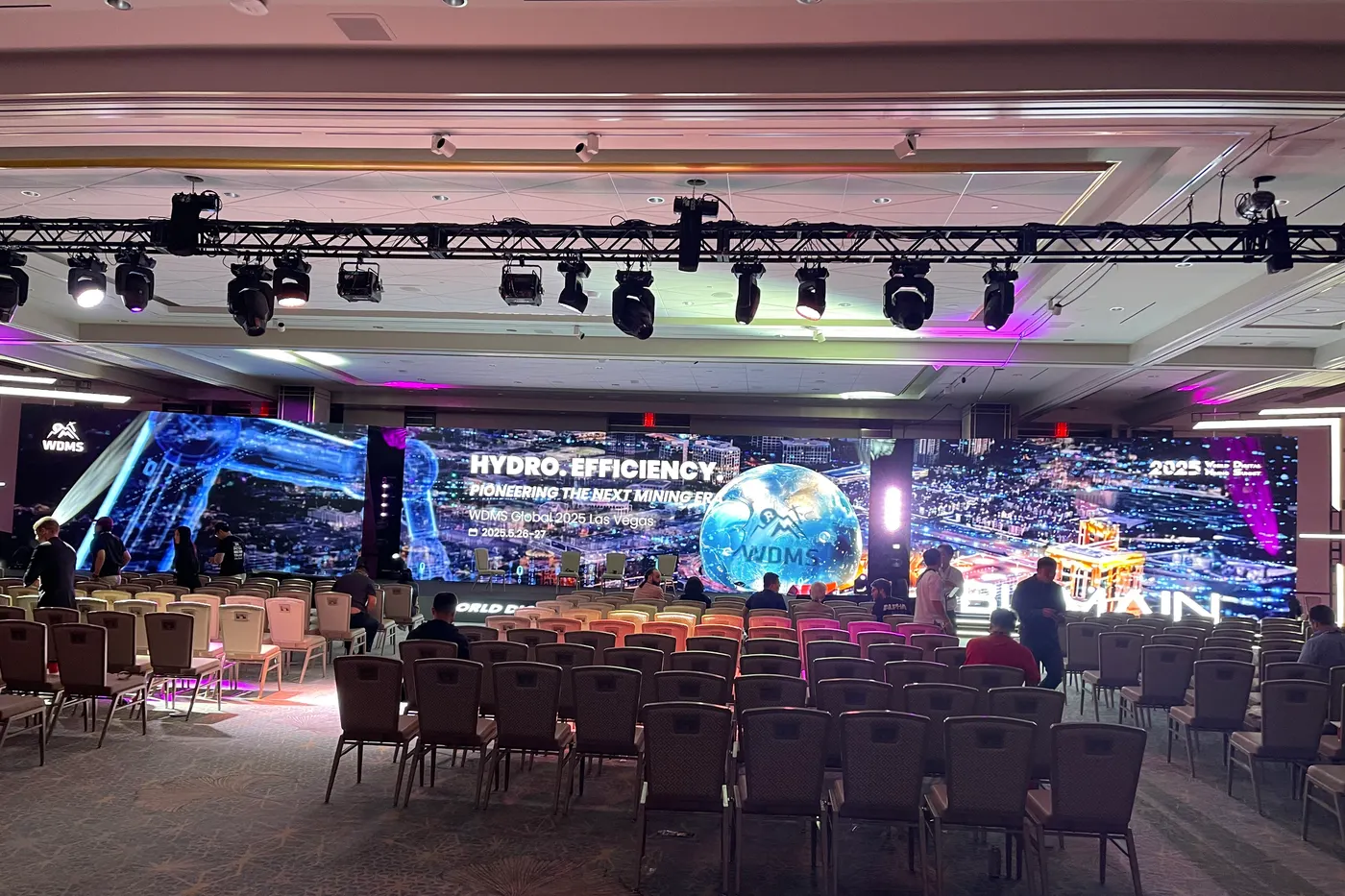
The screen is 448 Gloshine P2.6 panels, about 112 m² in all, split into three screens across the riser. It stands on 28 ground-support frames rather than hanging from the ceiling.
Six NovaStar MX40 Pro processors drive it, configured by our NovaStar-certified engineer. The panels refresh at 7,680 Hz.
Lighting
Fifty-six fixtures: twelve beams and twelve LED pars flown above the screens, twelve beams and twelve washes on the two sides, six profiles for front light and two lasers, all run from one console by our lighting director.
Challenge
Lasers drawn onto the screen
The launch used a laser outline effect. The laser beams had to be aimed so they landed on the LED screen and worked with the custom video on it, to present the new product.
Sound and show control
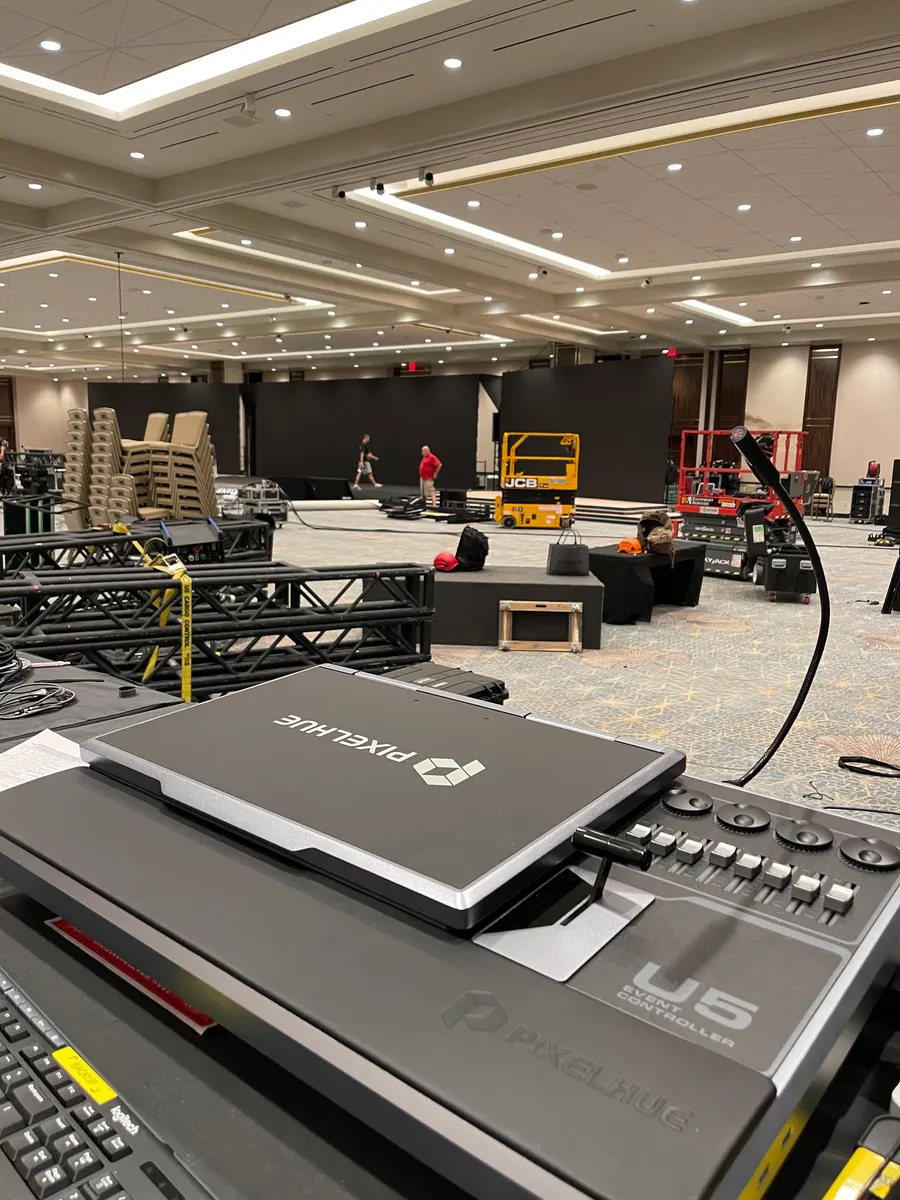
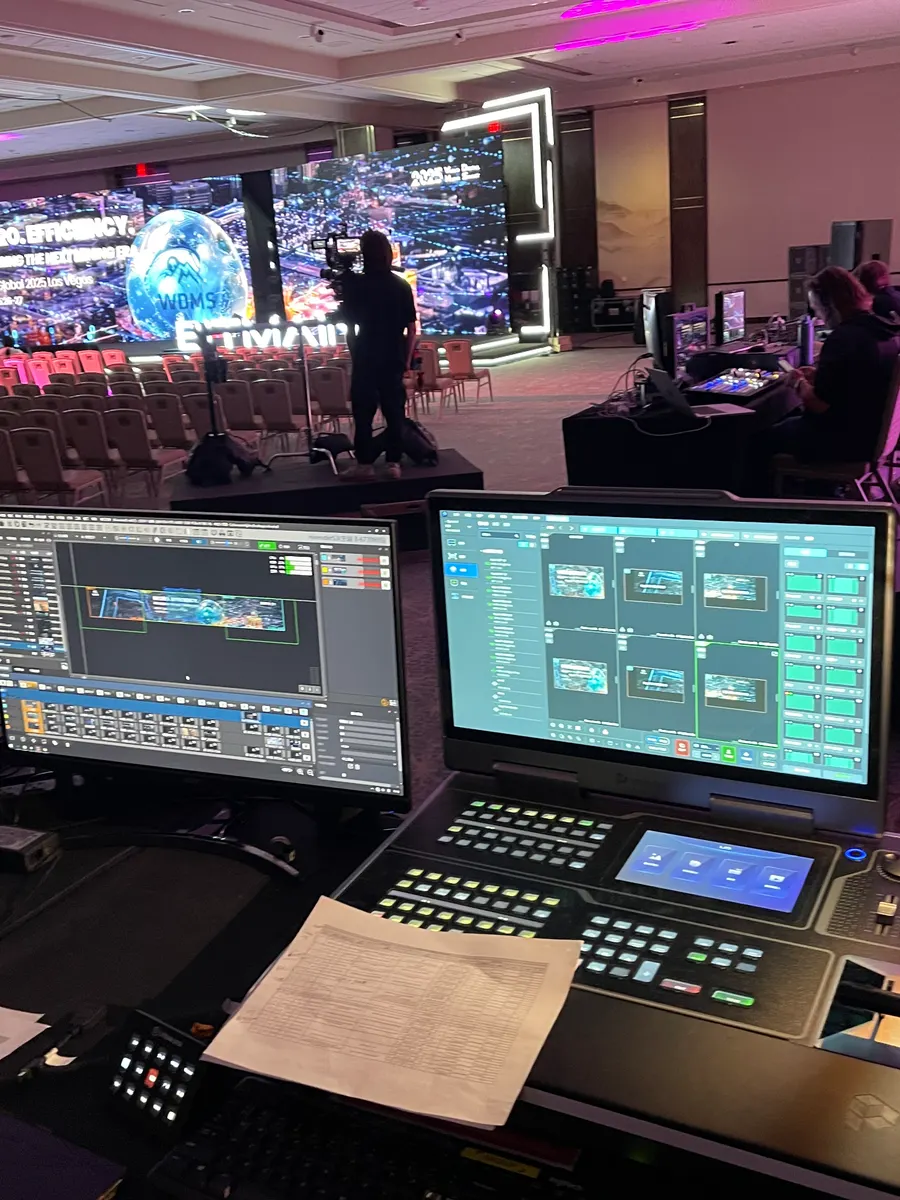
Content ran from two Hirender media servers through a PixelHue P10 switcher, cued from a PixelHue U5 console, with four 60-inch displays alongside. Sound was a line-array system with four stage monitors and eight channels of wireless microphones, and the crew worked on an eight-station wireless intercom.
Power came from two 400 A house services, distributed through our own 120/208 V distribution.
Challenge
A run of show that never stopped changing
Speakers came from several different companies, and the client kept changing the running order and the material for the screens, even while the launch itself was under way. Every change landed on the show-control operators, live.
The client’s team wanted operators who spoke Chinese, so changes could be passed on quickly and exactly. Some speakers needed English. Working in both languages was not optional, and there was no time to bring in an interpreter. Our operators handled both.
Through the summit, then out in a day
We stayed on site through the summit: four crew on May 26 and six on May 27, operating LED, lighting and sound. On May 28 a crew of ten, including four LED engineers, struck the room and loaded the trucks back to Anaheim in a single day.
The result
- An empty ballroom built into a 96-foot LED stage in two days, with equipment from our own inventory, despite six hours lost to a stage and a truss plan that did not fit the room.
- About 112 m² of LED, 56 lighting fixtures and a full sound system, operated by our own crew through the summit.
- A run of show that changed up to the last minute, handled live in Chinese and English.
- Struck and loaded out in one day.
This is the work our event AV production service covers: our own equipment and our own crew, from load-in to load-out.
Questions about events like this
Do you produce events outside California?
Yes. For WDMS Global 2025 we trucked our own LED, lighting and sound from Anaheim to Resorts World Las Vegas and ran it with our own crew. Event production is what we did there; our CSLB licence covers construction work in California only.
Can you work with a venue’s own rigging contractor?
Yes. At Resorts World the venue’s rigging contractor provides and approves the hoists and rigging points, and our lighting was flown on them.
How big a crew does an event like this take?
At WDMS Global 2025: twelve on the first build day, four on the second, four and six on the two summit days, and ten for load-out.
Can your operators work in Chinese and English?
Yes. At WDMS Global 2025 the client’s team gave changes in Chinese and several speakers needed English; our show-control operators worked in both, with no interpreter.