Case study · Church · Brea, CA · 2024
Two LED screens, angled at the pews, under $30,000
Live Oak United Church of Christ in Brea wanted to upgrade its sanctuary on a small budget. Screens, structure, finishes, power and sound, all of it, came in under $30,000.
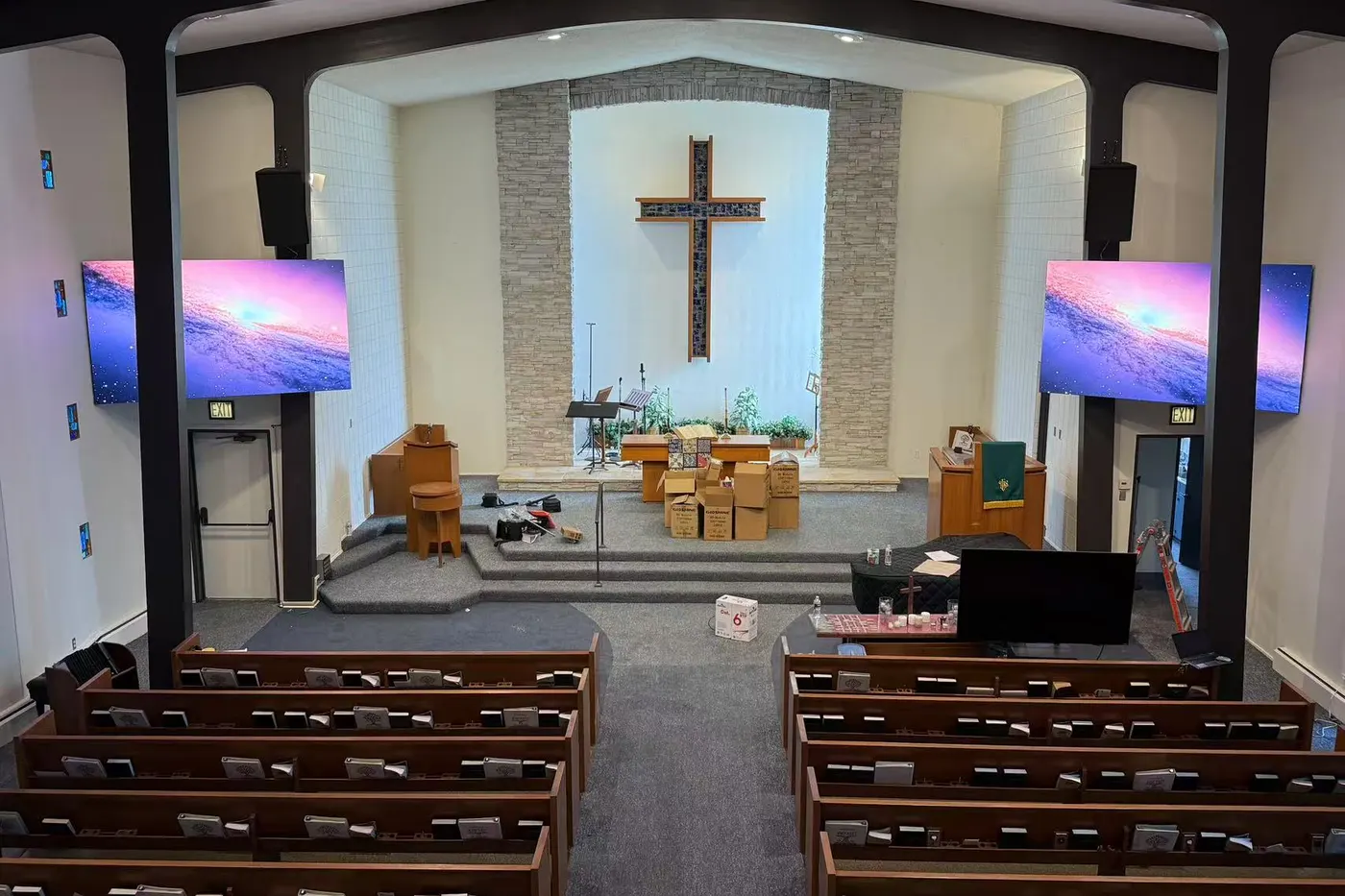
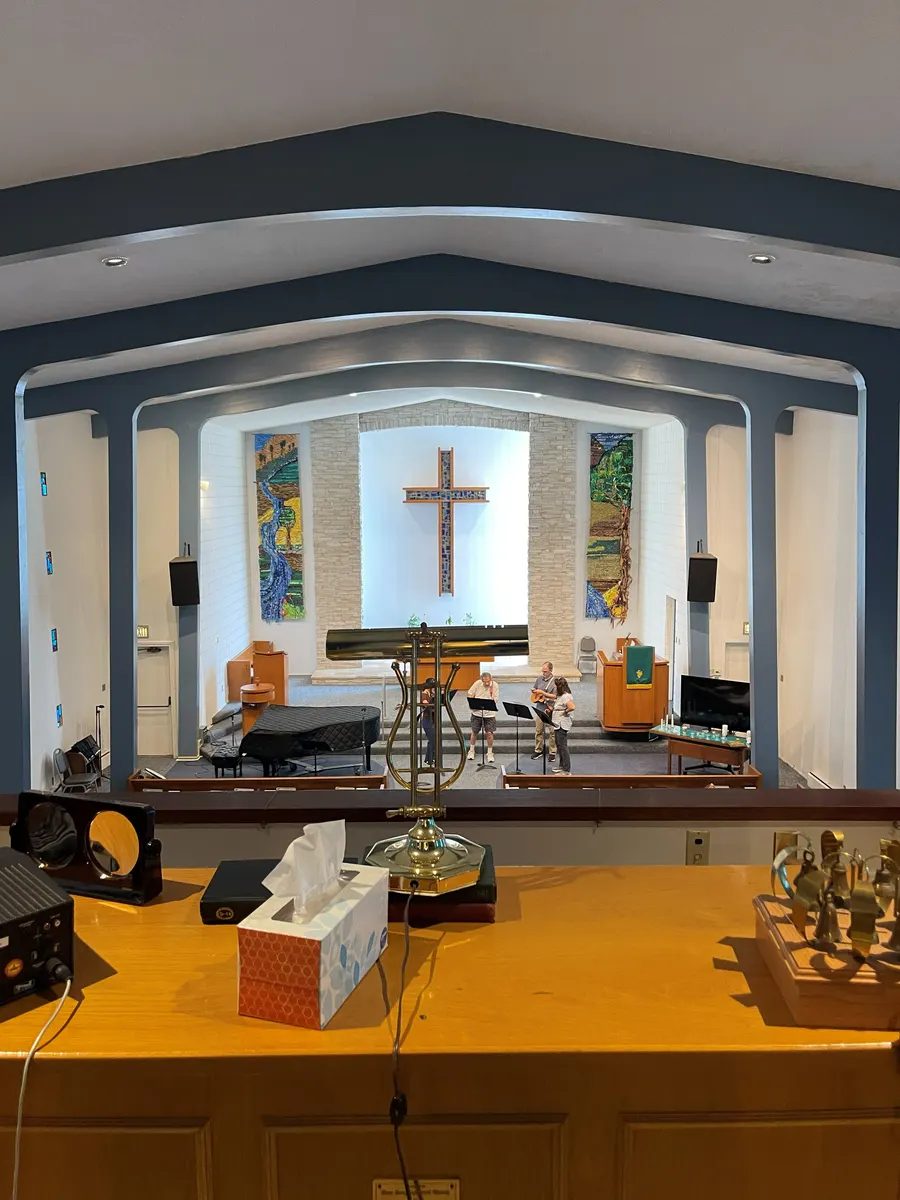
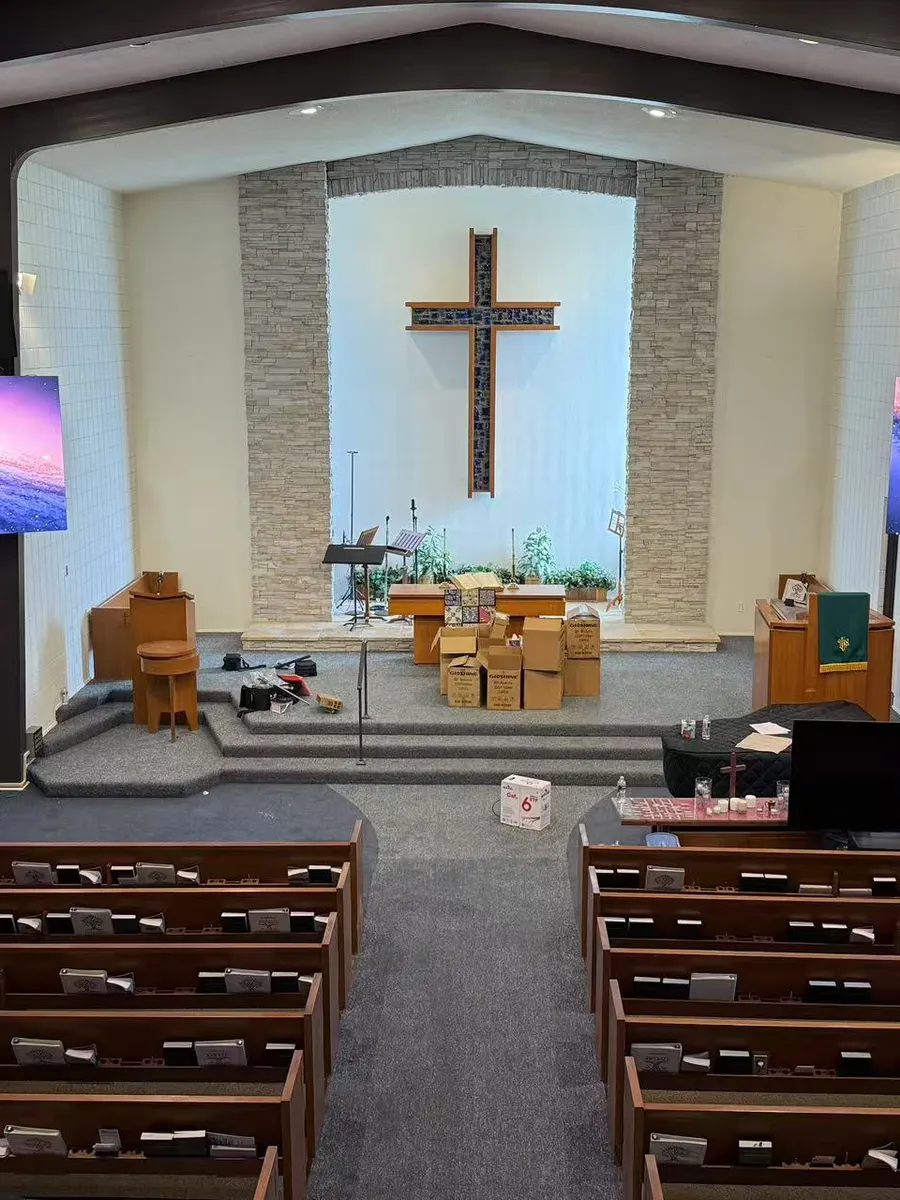
In September 2024 PixelPro Productions installed two Gloshine P2.5 LED screens, 4 × 3 cabinets each (about 8.4 × 4.7 ft), at Live Oak United Church of Christ in Brea, California, one on each side of the cross, driven by a NovaStar VX400. Each screen sits on a custom timber structure built off the existing framing at the angle the congregation actually views it from, wrapped in drywall and painted to match the sanctuary. PixelPro also reworked the power supply to the screens and repositioned the church’s existing speakers, extending their cables to the new positions. The whole upgrade came in under $30,000.
At a glance
- Client
- Live Oak United Church of Christ, Brea, California
- Completed
- September 2024
- Budget
- Under $30,000 for everything
- Screens
- Two, one on each side of the cross
- LED
- Gloshine Blade P2.5 (BD2.5), 640 × 480 mm cabinets
- Size
- 4 × 3 cabinets each: 2.56 × 1.44 m (8.4 × 4.7 ft), 24 cabinets in all
- Resolution
- 1024 × 576 per screen
- Processor
- NovaStar VX400
- Structure
- Custom timber framing at the viewing angle, drywall-wrapped and painted
- Sound
- Existing speakers repositioned and re-cabled
- Our scope
- LED screens, timber structure and finishes, power, existing sound repositioned
The brief
Live Oak is a small English-speaking congregation in Brea, in a sanctuary with a stone cross wall and side walls that angle away from the pews. It wanted screens the congregation could actually read, without a project the size of a stage-wide LED wall.
The budget for everything was under $30,000, and that number shaped every decision that follows.
Challenge 01
Where the money went
Two modest screens rather than one wide wall. Four by three cabinets each is enough to be read from the back pew of a room this size, and 24 cabinets is a fraction of what a stage-wide wall would cost.
A NovaStar VX400 sized to the real pixel count, 1024 × 576 per screen, rather than a larger controller the church would never use. The existing speakers kept and moved, not replaced. The support structure built in timber by us on site, rather than fabricated in steel.
Screens, structure, finishes, power and sound: under $30,000.
Challenge 02
Screens that face the pews, not the wall
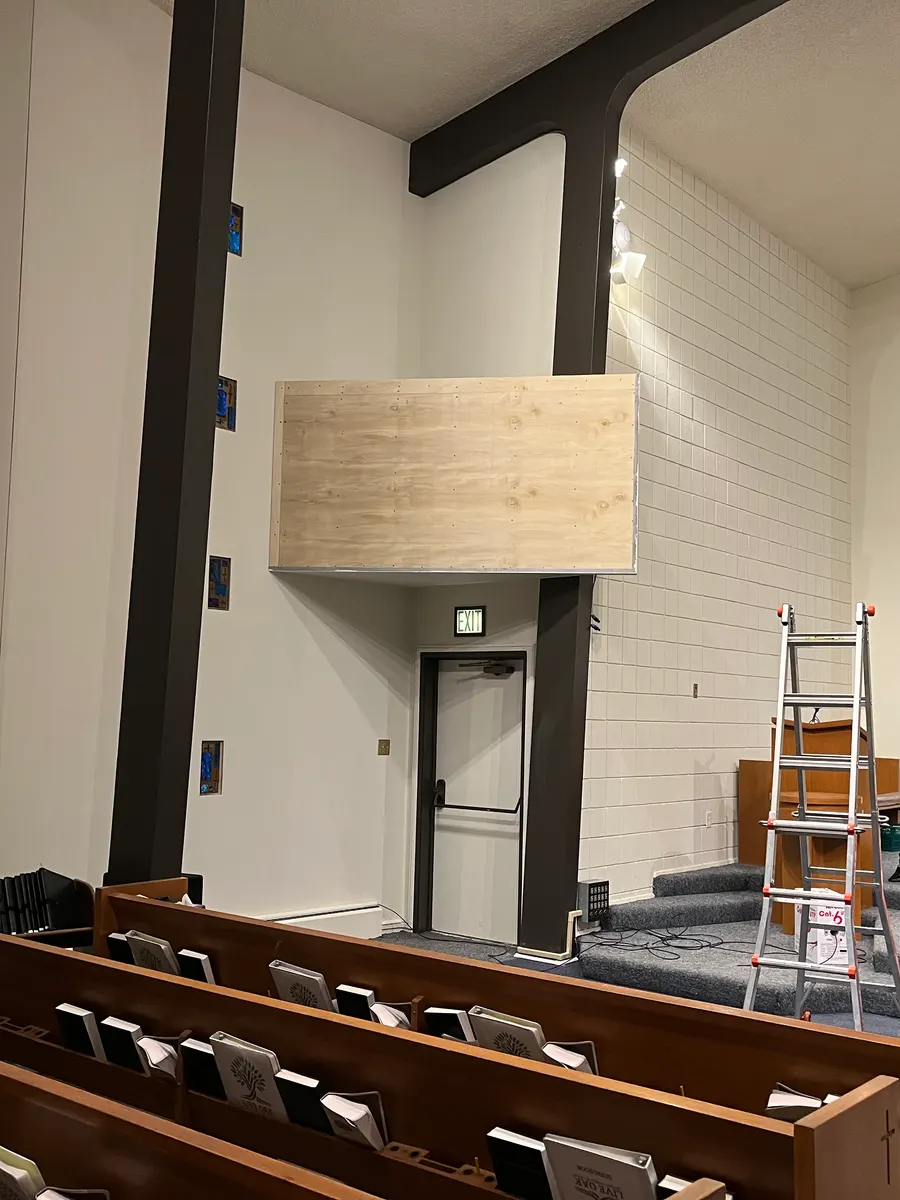
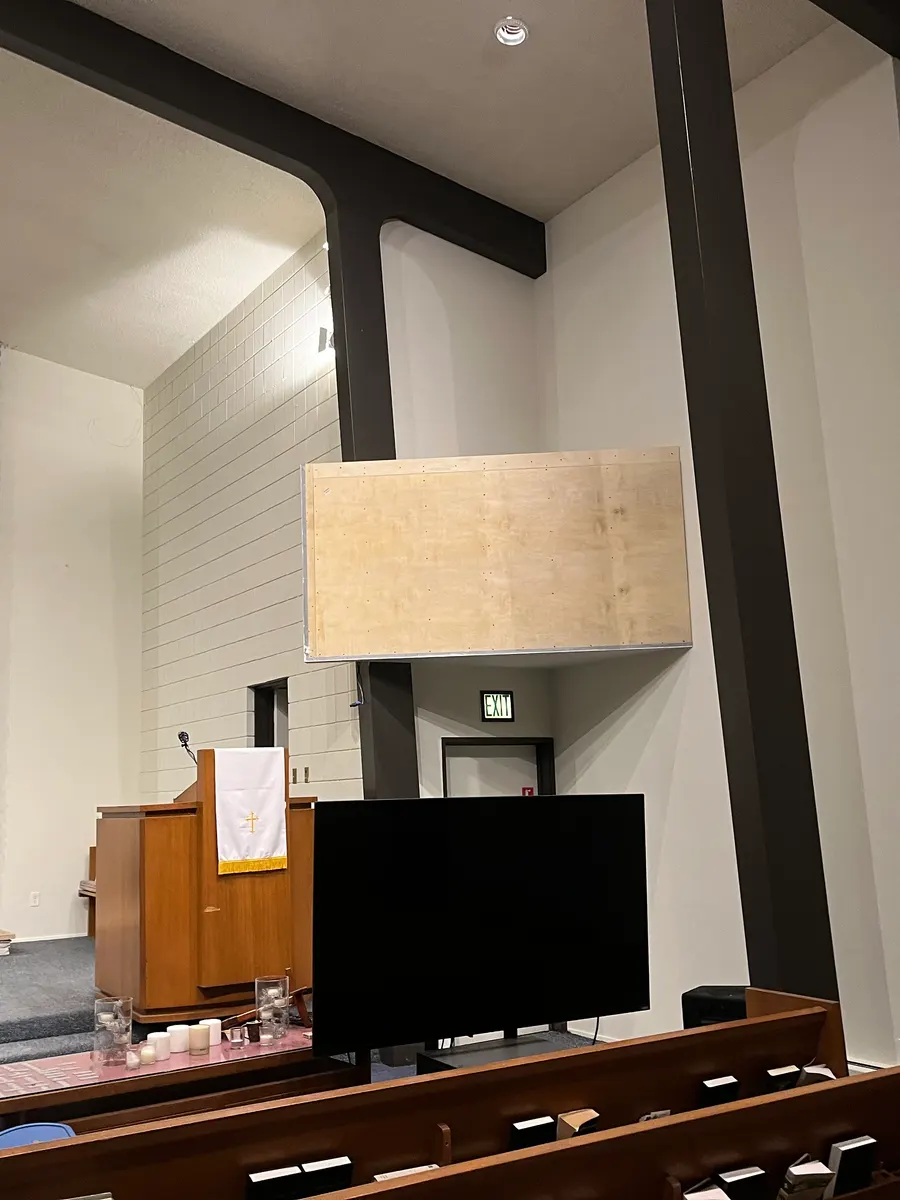
The walls either side of the cross run at an angle to the seating. A screen fixed flat to them would face partly away from the congregation. We surveyed the existing framing, worked out the angle at which each screen is read best from the pews, and built a timber structure off the framing that holds each screen at that angle.
Then we wrapped the structure in drywall and painted it to match, so from the pews it reads as part of the sanctuary rather than something bolted on.
Challenge 03
The old speakers, in new places
The church’s speakers were sound; their positions no longer suited the new screens. We moved them, extended the cabling to the new positions and reinstalled them, and reworked the power supply to feed the two screens.
The result
- Two P2.5 screens the congregation can read from every pew.
- Structure and finishes that look like part of the building.
- The existing speakers reused, in positions that suit the new layout.
- The whole upgrade under $30,000.
How we build, level and finish LED structures is covered step by step in our Good Stewards Church case study.
Questions churches ask
What does a church LED screen upgrade cost?
It depends mostly on cabinet count. At Live Oak United Church of Christ in Brea, two 4 × 3-cabinet P2.5 screens, the timber structure and finishes, power work and repositioning the existing speakers came in under $30,000 in 2024. A stage-wide wall of 70 to 140 cabinets is a different scale of project.
Can LED screens be angled toward the seating?
Yes. At Live Oak in Brea the side walls angle away from the pews, so we built a timber structure off the existing framing that holds each screen at the angle it is best read from, then wrapped it in drywall and painted it to match the sanctuary.
Do we have to replace our sound system when we add LED screens?
Not necessarily. At Live Oak in Brea the existing speakers were kept: we moved them to positions that suit the new screens, extended the cabling and reinstalled them. Replacing working equipment is the first thing to question on a small budget.
We design and install LED walls like this across Southern California: structure, power and control, from one licensed contractor. LED video wall design and installation →