Guide · LED walls · Structure
Can your wall hold an LED screen?
Usually not the way it is. Five churches, five different answers, all from our own installs.
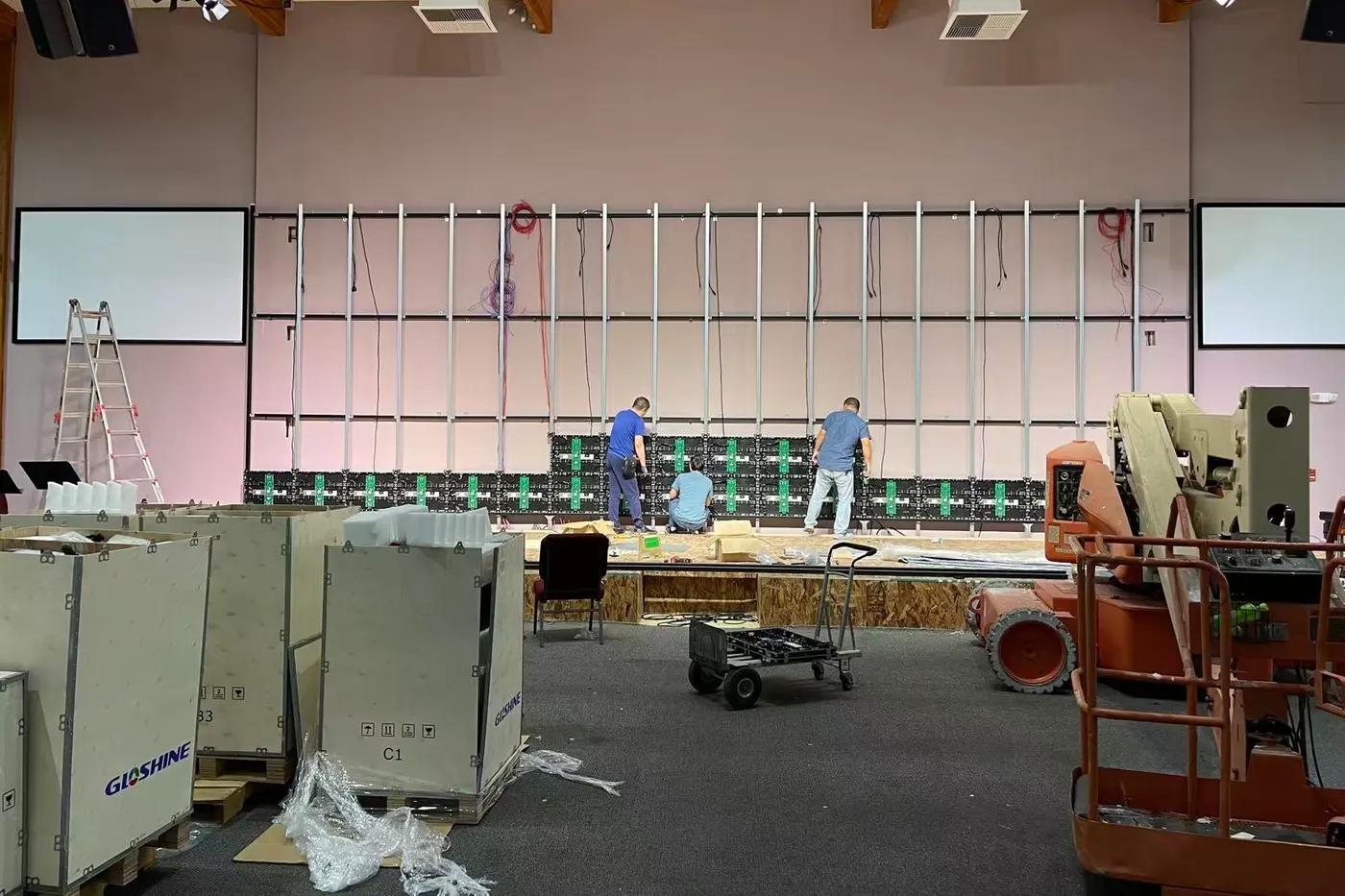
Most church walls were not built to carry an LED screen. A projector screen weighs very little; the 38-foot LED wall PixelPro Productions installed at Good Stewards Church in West Covina weighs about 1,020 kg (2,250 lb), and each of the two screens at a church in Irvine about 800 lb. The answer is to find where the load can go and build to it: a frame to the concrete slab when the wall is out of true, steel brackets to a concrete wall behind drywall, a raised frame over a door that must stay in use, a free-standing frame when the wall cannot be touched, or a timber structure when the budget is small and the screens are light.
Why the wall is usually the question
An LED screen is heavy, and it hangs above people. The finishes you can see, drywall, timber panelling, a stage deck, are not structure. So before we size a screen we find out what the wall is really made of and where its weight can go.
On every survey we answer the same three questions:
- What is the wall built from, and is it flat? Drawings if the building has them; a laser level either way.
- Where can the load go? Usually a concrete slab or a concrete wall, not the surface in front of it.
- What is in the way? A door, equipment that cannot move, walls at an angle to the seating.
1. The wall is out of true: stand the frame on the slab
At Good Stewards Church in West Covina the stage wall was half an inch out of plumb, and the screen was 38 feet wide and over a ton. We did not hang it on that wall. The aluminium frame stands on the concrete slab through openings cut in the stage, and was levelled before the first cabinet went up. The finished surface is flat to 0.5 mm across 144 cabinets.
2. The wall is drywall: reach through it to concrete
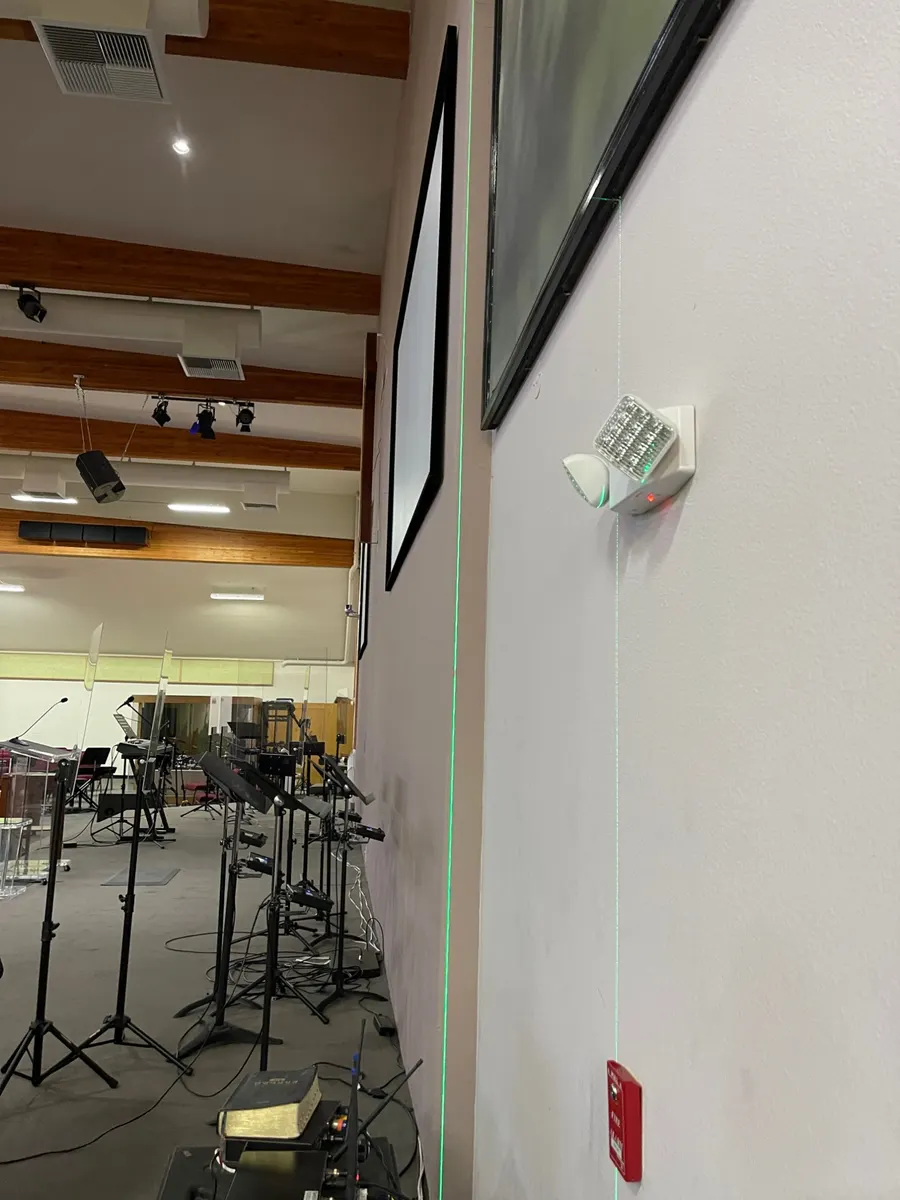
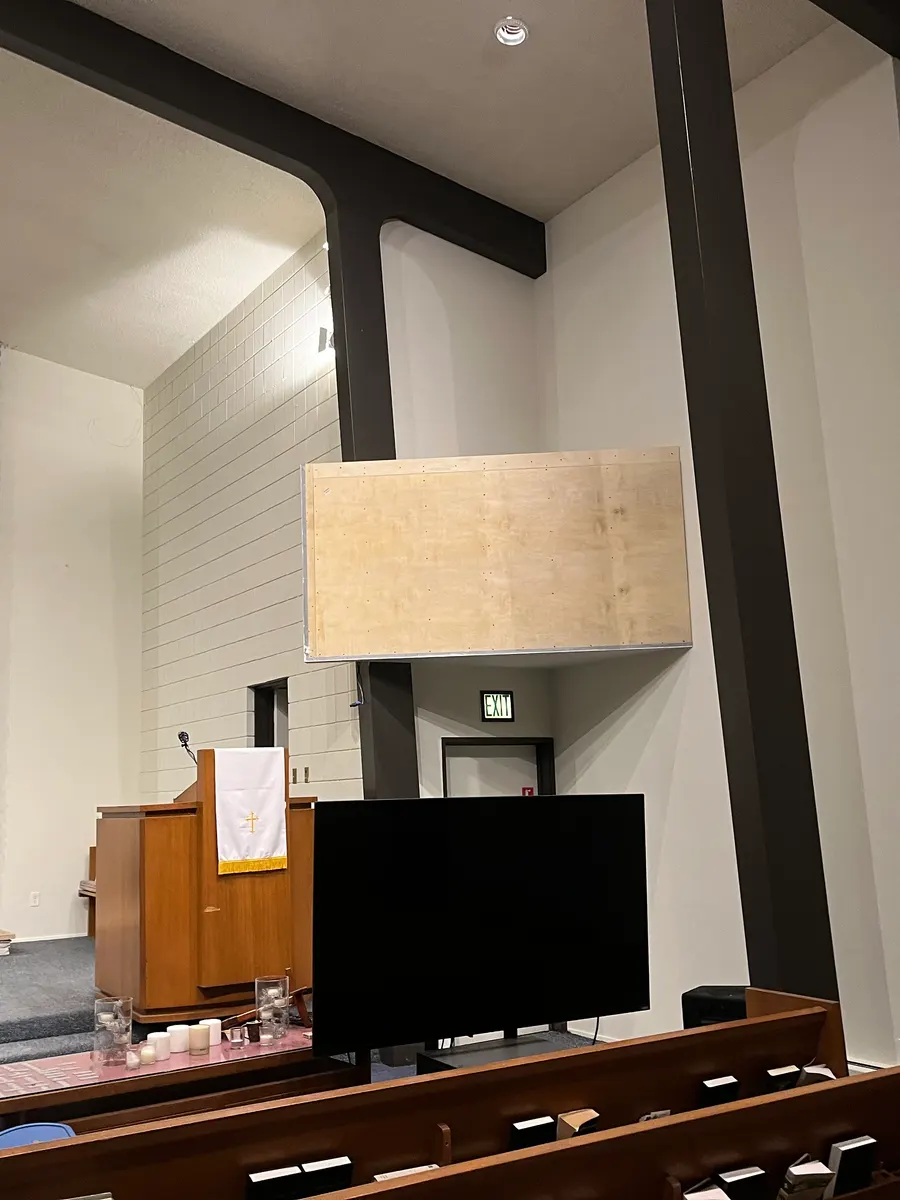
At a church in Irvine the walls that held the old projector screens looked solid. The building drawings showed cantilevered bulkheads of steel studs and drywall. Each new screen weighs about 800 lb, so we designed brackets in 2 × 2 in steel tube, four posts per screen, fixed to the reinforced concrete wall behind and passed through slots in the drywall. The plywood base for the LED is fastened to our steel, not to the drywall.
3. There is a door underneath: raise the screen on its own frame
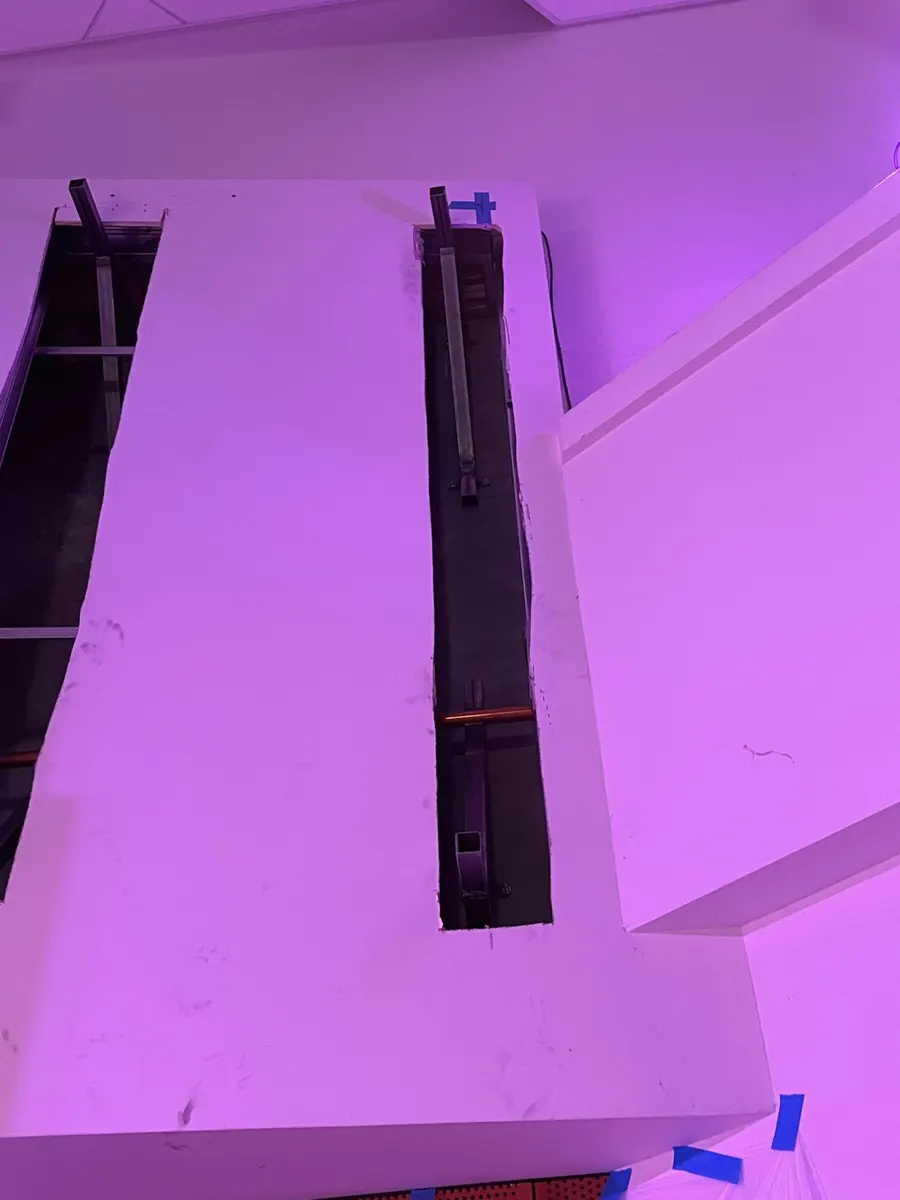
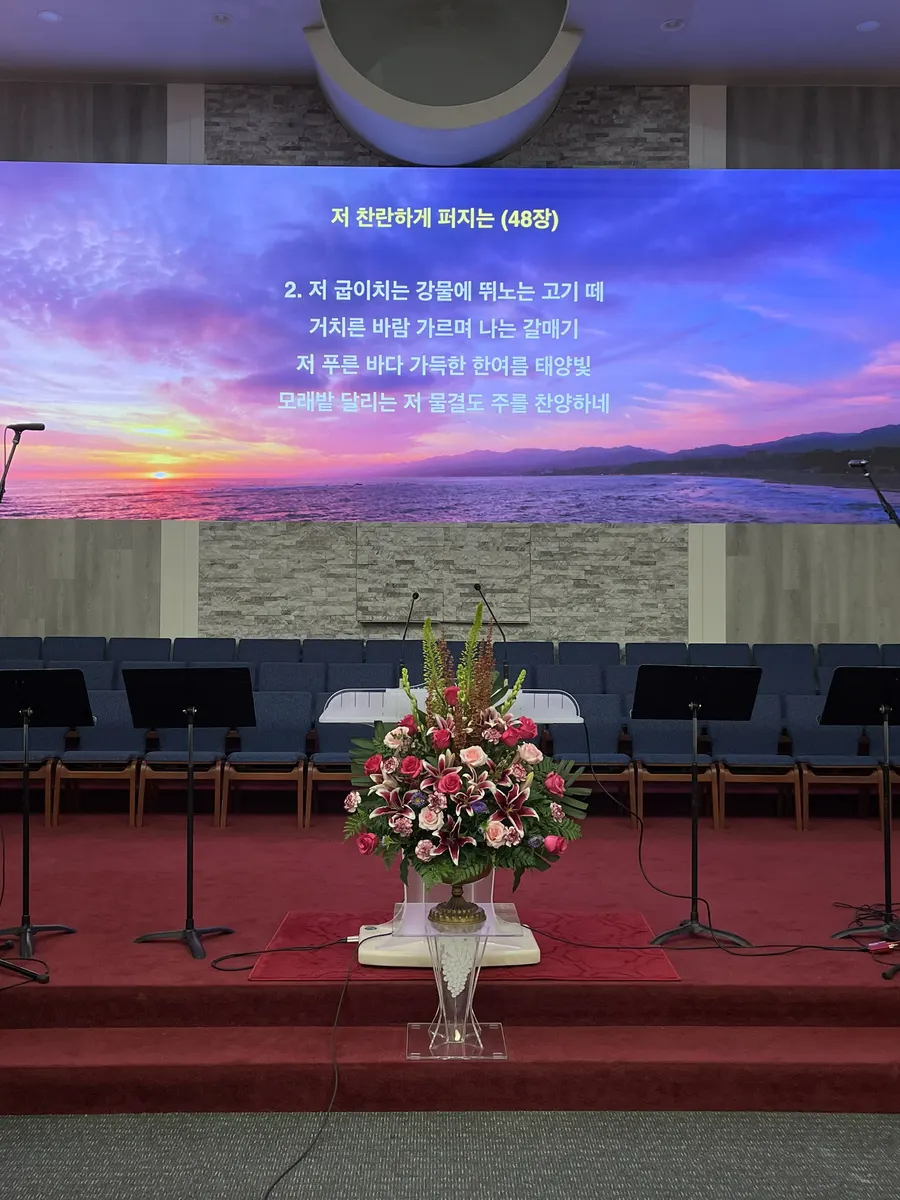
At a Korean church in downtown Los Angeles the baptistery door sits below the stage wall and had to stay in use. The wall behind was part gypsum, part timber, and out of flat by about half an inch either way. The 72-cabinet screen starts 1.5 m up, on a custom aluminium frame whose legs pass through the stage and anchor to the concrete slab with expansion bolts. The door still opens beneath it.
4. The wall cannot be touched: a free-standing frame
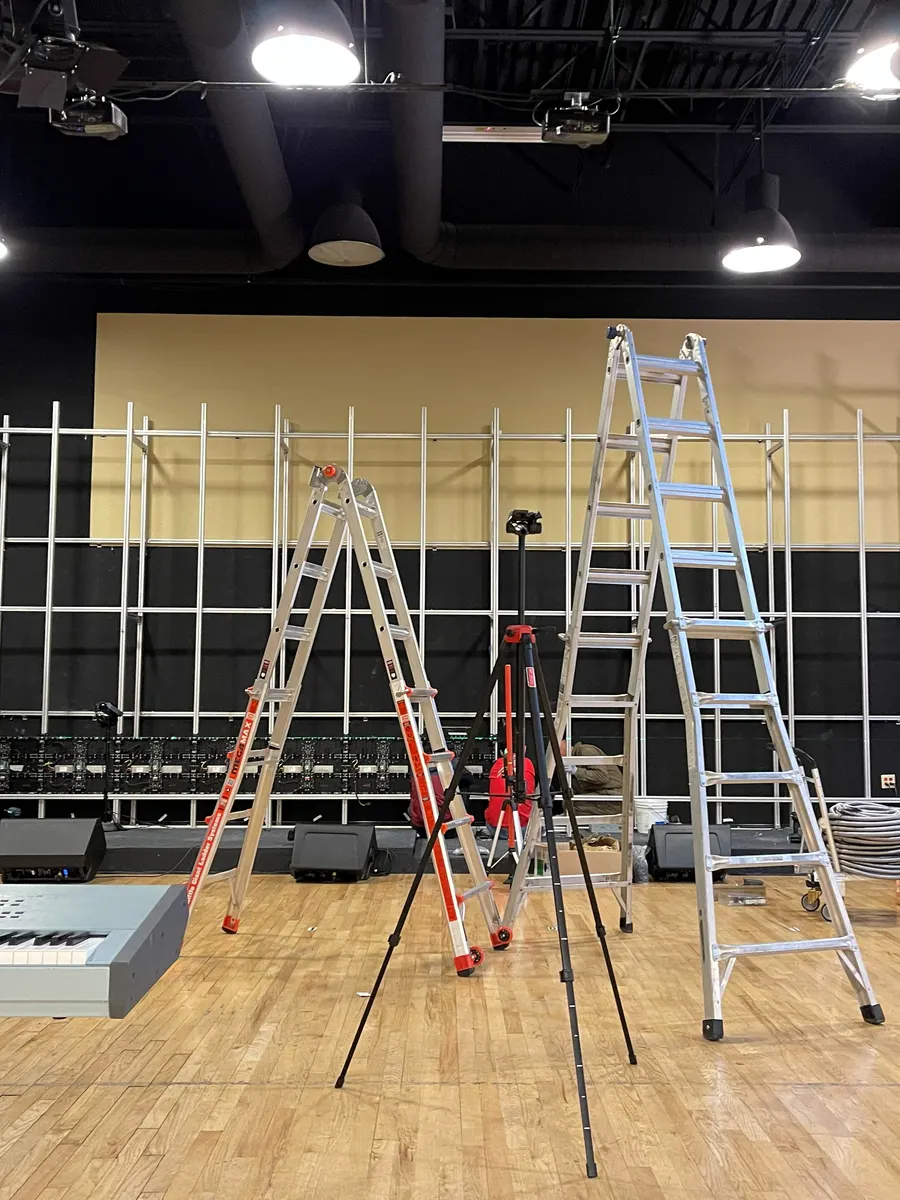
At Remnant Ministries in Las Vegas the rear wall carried equipment that could not move. The 98-cabinet screen stands on a custom free-standing aluminium frame on the stage floor, fixed to nothing behind it. We made the frame 24 inches deep, which leaves a service corridor for one person between the LED and the wall.
5. The walls are at an angle and the budget is small: timber
At Live Oak United Church of Christ in Brea the side walls run at an angle to the pews, and the whole upgrade had to stay under $30,000. The screens are small, 4 × 3 cabinets each, so we built a timber structure off the existing framing that holds each screen at the angle it is read best from the pews, then wrapped it in drywall and painted it to match.
The five answers side by side
- Wall out of true, heavy screen: Aluminium frame on the concrete slab (Good Stewards, West Covina)
- Drywall bulkheads: Steel brackets to the concrete wall behind (Church in Irvine)
- A door below the screen: Raised aluminium frame to the slab (Church in downtown Los Angeles)
- Wall that cannot be touched: Free-standing aluminium frame (Remnant Ministries, Las Vegas)
- Walls at an angle, small budget: Timber structure off existing framing (Live Oak, Brea)
What this means for your room
None of these walls could simply take the screen as they were, and none needed the building rebuilt. What they needed was someone to find out what the wall is, and design to that.
In California, structural attachment and power together are construction work. We do it under our contractor licence, CSLB #1063528, Class B (General Building).
Questions about walls and LED screens
Can an LED screen be mounted on drywall?
Not on the drywall itself. Drywall is a finish, not structure. At a church in Irvine the old screen walls were steel studs and drywall, so the 800 lb LED screens hang on steel brackets that pass through the drywall to the concrete wall behind it.
What if we cannot fix anything to the wall behind the stage?
The screen can stand on its own frame. At Remnant Ministries in Las Vegas the rear wall carried equipment that could not move, so the 98-cabinet screen stands on a free-standing aluminium frame on the stage floor, with a 24-inch service corridor behind it.
Does an LED screen have to start at the floor?
No. At a church in downtown Los Angeles the screen starts 1.5 m up on its own aluminium frame, so the baptistery door below it still opens. The frame’s legs carry the weight to the concrete slab.