Case study · Event · San Diego, CA · 2025
Glasses-free 3D on a 24 m wall, flown at Comic-Con
A video game booth at San Diego Comic-Con 2025 wanted glasses-free 3D overhead: a 24-metre LED wall, flown, with the picture folding round two corners. The effect only works if the angles are exact and the picture never breaks.
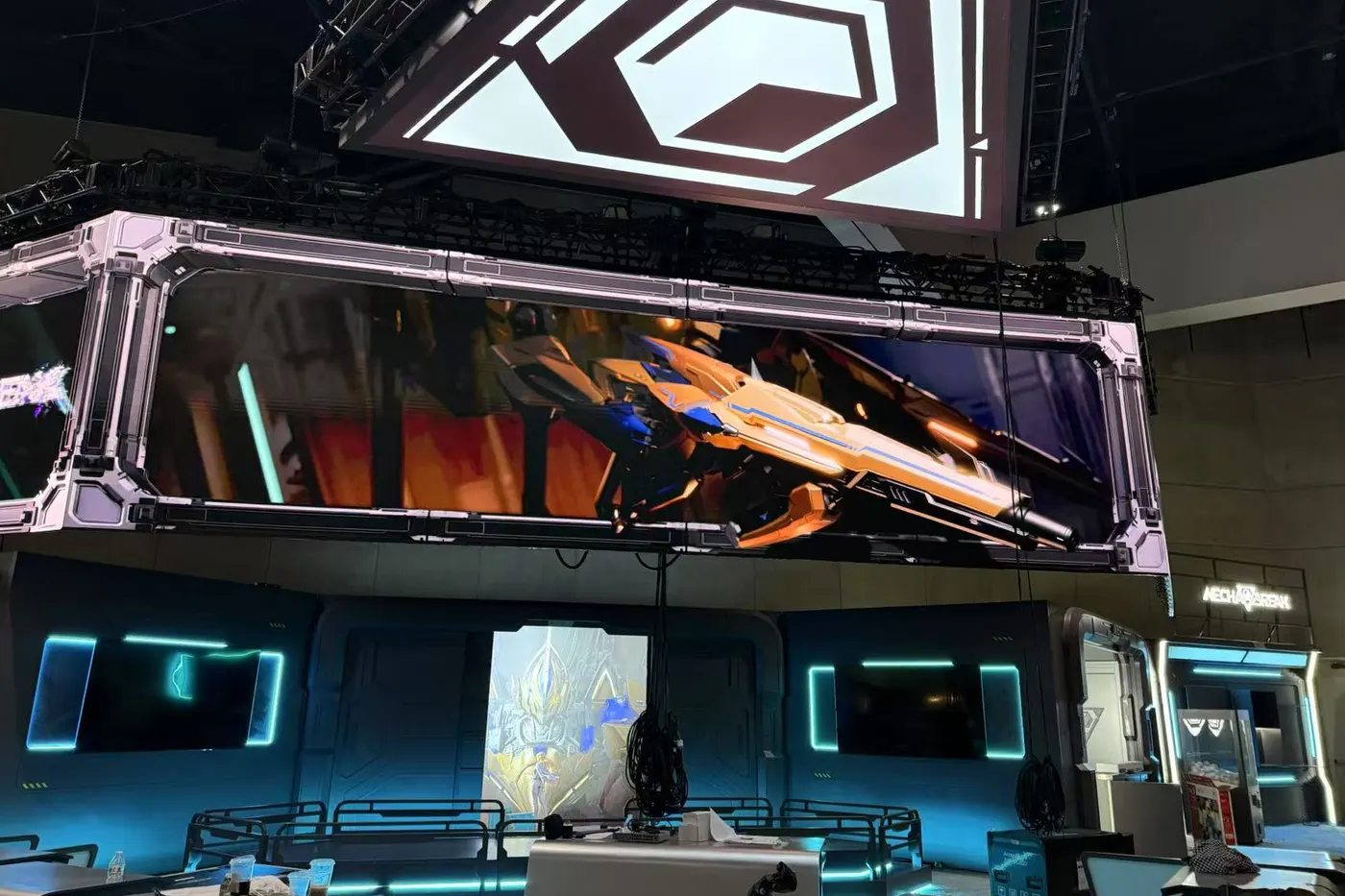
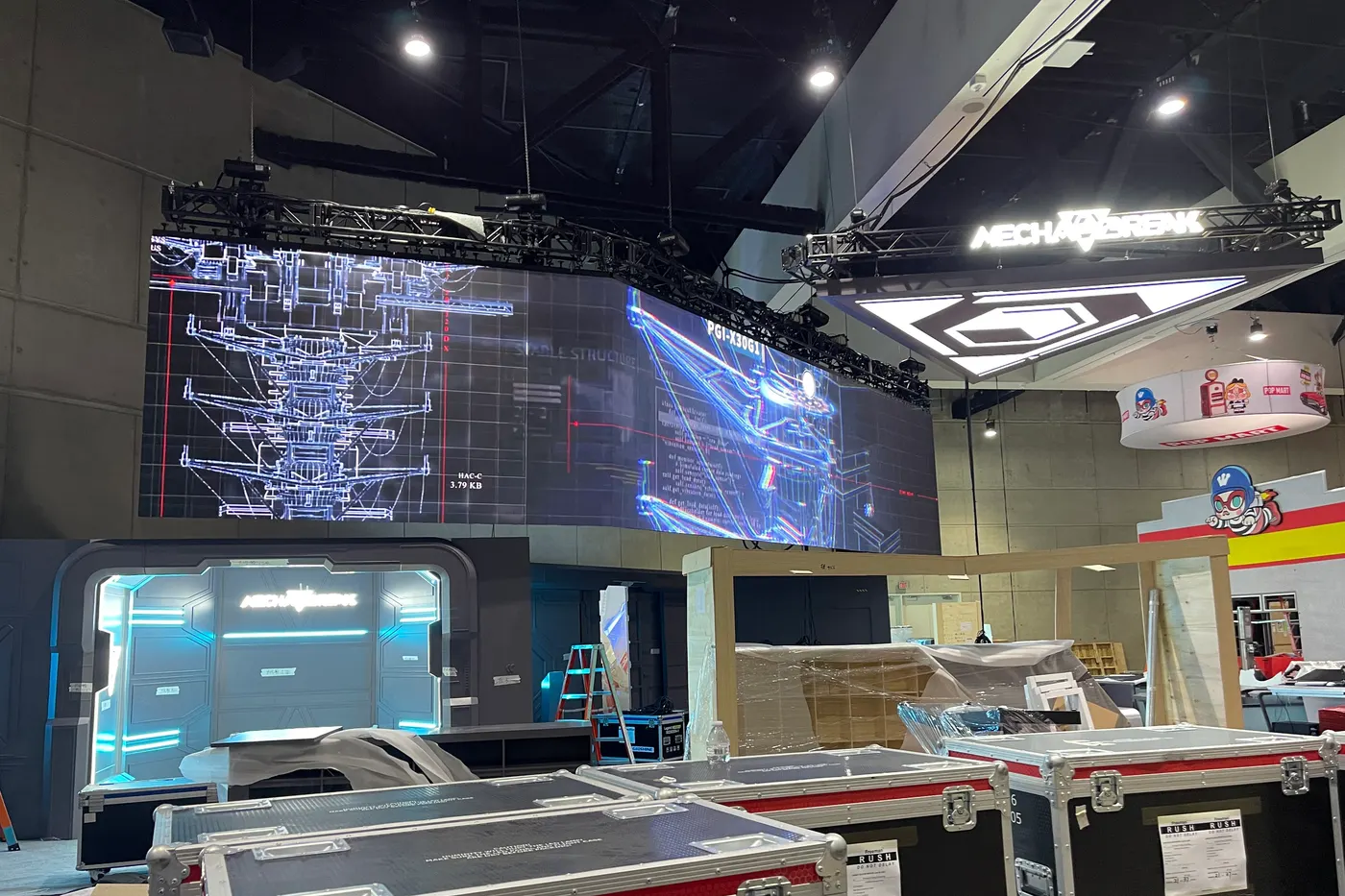
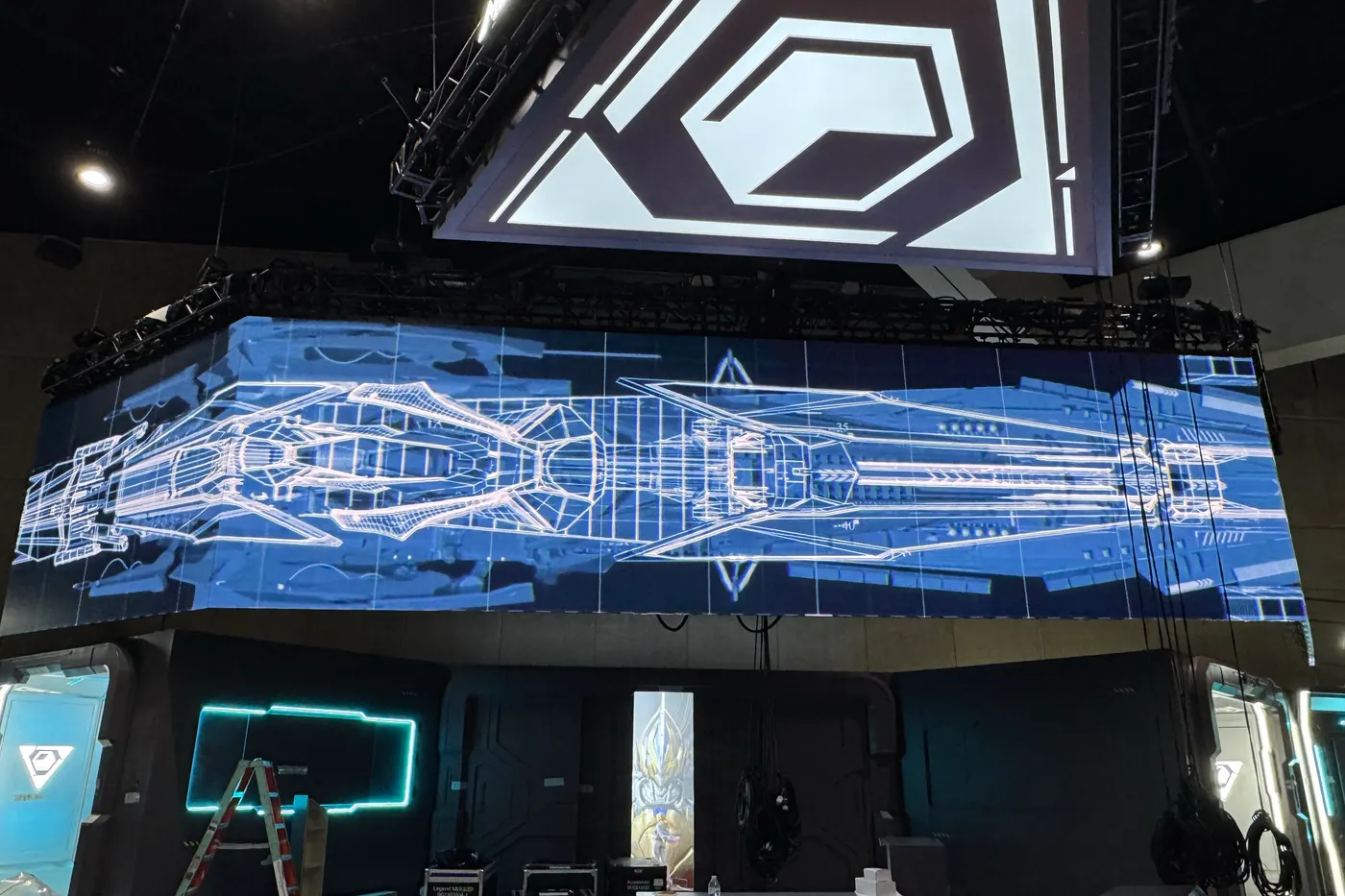
For San Diego Comic-Con 2025 (July 24–27, San Diego Convention Center), PixelPro Productions designed, supplied and ran a flown LED wall for glasses-free (naked-eye) 3D on a video game booth. The wall is 24 m long and 3 m high in three sections, an 11 m main screen with a 6.5 m wing on each side at 135°: 288 Gloshine MV Pro 2.6 cabinets, 9216 × 1152 pixels, 7680 Hz refresh, NovaStar A10s Pro receiving cards, and four NovaStar MX40 Pro processors on fibre, two live and two on hot standby. The folds use bevel-cut cabinets from the same production batch as the rest of the wall, joined with custom 135° connectors. The venue’s appointed rigger supplied the truss; working together, we brought the fold angles from about ±10° to the ±1° the effect needs. A sync generator locks the two halves of the picture, and Hirender S3 media servers play the client’s 3D content.
At a glance
- Event
- San Diego Comic-Con 2025, San Diego Convention Center
- Show days
- July 24–27, 2025 (load-in from July 20)
- Client
- A video game booth, through an exhibition agency
- LED
- Gloshine MV Pro 2.6, 7680 Hz refresh, NovaStar A10s Pro receiving cards
- Size
- 24 × 3 m, flown: 11 m main screen, two 6.5 m wings at 135°; 288 cabinets
- Resolution
- 9216 × 1152
- Processing
- Four NovaStar MX40 Pro (two live, two hot standby) on fibre; sync generator
- Playback
- Hirender S3 media servers; PixelHue switcher and U5 console
- Content
- Glasses-free 3D video, supplied by the client
- Rigging
- Hanging design and drawings by us; points, truss and hoists by the venue’s appointed rigger
- Also on the booth
- Sound (four 12-inch speakers, mixer, two Shure wireless mics), two haze machines
The brief
Glasses-free 3D is an illusion made of geometry. The video is made for a wall of a given size, folding at given angles; when the real wall matches, the image seems to come out of the screen. When it does not, the illusion falls apart.
The booth design called for a wall 24 metres long and 3 metres high, flown above the booth: an 11-metre main screen with a 6.5-metre wing on each side, each meeting it at 135°. The client supplied the 3D content. We designed the LED wall and its hanging structure, drew it up, and supplied and ran the LED, processing, playback and sound.
Challenge 01
A 135° fold, to within one degree
The folds are where the 3D effect lives or dies. We built them from bevel-cut cabinets, and made sure those came from the same production batch as every other cabinet in the wall: cabinets from different batches can differ in colour, and at a fold the difference would show. We had custom 135° connectors made for the joints.
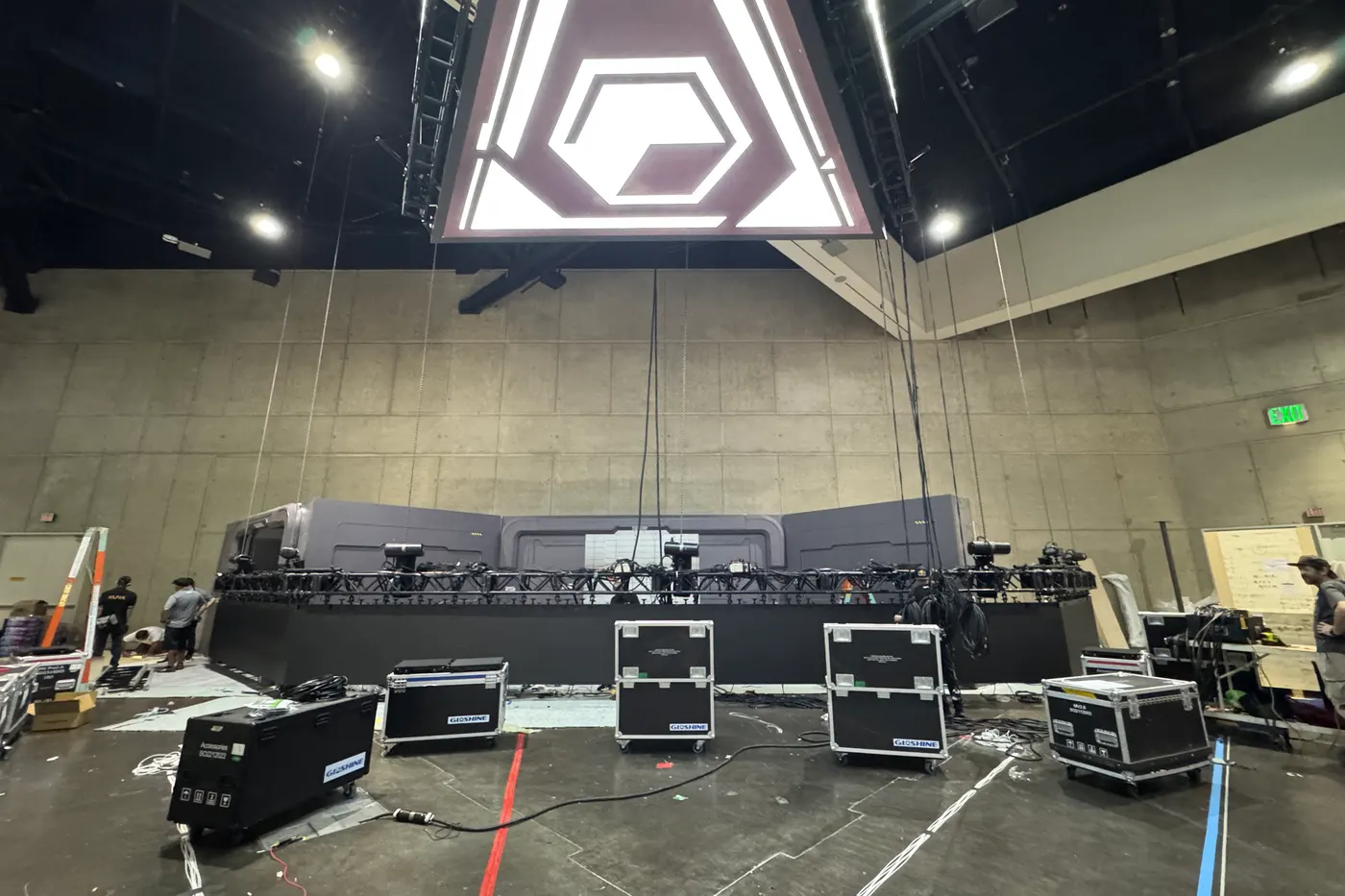
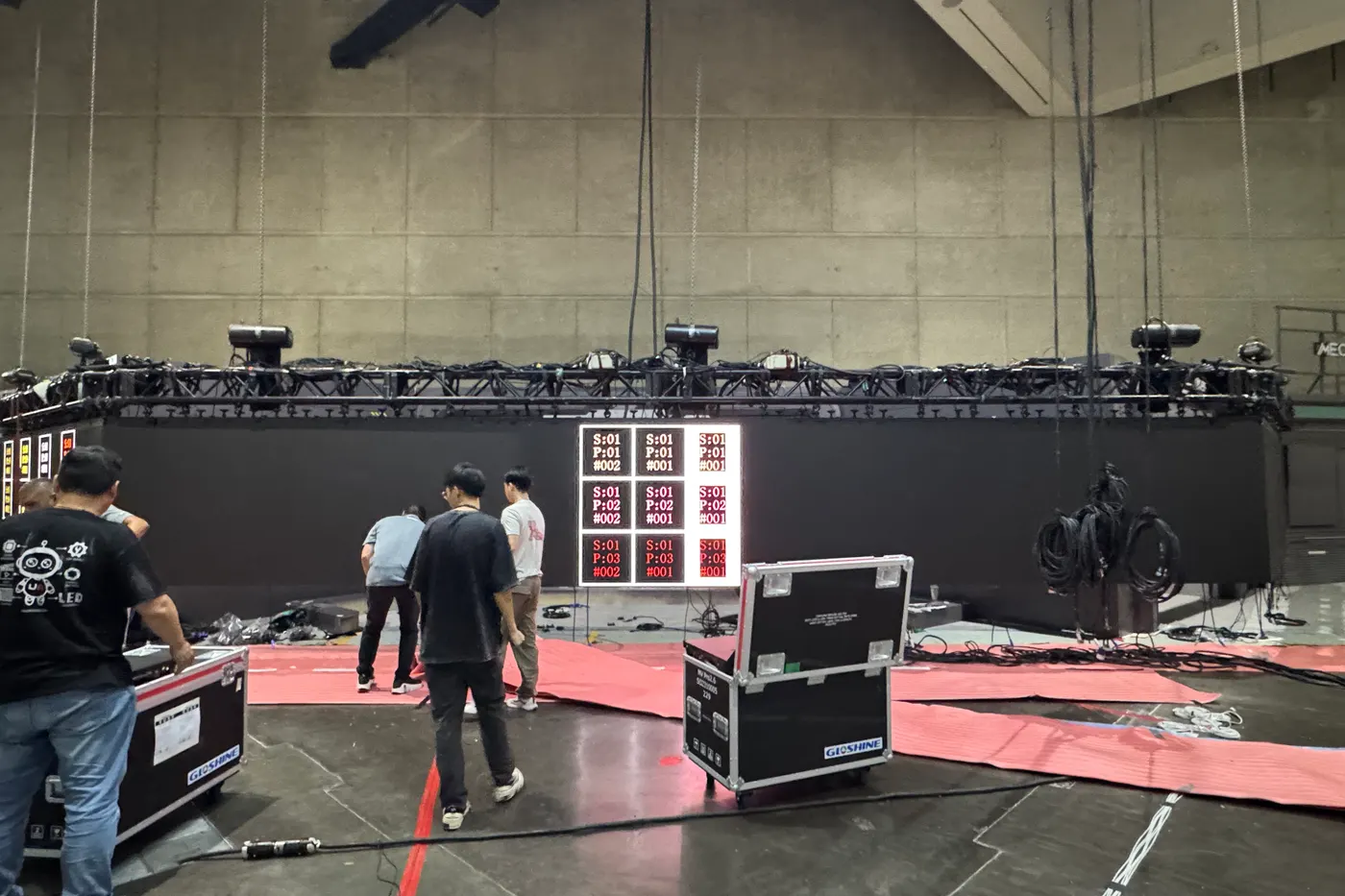
The rigging points, truss and hoists came from the venue’s appointed rigger. Their truss held the angle to about ±10°; our wall needed ±1°, which is finer than a rigging crew normally works to. So we worked it out together, adjusting the truss and the hanging a little at a time. It took six hours to bring the structure to the standard.
Six hours on the structure, so the picture would hold its shape.
Challenge 02
One picture from two processors
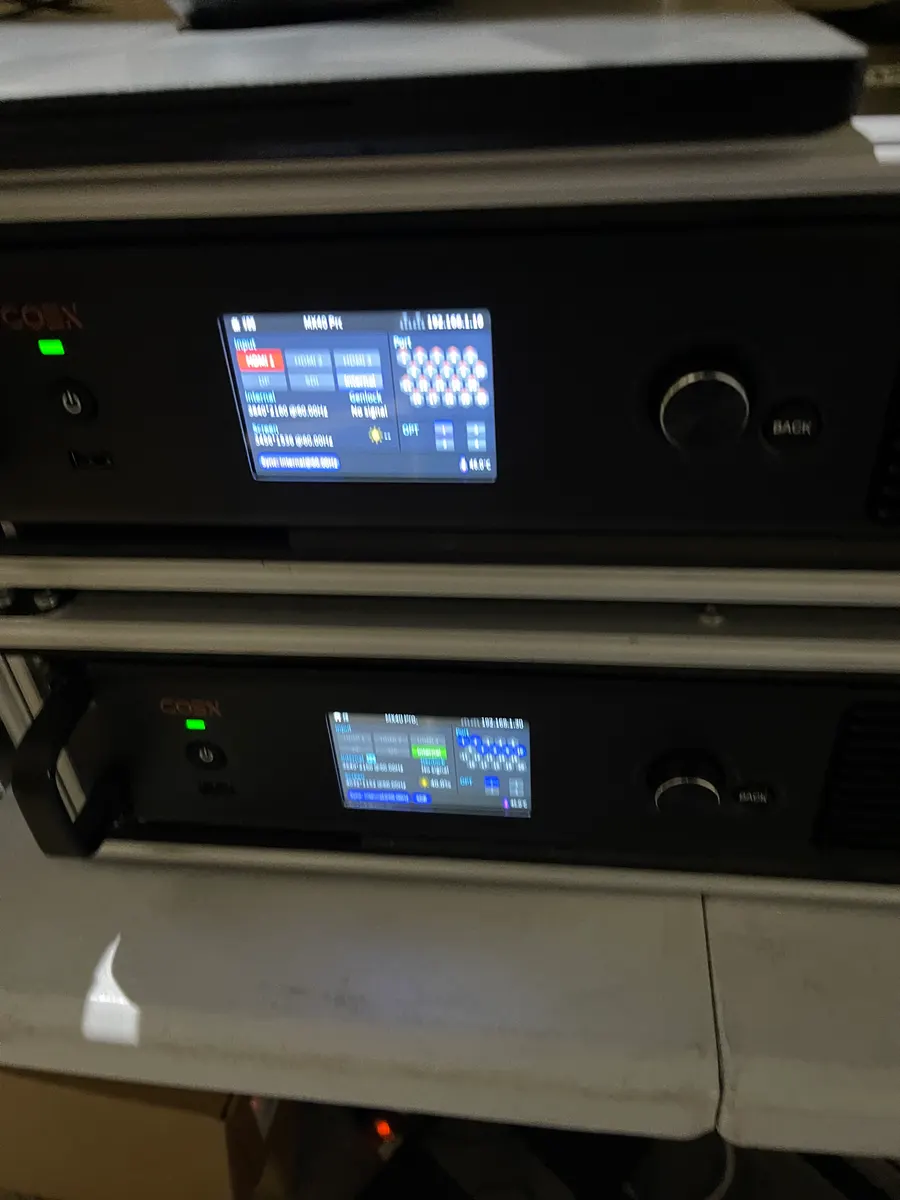
At 9216 × 1152 the wall runs in two halves: one NovaStar MX40 Pro drives the left half, one the right, and two more stand by as hot backups, all connected to the wall over fibre.
In testing, the 3D video, large files full of motion, sometimes tore at the seam in the middle of the wall after playing for a long time. The left and right processors were drifting out of frame sync. The sync settings on the PixelHue switcher made it better, but did not cure it.
The cure came from our virtual production stage, where the LED wall and the camera have to run on one clock: we added a sync generator and locked both halves to it. The tearing stopped completely.
Two processors, one clock, one picture.
Challenge 03
A heavy file, played all day
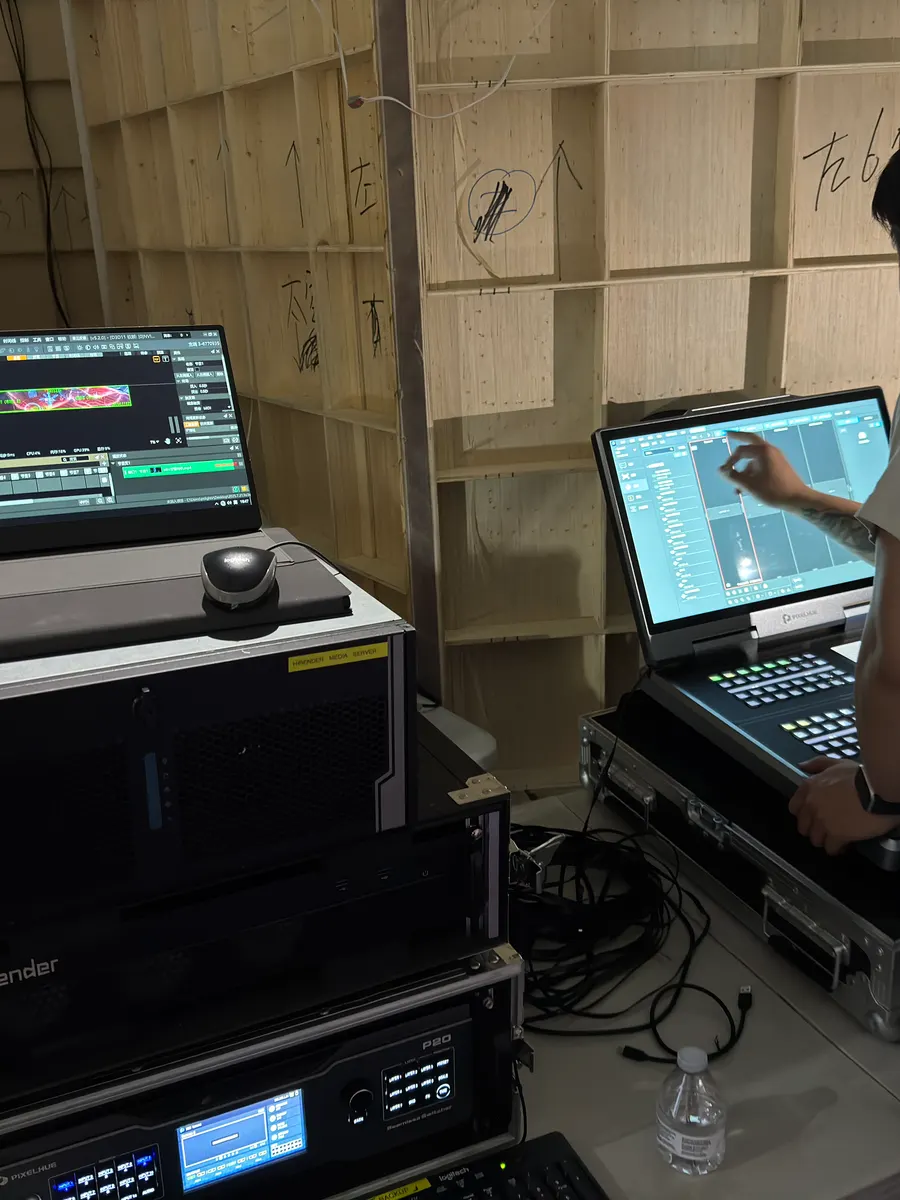
Glasses-free 3D files are very large, and an ordinary playback computer starts to stutter over a long day. We played the content from Hirender S3 media servers instead.
That removed the stutter, and it let us follow the booth’s running order: different content on the wall for different parts of the programme, as the client needed.
The result
- A 24 × 3 m glasses-free 3D wall, flown, its 135° folds held to ±1°.
- Colour that matches across the folds, every cabinet from one production batch.
- No tearing at the seam once both halves ran on one sync generator.
- Smooth playback through the show, with content changing to the booth’s programme.
How we run LED, sound and crew for events is on our event AV production page.
Questions exhibitors ask
What does an LED wall need for glasses-free 3D?
Exact geometry and a picture that never breaks. At San Diego Comic-Con 2025 PixelPro flew a 24 × 3 m P2.6 LED wall with two wings at 135°, held to ±1°, using bevel-cut cabinets from the same production batch as the rest of the wall so the colour matched at the folds, at 7680 Hz refresh.
Why does a wide LED wall tear in the middle, and how is it fixed?
When two processors each drive half of a wide wall, the halves can drift out of frame sync during long playback, and the picture tears at the seam. At San Diego Comic-Con 2025 PixelPro cured it on a 9216 × 1152 wall by locking both NovaStar MX40 Pro processors to a sync generator, as on its virtual production stage.
Can you fly an LED wall on the venue’s rigging?
Yes. At San Diego Comic-Con 2025 the rigging points, truss and hoists came from the venue’s appointed rigger. PixelPro designed the LED wall’s hanging structure, supplied the drawings, and worked with the rigger for six hours to bring the 135° folds from about ±10° to ±1°.
What plays glasses-free 3D content without stuttering?
A media server built for it. Glasses-free 3D files are very large, and an ordinary computer can stutter over a long show day. At San Diego Comic-Con 2025 PixelPro played the content from Hirender S3 media servers, which also switched the content to the booth’s running order.