Guide · LED walls · Projection
LED wall or projector for a church?
It is rarely either/or. Three churches that chose LED, two of them replacing projection: why, what they kept, and what it took.
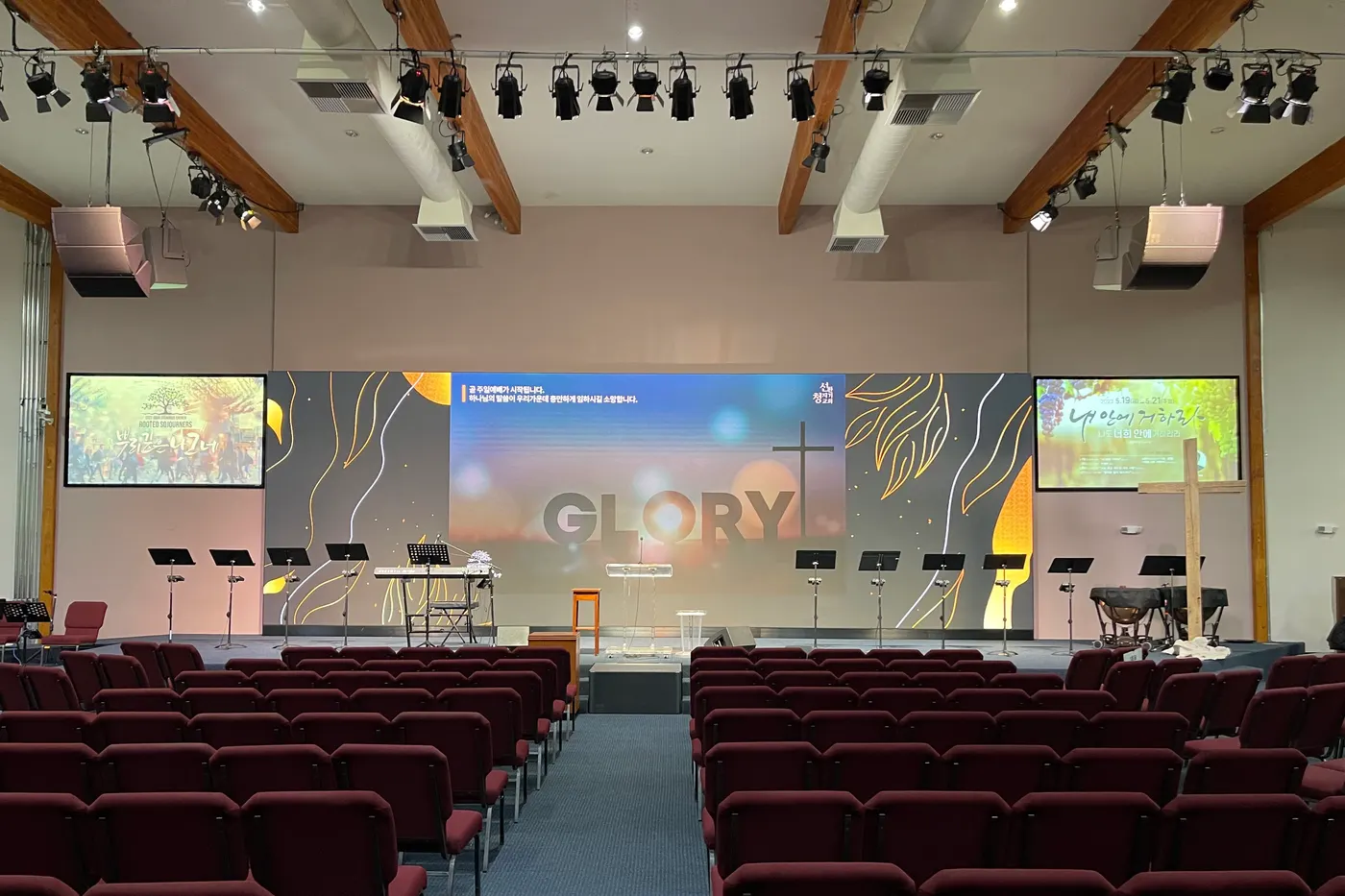
In the churches PixelPro Productions has worked with, three wishes led to LED: HD pictures in 16:9 instead of old 4:3 screens, one continuous picture across the stage instead of separate screens, and screens the congregation can read. It does not have to be either/or: at Good Stewards Church in West Covina the two existing projectors and screens moved either side of the new 38-foot LED wall as supporting displays. What LED changes is weight and budget. A projector screen weighs very little; each of the two LED screens at a church in Irvine weighs about 800 lb, so the wall behind has to be checked first. Our church LED projects have cost from under $20,000 to about $140,000 installed.
Five questions that decide it
We ask these before recommending either:
- What do you show? Lyrics, slides and video are made in 16:9. In Irvine the new LED screens show 16:9 content about a third larger in the same openings the 4:3 projector screens used.
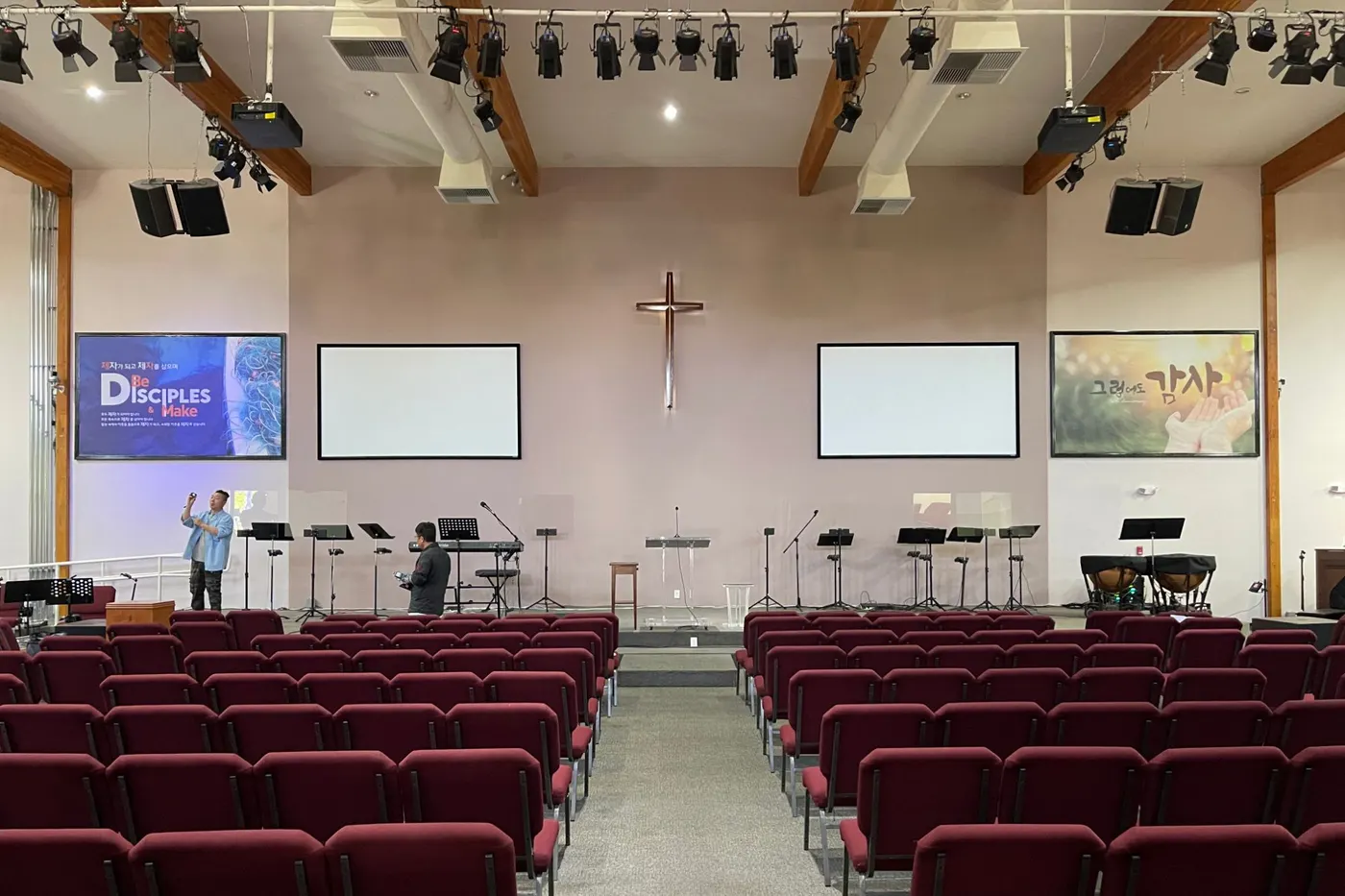
- One picture or several? Good Stewards’ stage held four separate pictures, two projection screens and two printed banners; the church wanted one continuous wall.
- How much light is in the room? A projected picture is light reflected off a screen and competes with stage lighting and daylight; an LED screen makes its own light.
- Can the wall carry it? A projector screen weighs very little; an LED screen of the same size can weigh several hundred pounds.
- What can stay? Projectors, screens and cameras often have a place in the new system.
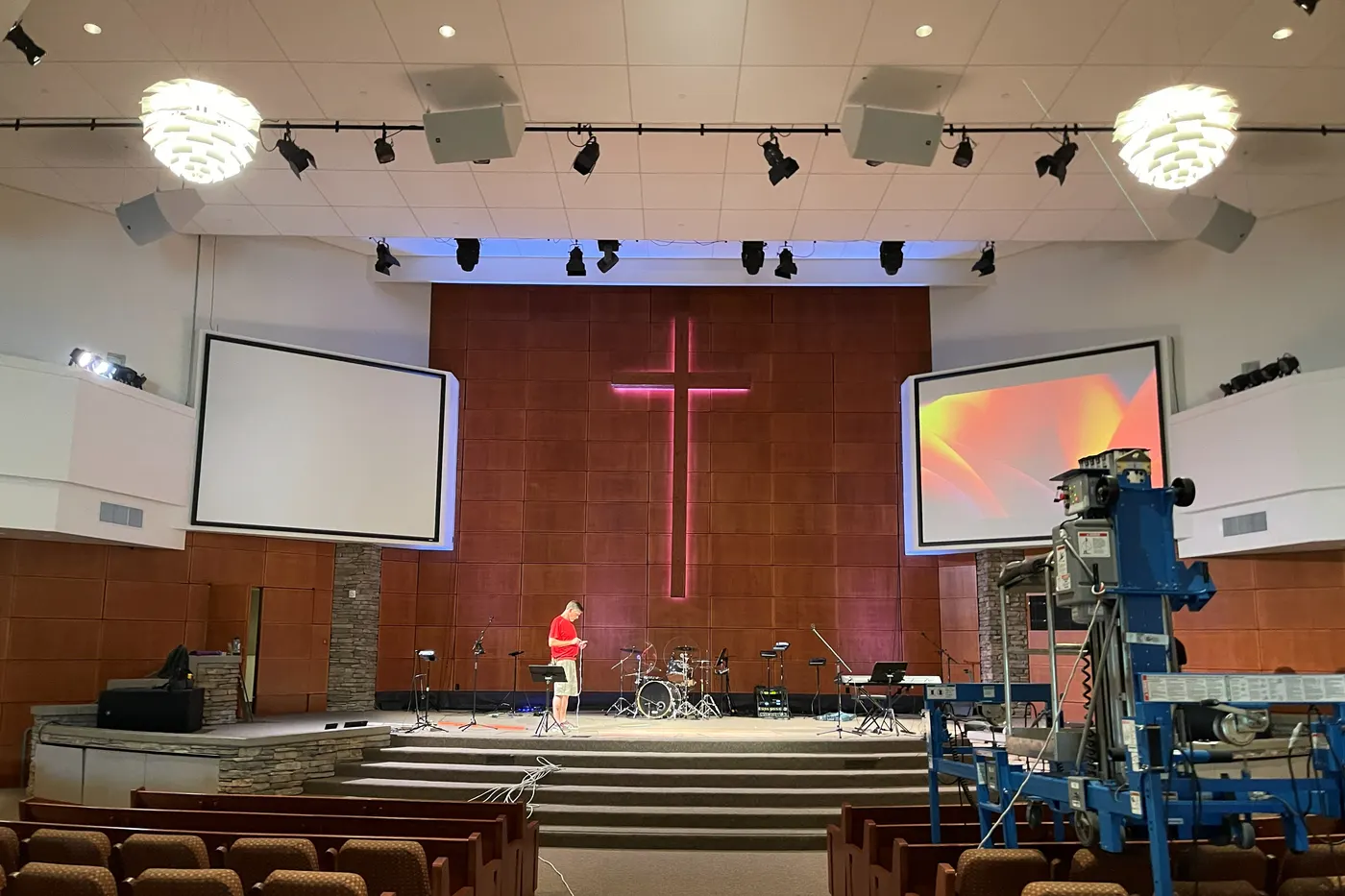
1. The same openings, a bigger picture: a church in Irvine
The church had the setup many churches still have: a projector and a 4:3 screen on each side of the stage, neither of them HD. It wanted modern HD screens in the same places, without rebuilding the sanctuary.
LED screens are built from fixed-size cabinets. Each new screen is 7 × 6 P2.5 cabinets, which still fits the old 4:3 surround and shows 16:9 content about a third larger. The surrounds turned out to be steel studs and drywall, fine for a projector screen but not for about 800 lb of LED, so each screen hangs on steel brackets anchored to the concrete wall behind.
2. LED in the centre, projectors kept: Good Stewards Church, West Covina
The stage wall held four separate pictures: a projection screen either side of the cross and a printed banner beyond each. The church wanted one continuous picture, so we built a 38 × 13 ft LED wall of 144 cabinets across the stage.
The projectors did not go to waste. The two projectors and screens moved to either side of the LED wall, where they now serve as supporting displays, and every existing camera was reinstalled into the new system.
3. Screens people can read, on a small budget: Live Oak UCC, Brea
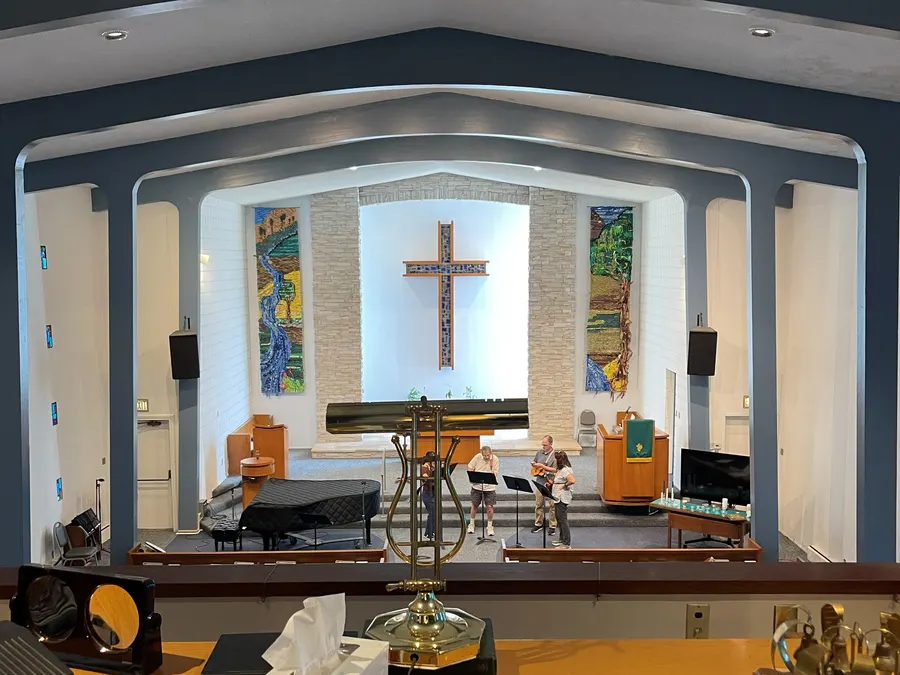
Live Oak is a small congregation in a sanctuary whose side walls angle away from the pews. It wanted screens the congregation could actually read, without a project the size of a stage-wide LED wall.
Two LED screens of 4 × 3 cabinets went up on timber structures angled toward the seating. With the power work and the existing speakers moved, the whole upgrade came in under $30,000.
What changed when LED came in
- Picture shape: 16:9 content about a third larger in the old 4:3 openings (A church in Irvine)
- The old projectors: moved beside the LED wall as supporting displays; cameras reused (Good Stewards, West Covina)
- Weight: about 800 lb per screen, on steel brackets to the concrete wall (A church in Irvine)
- Budget: two small screens with structure, power and sound under $30,000 (Live Oak UCC, Brea)
- Time in the room: six days between two Sundays for a 144-cabinet wall (Good Stewards, West Covina)
If you are still deciding
Start from what the screens must do and where people sit, not from the technology. If the answer is HD content, one picture across the stage, or screens that hold up under stage lighting, LED is usually the answer; the projectors you have may still earn a place beside it.
Before any quote we check the wall behind the screen and the power. For what LED costs in a church, see our budget guide.
Planning a wall for your own sanctuary? PixelBid, our free planner, sizes it from your seats and stage and gives an installed budget in a minute. Estimate your church's LED wall →
Questions about moving from projection to LED
Should a church choose an LED wall or a projector?
It depends on what the screens must do. The churches we have worked with moved to LED for HD 16:9 pictures, one continuous picture across the stage, and screens that are easy to read. It need not be either/or: at Good Stewards Church the old projectors became supporting displays beside the new LED wall.
Can we keep our projectors when we add an LED wall?
Often, yes. At Good Stewards Church in West Covina the two projectors and screens moved to either side of the LED wall as supporting displays, and every existing camera was reinstalled into the new system.
Can an LED screen go where our projector screen is now?
Usually, once the wall has been checked. A wall built for a projector screen was designed for very little weight. At a church in Irvine each new LED screen weighs about 800 lb, so we anchored steel brackets to the concrete wall behind the old surrounds.