Service · Virtual production stage
Virtual production on our own LED stage in Anaheim.
A curved 10-metre LED wall that puts your actors wherever the script needs them, and changes the scene whenever it calls for a new one. The stage has its own space inside our Anaheim warehouse, and vehicles drive straight onto it. Rent it with our crew, or have us build a stage at your location.
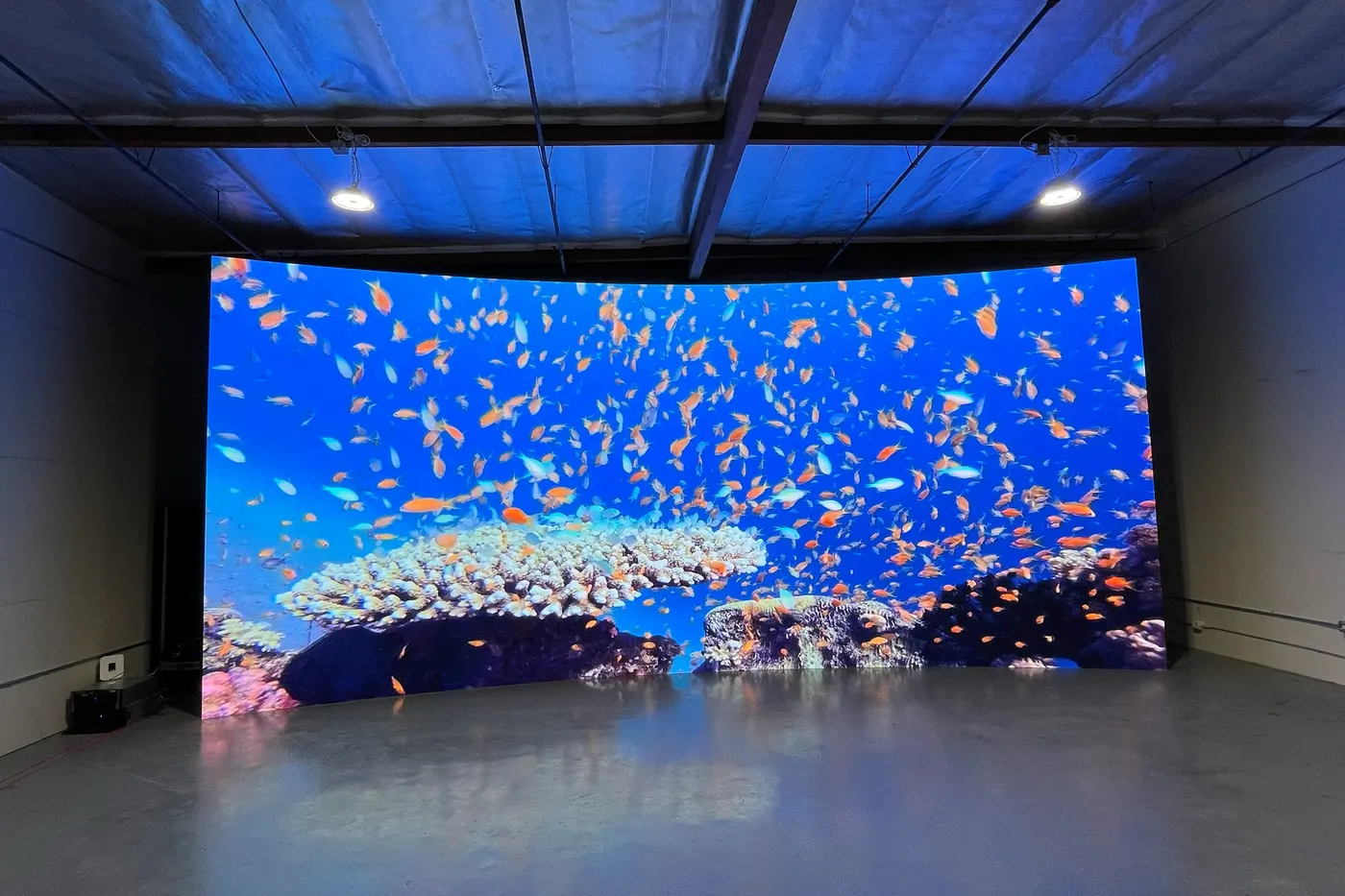
- 10 × 4.5 m
- Curved LED wall, about 33 × 15 ft
- P2.6
- Gloshine MV Pro 2.6 LED
- Drive-in
- Cars and motorcycles onto the stage floor
- Mo-Sys
- StarTracker camera tracking
PixelPro Productions runs its own virtual production stage in Anaheim, California: a curved LED wall 10 m wide and 4.5 m high (Gloshine MV Pro 2.6, 2.6 mm pixel pitch), NovaStar MX40 Pro control, Mo-Sys StarTracker camera tracking, real-time rendering in Unreal Engine (Hecoos for XR), and a RED Komodo camera of our own. The stage is partitioned off inside our warehouse, so vehicles drive onto the stage floor. Productions rent it with our technical crew, and we can also build a stage at a client’s location. ReelShort has shot short-form drama on it.
The stage
- LED wall: Gloshine MV Pro 2.6, 2.6 mm pixel pitch, curved, 10 m wide and 4.5 m high (about 33 × 15 ft).
- LED control: NovaStar MX40 Pro processor with A10s Pro receiving cards, configured against moiré and flicker.
- Camera tracking: Mo-Sys StarTracker.
- Real-time rendering: Unreal Engine for standard virtual production, Hecoos for XR.
- Backgrounds: 2.5D backgrounds generated from 2D images with AI.
- Lighting: our own.
- Camera: RED Komodo, our own.
- Space: partitioned off inside our Anaheim warehouse, with vehicle access to the stage floor.
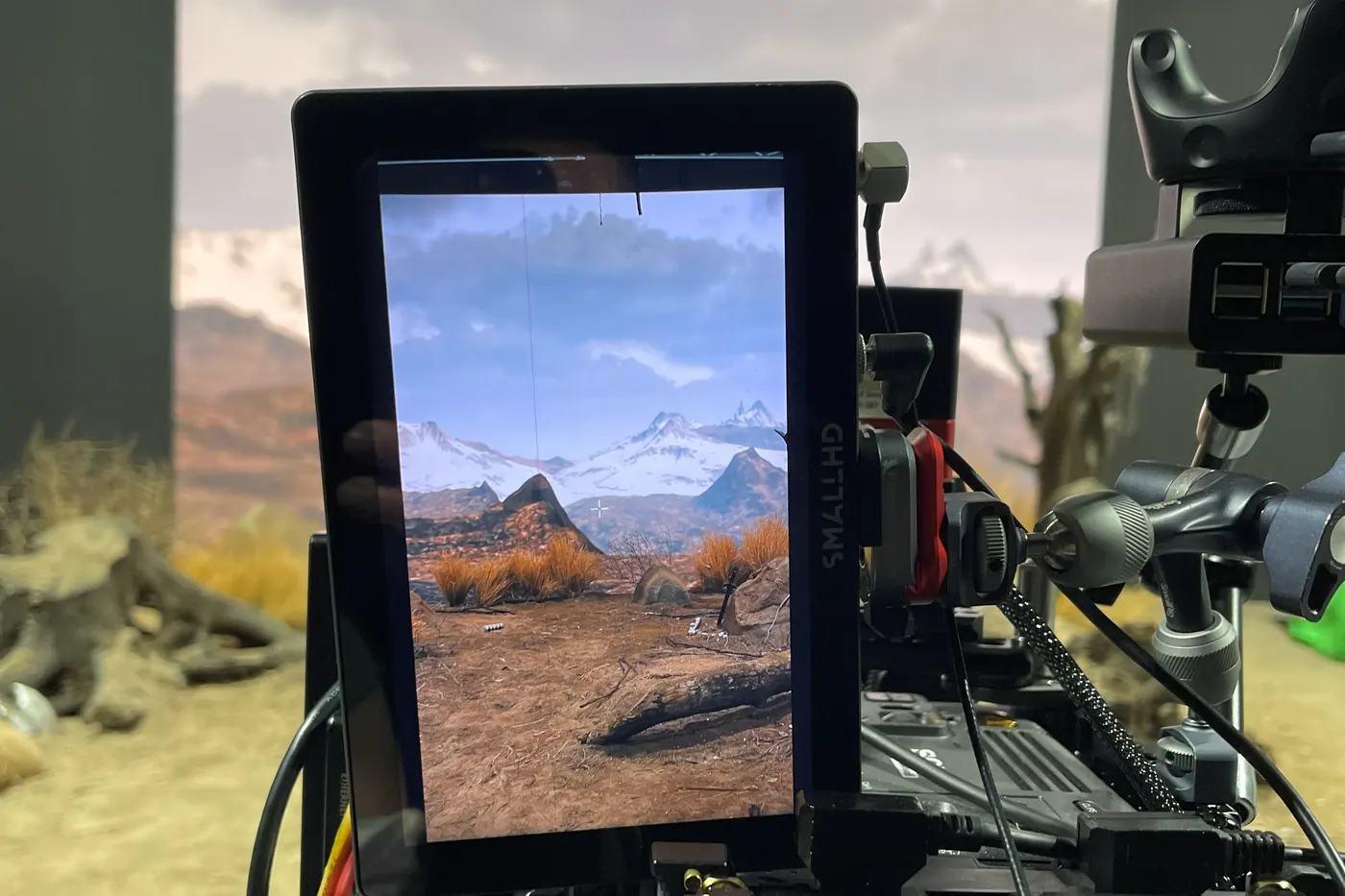
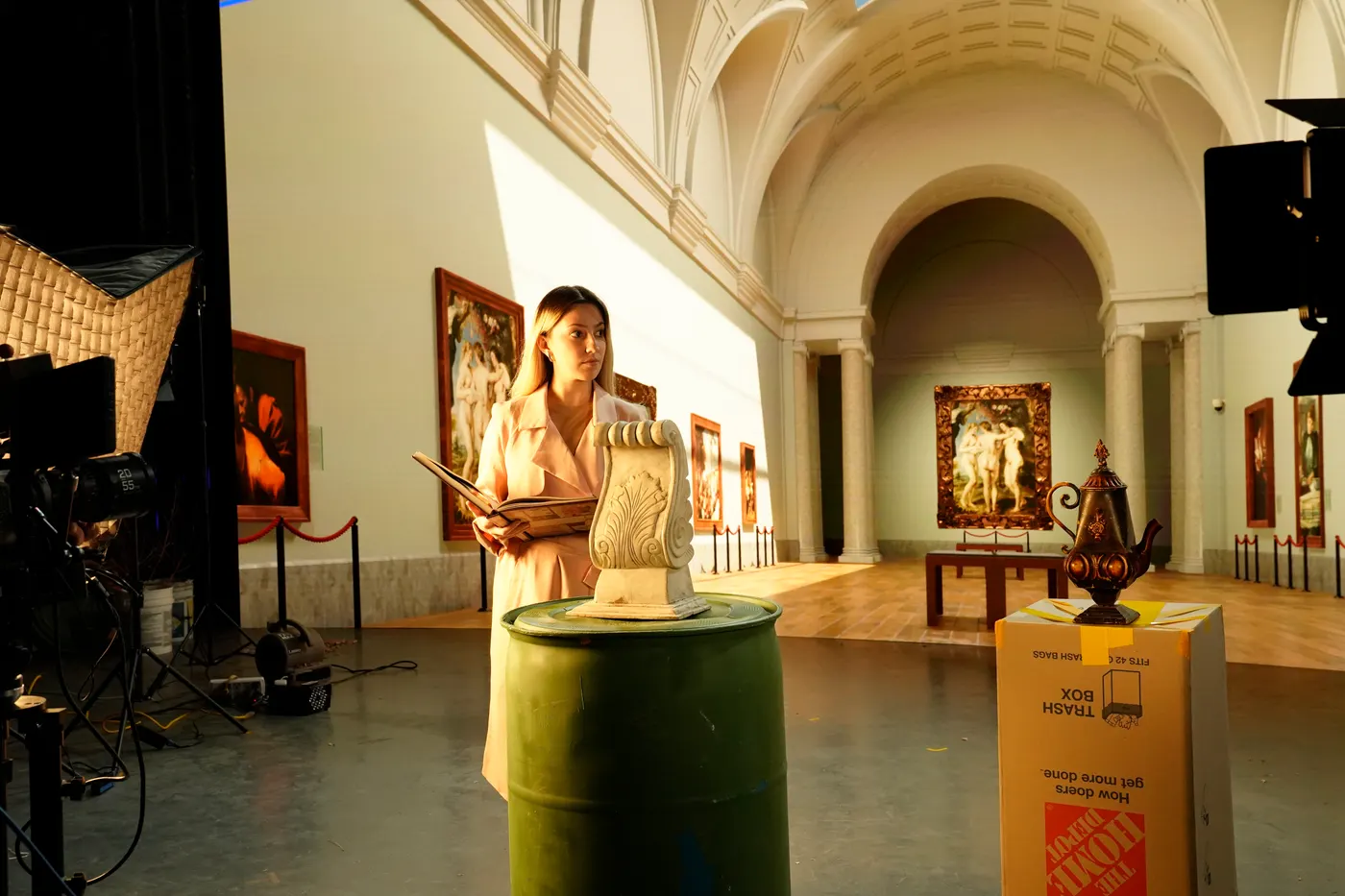
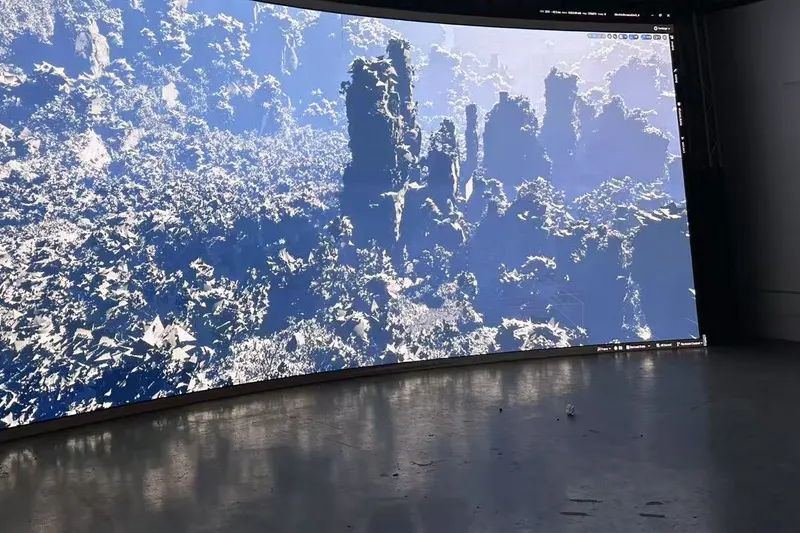
The point of virtual production is that, on camera, your actors are really there. The wall changes scene whenever the script calls for it: mountains, the ocean, snowfields, ancient buildings, a volcano, places that are hard or impossible to take a crew to.
It holds up on camera for two reasons. The curved wall lights the actors and the set with the scene itself, so they sit in it rather than in front of it. And tracking tells the render engine where the camera is, so the background moves in the right perspective as the camera moves. The director and the actors see the finished picture while they shoot, not after the edit.
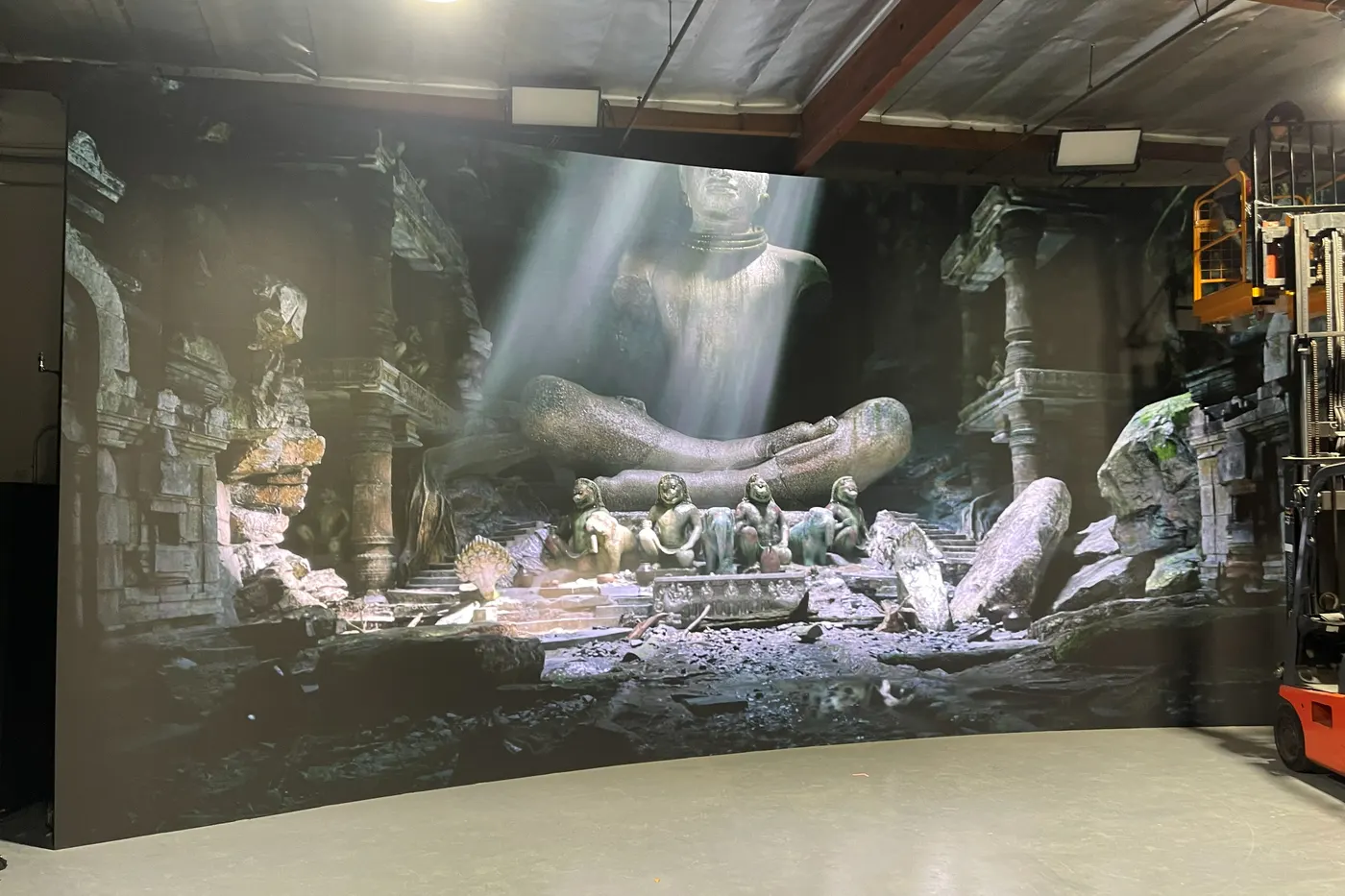
Car shots: the car stands still, the road moves
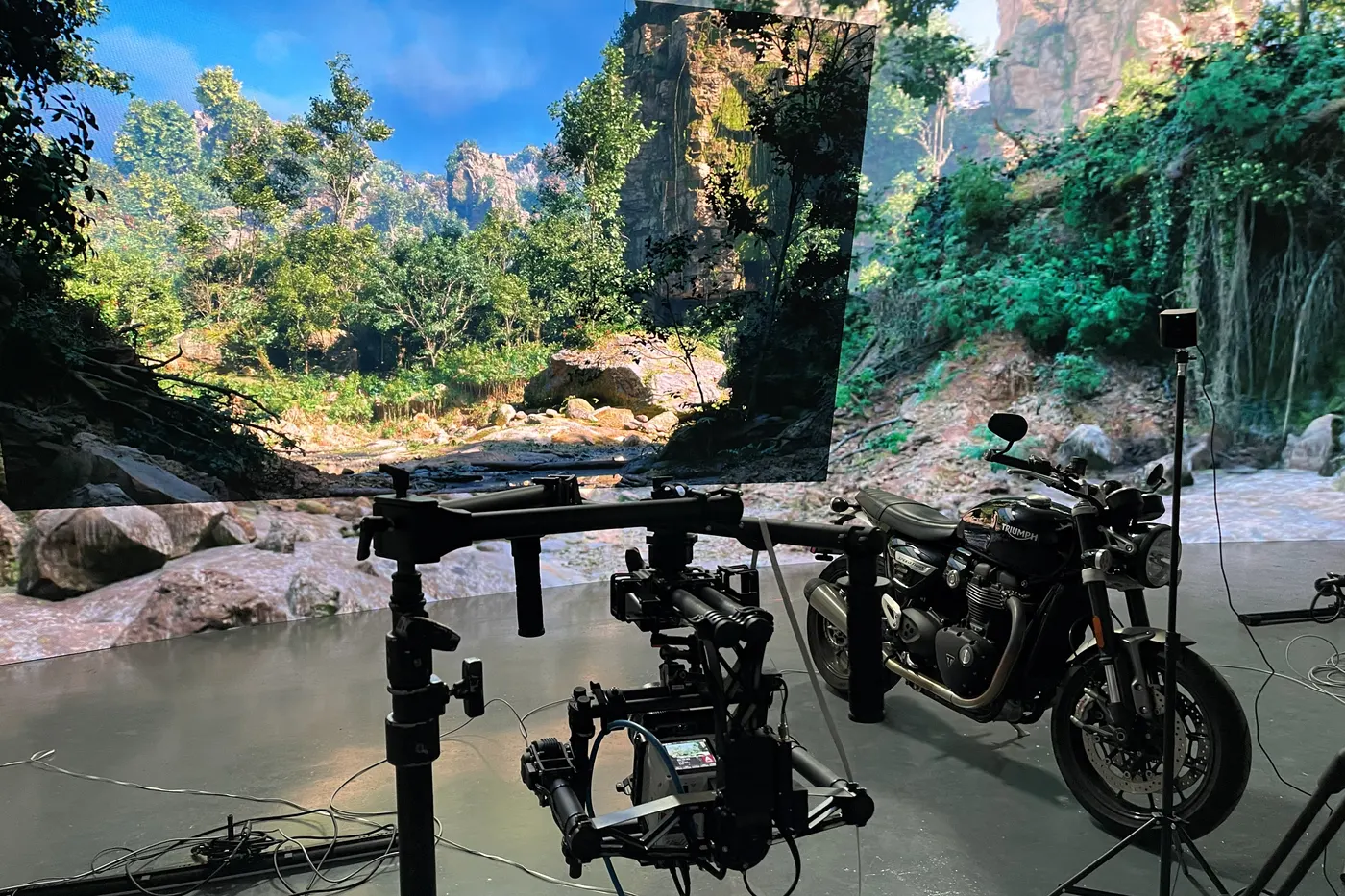
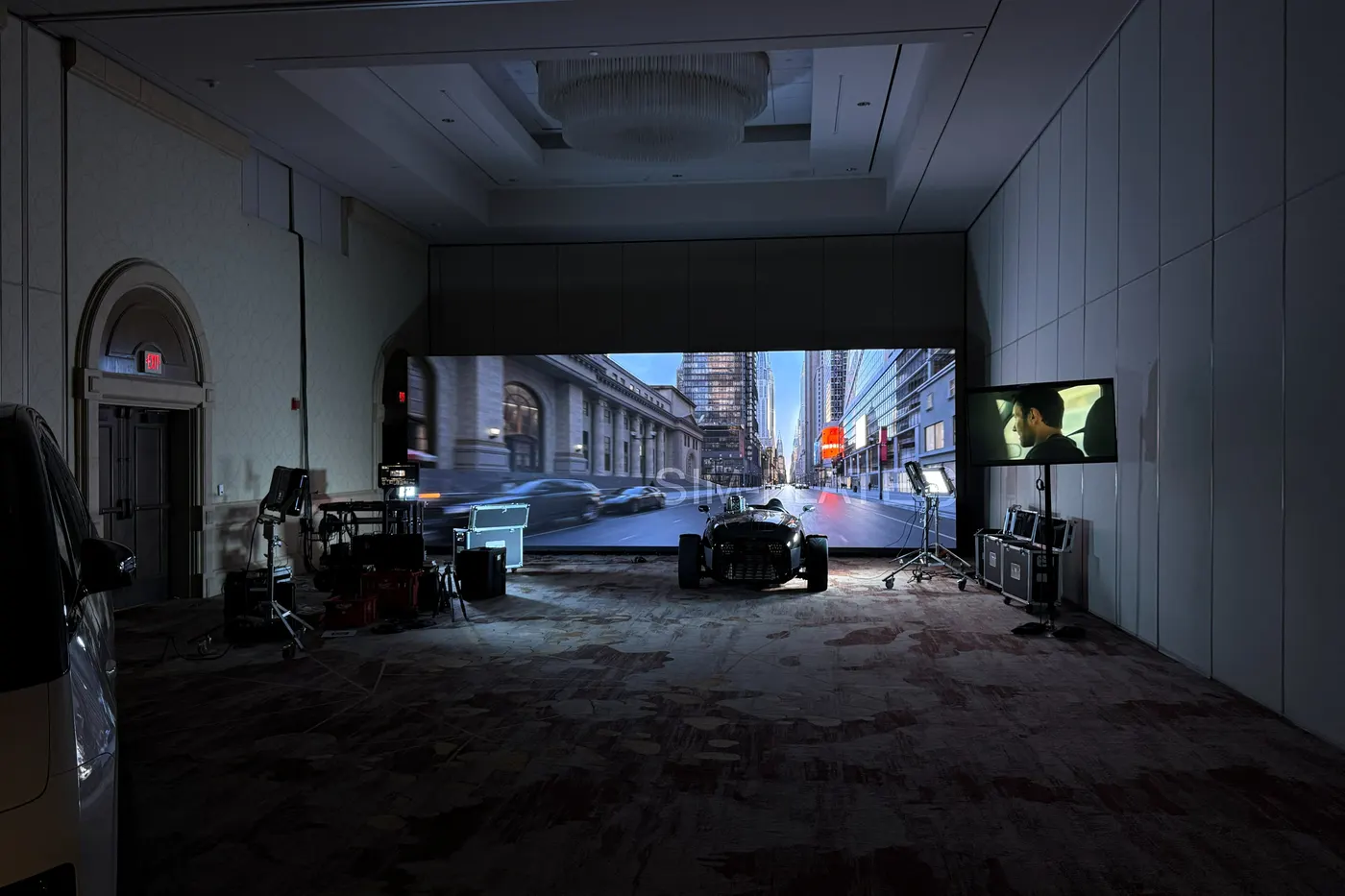
The stage is part of our warehouse, so a car or a motorcycle drives straight onto the stage floor. For a driving shot the wall plays a moving background while the vehicle stands still, and on camera it is out on the road.
No real road means no traffic, no road closure and no one driving at speed for the camera. It is safer, and it saves time: the next road is the next clip on the wall.
Why virtual production is hard
Virtual production is not an LED wall and a camera. It is seven systems working as one: the LED wall, lighting, a real-time render engine, the camera, camera tracking, recording and XR. Software and hardware have to line up exactly, and the bar is high. The usual problems, and what we do about them:
- Moiré and flicker. Point a camera at an LED wall and you can get moiré, a rippling pattern across the picture. When the wall’s refresh and the camera’s shutter are out of step, the picture flickers or rolls. Our wall is configured specifically against both, on the system NovaStar makes for virtual production: an MX40 Pro processor with A10s Pro receiving cards.
- A background that lags the camera. When the camera moves, the perspective of the background has to move with it, and any lag gives the shot away. We use Mo-Sys StarTracker, a proven tracking system, and our founder holds Mo-Sys’s technician certificate in green screen and ICVFX.
- A join between the set and the wall. The set on the floor and the light on the actors have to match the direction and colour of the light in the scene on the wall, and the wall itself has to look right in camera, or the join shows. Lighting matters here as much as the wall: we have our own lighting, and we set it together with the picture on the wall.
- Scenes that are slow and costly to build. 3D scenes take time to make, and heavy ones can stutter in real time. We run Unreal Engine for standard virtual production and Hecoos for XR, and use the latest AI tools to generate 2.5D backgrounds from a single 2D image, which cuts the time and cost of building scenes.
- Crews new to virtual production. Camera positions, scenes and lighting have to be planned together before the shoot. That is why our technicians run every booking, from preparation through the shoot.
Two ways to work with us
- Rent our stage, with our crew. Every booking includes our technicians for the LED, the tracking and the rendering. Virtual production is a chain of systems that has to stay in sync, and the people who built the stage are the ones who keep it that way on a shoot day.
- We build at your location. When the shoot has to happen somewhere else, we can build a virtual production stage there, with our own equipment and crew.
On our stage, and at HPA
ReelShort
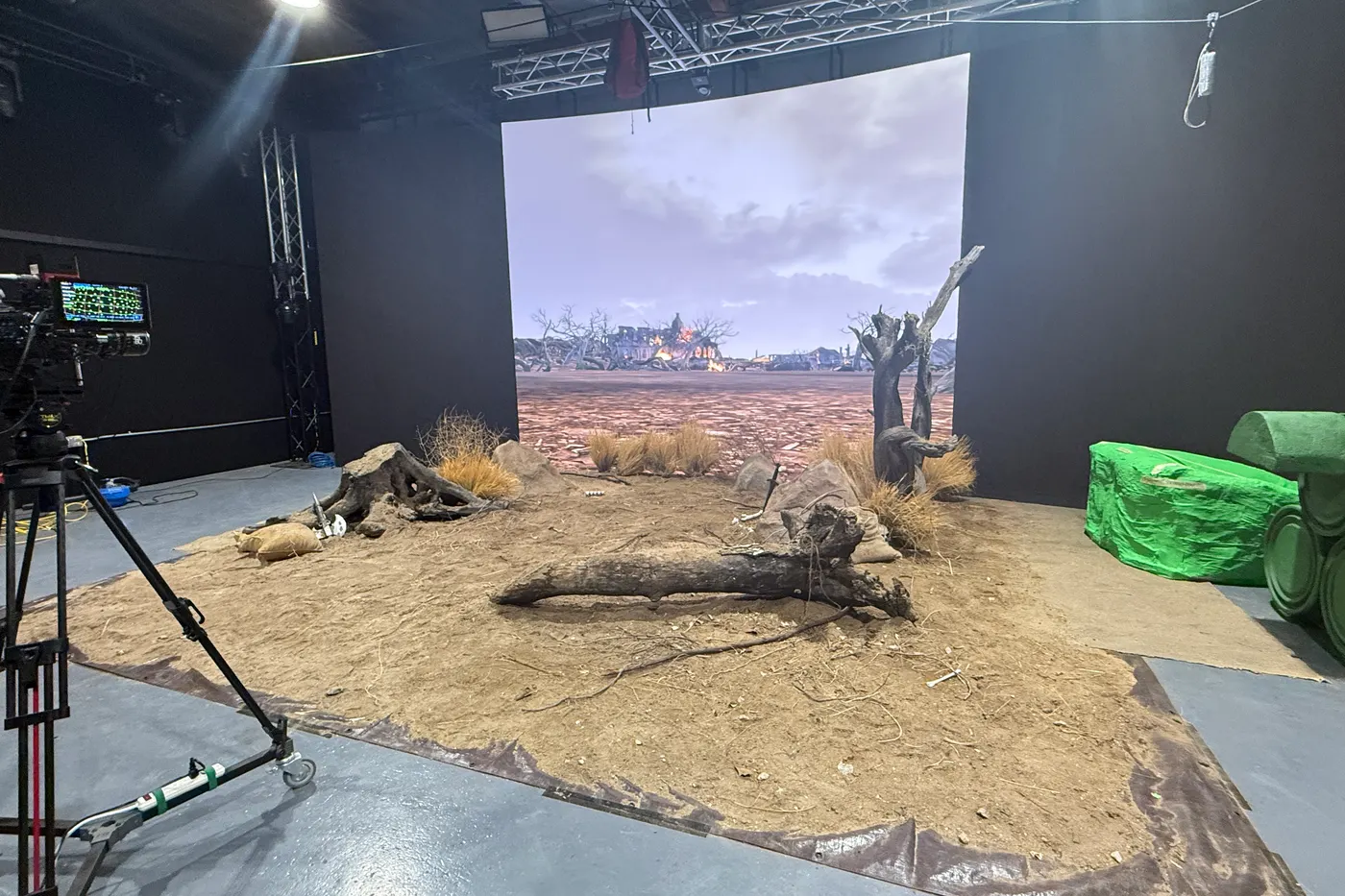
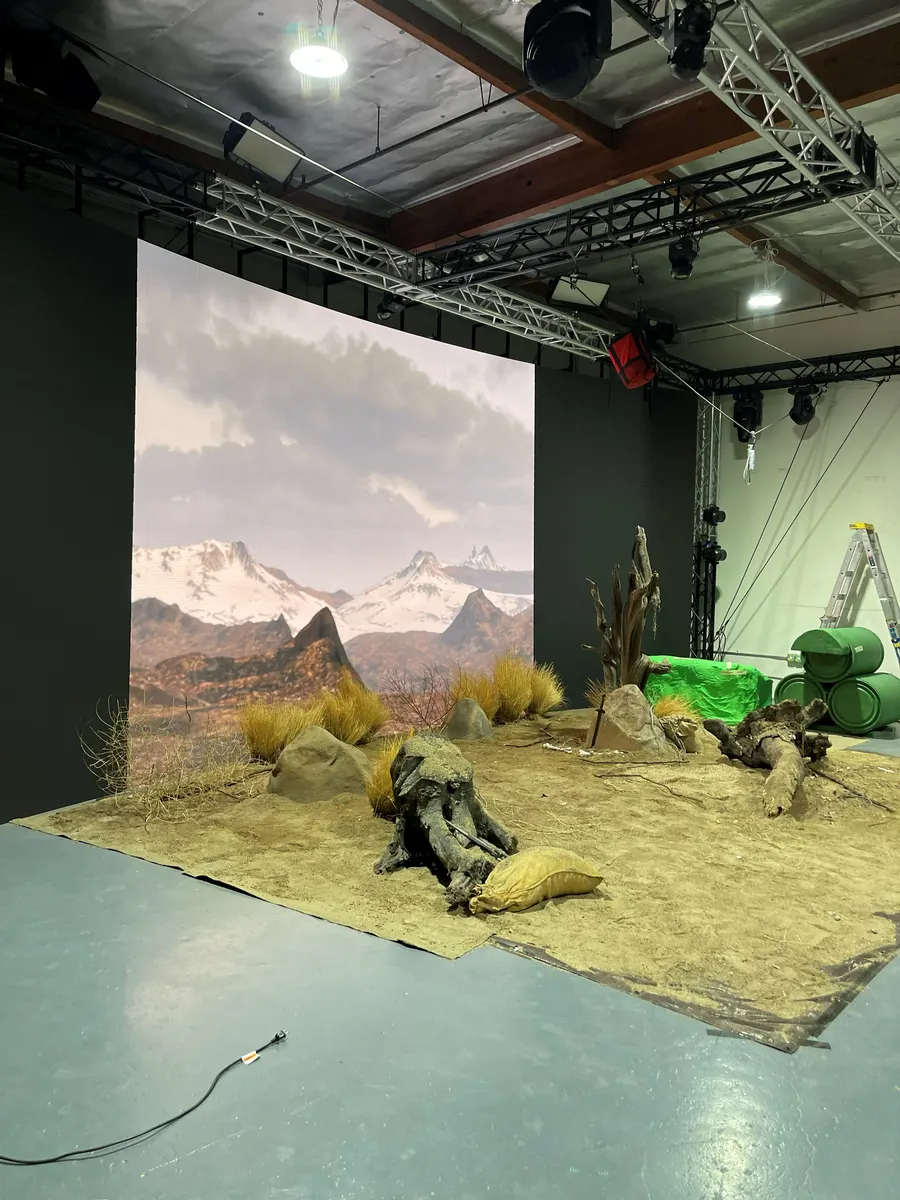
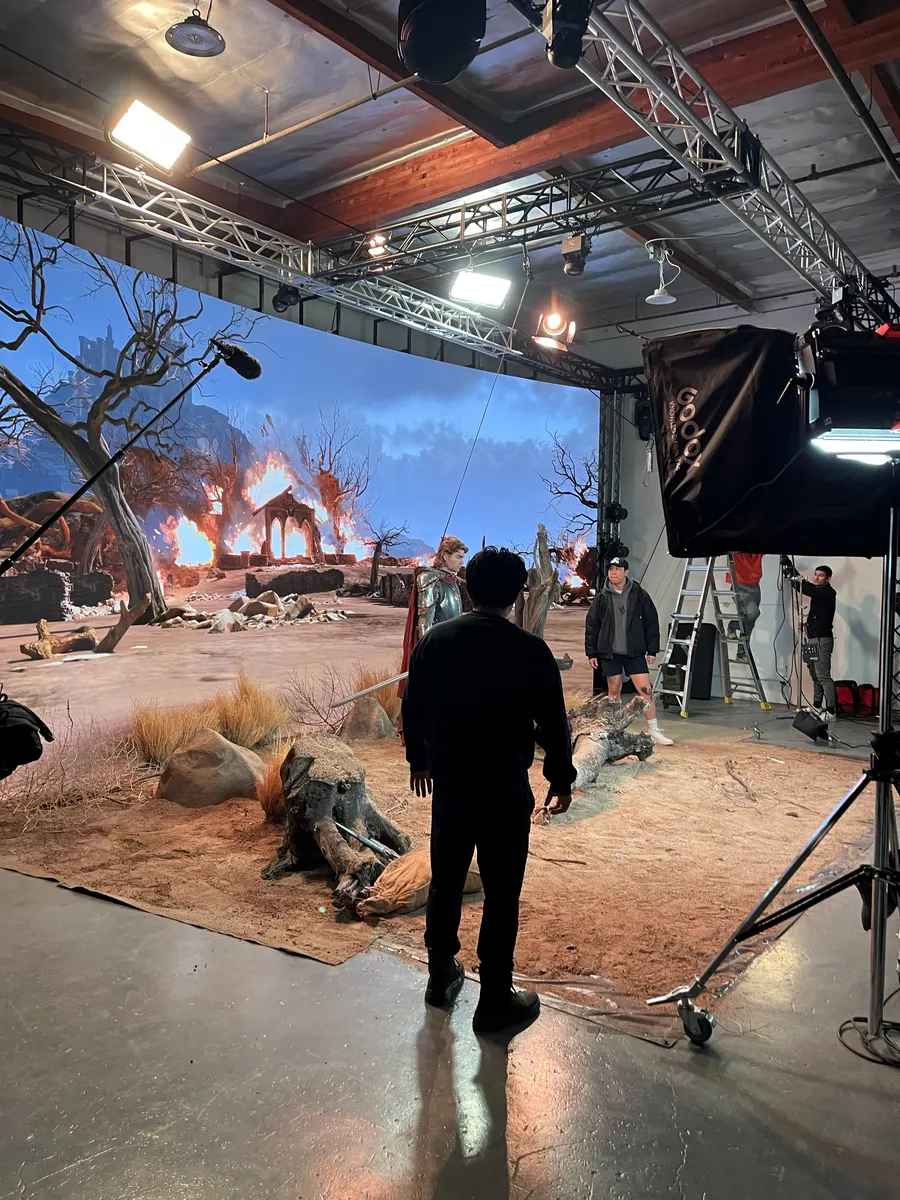
ReelShort shot short-form drama on our stage in 2024. The set was built on the floor in front of the wall, and the scene behind it changed from snow mountains to a burning village without the set being moved.
Open day, December 2024
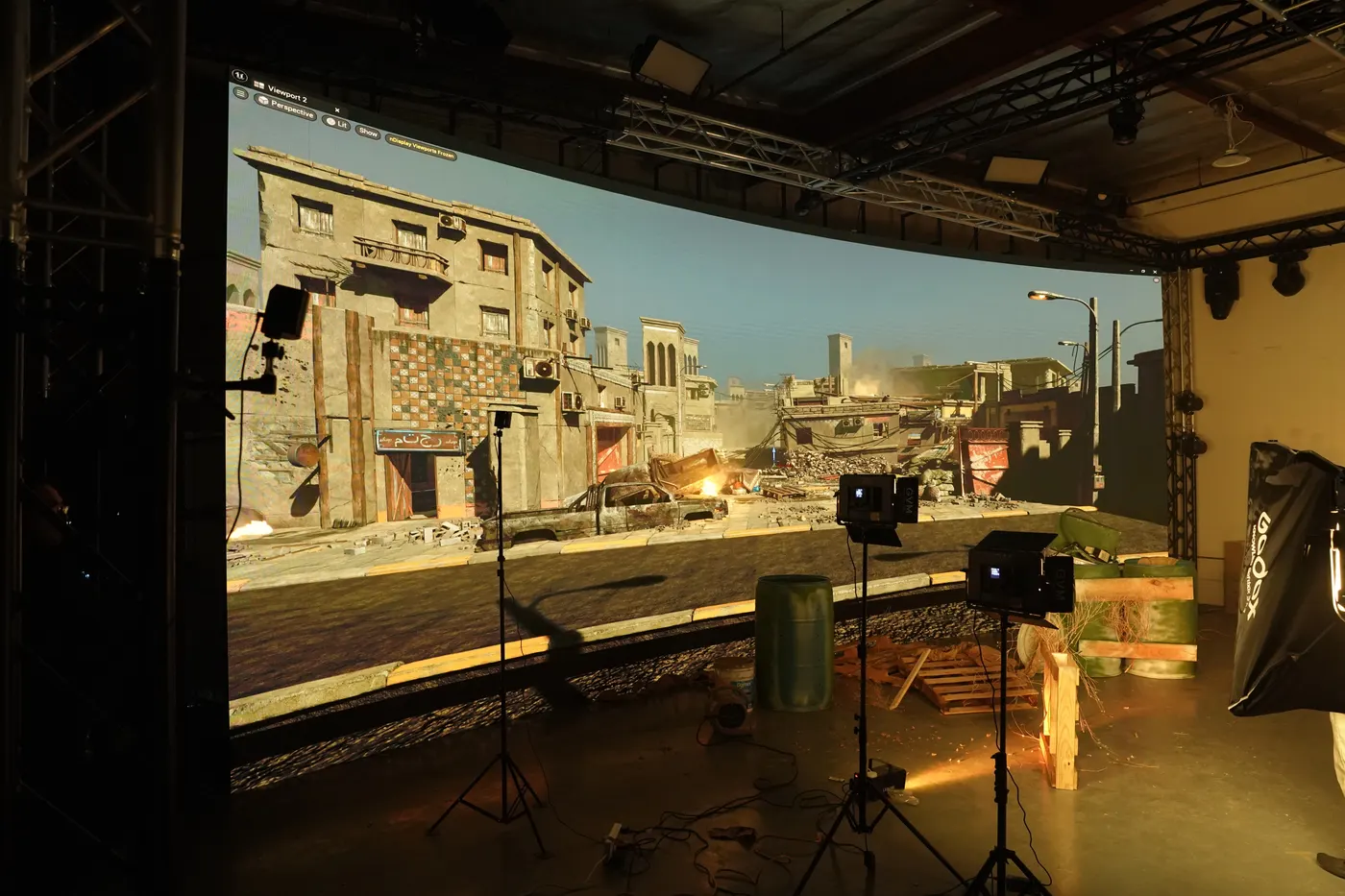
We opened the stage with a working day for filmmakers. Virtual production specialists taught LED and camera tracking on live sets: a desert town, a museum gallery and a café.
HPA Tech Retreat 2025
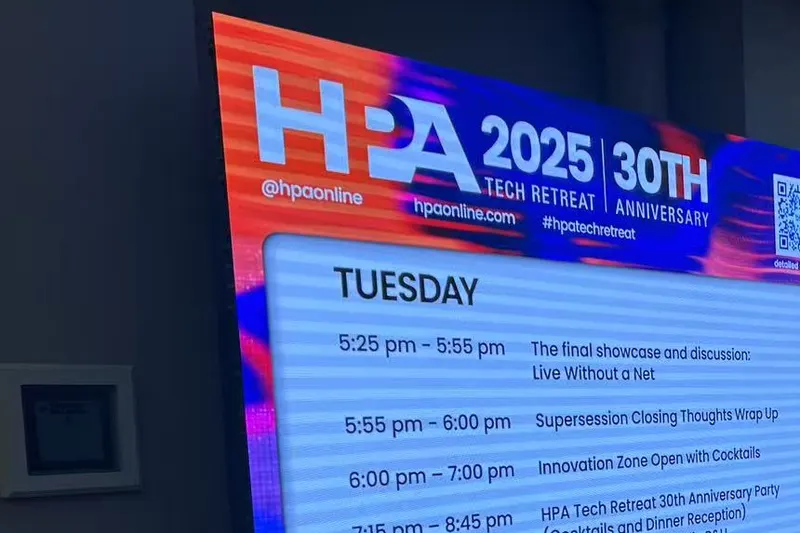
At the Hollywood Professional Association’s 30th Tech Retreat we exhibited jointly with Gloshine, with a booth showing our virtual production setup, and sponsored the event’s LED screen.
Why shoot with us
- Trained on the tracking we run. Our founder completed Mo-Sys Academy’s technician course in green screen and ICVFX in 2023, on the StarTracker system and the VP Pro Unreal Engine plugin.
- LED is our trade. We install permanent LED walls and run LED for events, and we are an authorised NovaStar dealer and NovaStar’s 2025 Distributor of the Year.
- English and Mandarin. Our engineers work in both, which helps when the production team comes from China.
Questions before a virtual production shoot
What scenes can you put on the wall?
Whatever the script needs: mountains, the ocean, snowfields, ancient buildings, a volcano, and other places that are hard to shoot on location. Scenes are rendered in real time in Unreal Engine or Hecoos, and can be changed during the shoot.
Can we rent the stage without your crew?
No. Every booking includes our technicians for the LED, the tracking and the rendering. A virtual production stage is a chain of systems that has to stay in sync: the wall, the tracking, the render engine and the camera. The team that built it is the one that keeps it that way on a shoot day.
Can we drive a vehicle onto the stage?
Yes. The stage is partitioned off inside our warehouse in Anaheim, so cars and motorcycles drive onto the stage floor. The wall plays a moving background while the vehicle stands still, so a driving scene needs no real road: safer, and faster. Tell us the vehicle when you enquire and we will confirm the fit.
How big is the LED wall?
10 m wide and 4.5 m high (about 33 × 15 ft), curved, built from Gloshine MV Pro 2.6 LED at a 2.6 mm pixel pitch.
Which tracking and rendering do you use?
Mo-Sys StarTracker for camera tracking; Unreal Engine for standard virtual production and Hecoos for XR; a NovaStar MX40 Pro processor with A10s Pro receiving cards driving the wall. We have our own RED Komodo camera.
Can you build a virtual production stage at our location?
Yes. We can bring the LED, the tracking and the crew to your space. Tell us the location, the dates and what you are shooting, and we will tell you what the space needs.
How is an LED stage different from a green screen?
On a green screen the background is added after the shoot. On an LED stage it is on the wall while you shoot: everyone on set sees the final picture, and the light from the wall falls on the actors and the set, including reflections on glass and paintwork.