Guide · NovaStar · Processors
NovaStar MX30 or VX1000?
Published
The same 6.5 million pixels, so capacity does not decide it. What goes in, who will run it and the price do.
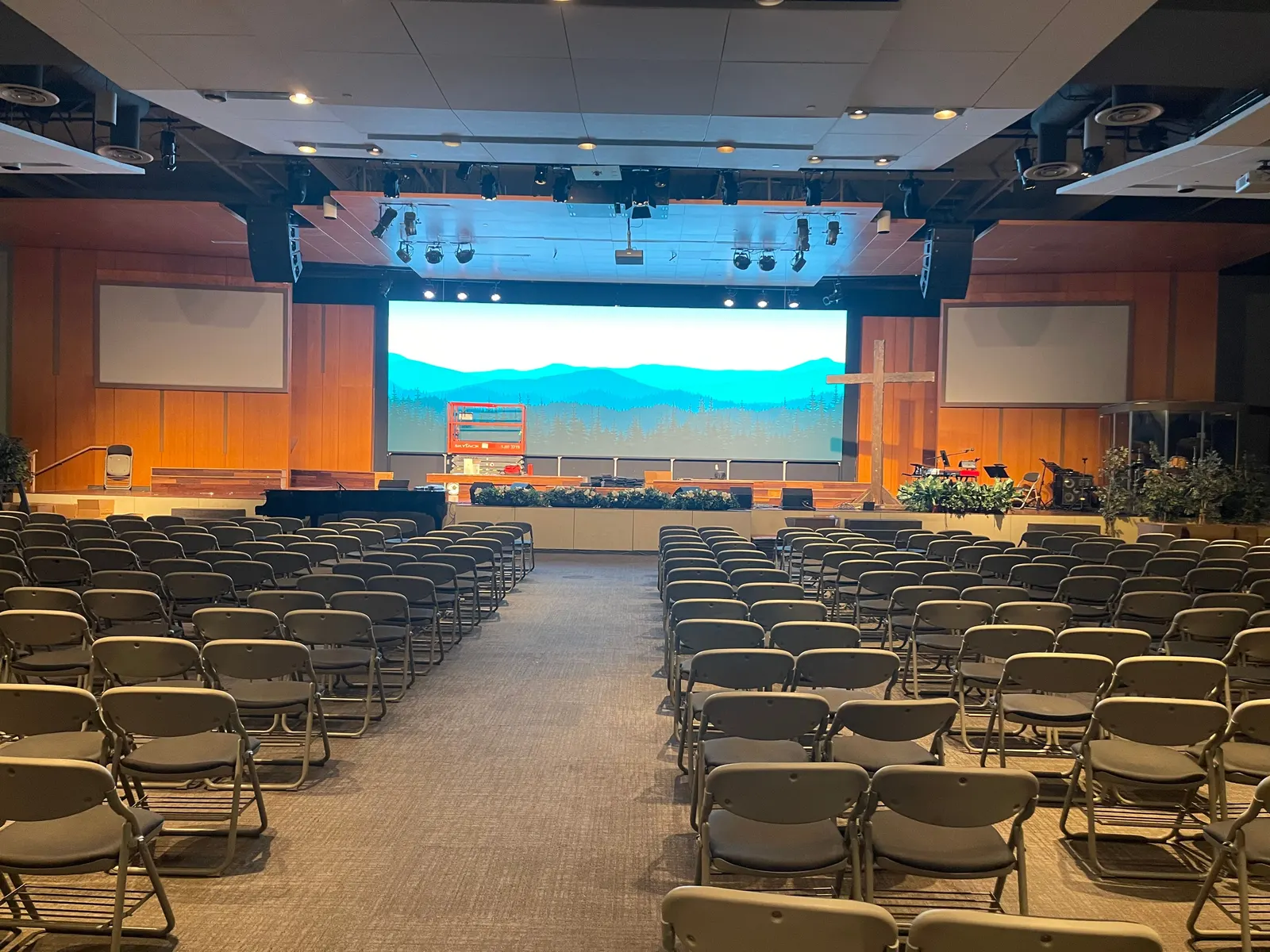
The NovaStar MX30 and VX1000 are both rated at 6.5 million pixels on 10 Gigabit Ethernet ports with three layers, so the wall’s size does not choose between them. Choose the MX30 ($2,584) when a source needs to arrive at 4K and 60 Hz, since it has HDMI 2.0, or when cameras need genlock and 10-bit processing; it is a 2U COEX controller run from VMP. Choose the VX1000 ($2,067) when the sources are HD, from HDMI, DVI or SDI, and you want an all-in-one 1U box at 35 W that can also work as a fiber converter; its HDMI 1.4 inputs reach 3840 × 1080 at 60 Hz or 3840 × 2160 at 30 Hz, not 4K at 60 Hz. The software differs too: the MX30 is set up in NovaStar’s VMP, a graphical interface a new user can find their way around, while the VX1000 is set up in NovaLCT, a tool written for engineers. On one Irvine church job PixelPro Productions used both: an MX30 for the 5.5-million-pixel main wall and a VX1000 for 2 million pixels of side screens.
Have a project in mind? Send us the details, or call.
How to choose, in five questions
Both carry the same wall. These decide which one should:
- Does a source arrive at 4K and 60 Hz? The MX30 has one HDMI 2.0 input. The VX1000’s HDMI 1.4 stops at 3840 × 1080 at 60 Hz or 3840 × 2160 at 30 Hz.
- Are there cameras on the wall? The MX30 has genlock in and loop and processes 10-bit. For a livestreamed service or a shoot, that is the safer box.
- What connectors do your sources use? The VX1000 takes two HDMI 1.4, two DVI and one 3G-SDI. The MX30 takes HDMI 2.0, HDMI 1.4, DisplayPort 1.1 and two 3G-SDI.
- Where does it live? The VX1000 is 1U, 4 kg and 35 W, and it can run as a fiber converter or in bypass. The MX30 is 2U, 7.2 kg and 55 W.
- Who will touch it after we leave? The MX30 runs on VMP, a graphical interface that a church volunteer or office staff can learn. The VX1000 runs on NovaLCT, which is built for engineers: fine if your integrator maintains it, hard going for a new user.
1. Both on one job: a church in Irvine
For one of our integrator clients we designed a Korean church in Irvine with five screens on Gloshine P2.5 cabinets. The main wall is 16 × 7 cabinets, 112 in all, about 5.5 million pixels: an MX30, rated at 6.5 million. The two side screens, added in a second phase, are 40 cabinets, about 2 million pixels: one VX1000.
Either controller could have carried either load. The split shows the pattern: the biggest wall on the COEX controller, the smaller screens on the all-in-one box.
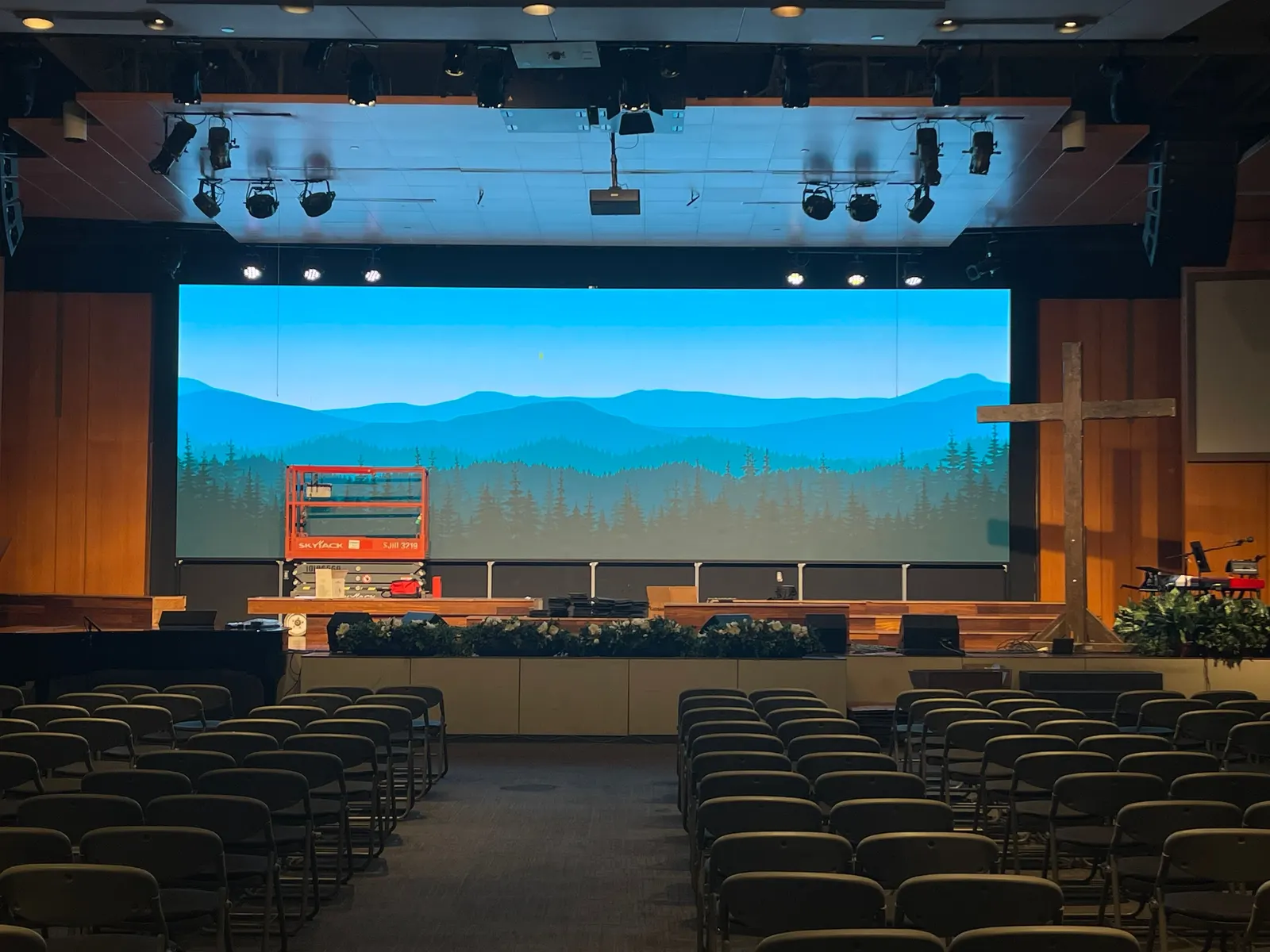
2. An MX30 for a whole-room job: Glendale
A wall of 12 × 6 P2.5 cabinets is 72 cabinets, about 3.5 million pixels, well inside the MX30’s 6.5 million. The same church has a four-camera YouTube livestream, which is the kind of room where the MX30’s genlock earns its place.
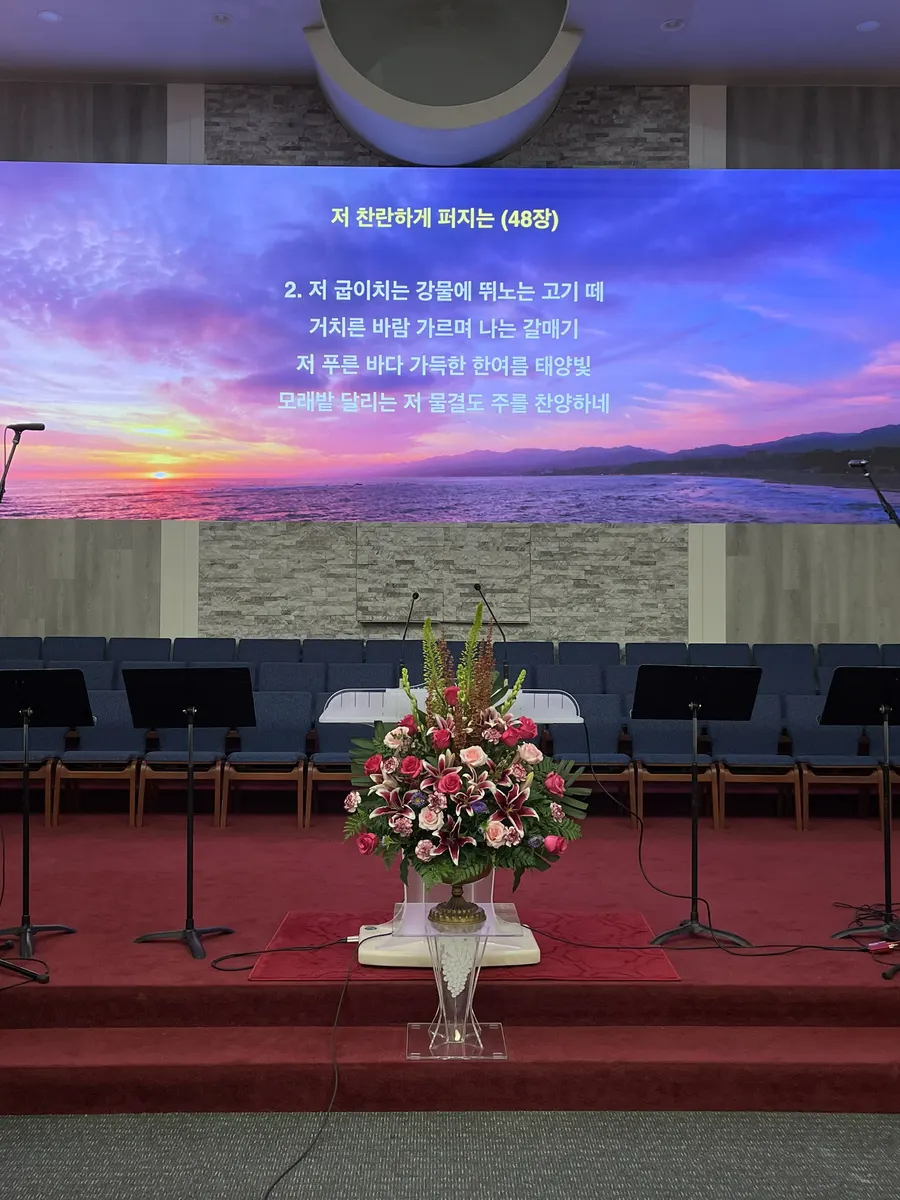
3. One VX1000, two screens: another church in Irvine
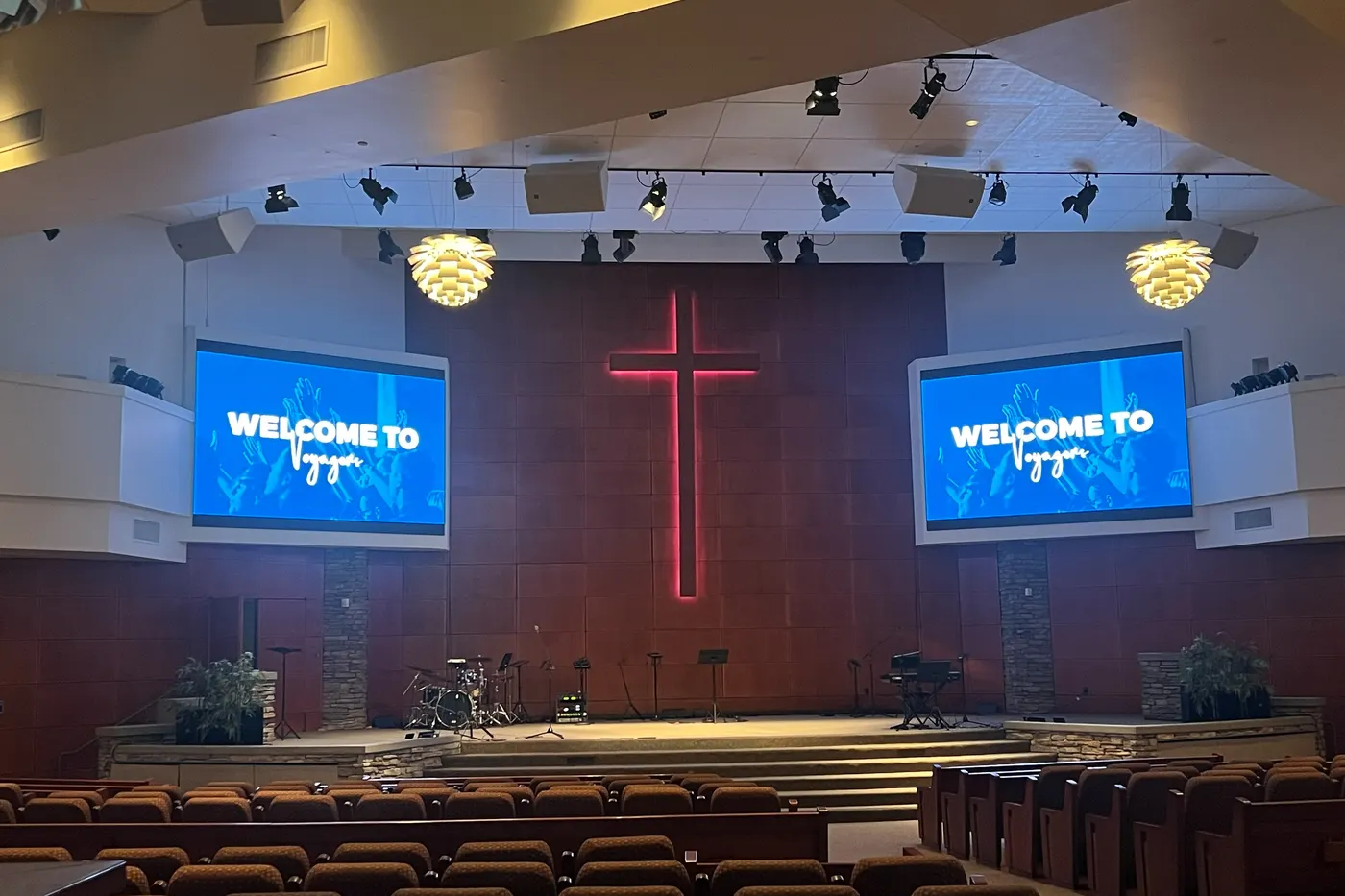
Two screens of 7 × 6 cabinets each are 84 cabinets, about 4.1 million pixels. One VX1000 drives both, so they always show the same picture, from a single 1U box.
Side by side, from NovaStar’s documents
- Loading capacity: both 6.5 million pixels, on 10 Gigabit Ethernet ports plus 2 × 10G optical (MX30)
- Video inputs: MX30: HDMI 2.0, HDMI 1.4, DP 1.1, 2 × 3G-SDI. VX1000: 2 × HDMI 1.4, 2 × DVI, 1 × 3G-SDI (MX30)
- Fastest input: MX30: 4K at 60 Hz over HDMI 2.0. VX1000: 3840 × 1080 at 60 Hz or 3840 × 2160 at 30 Hz (MX30)
- Cameras: MX30: genlock in + loop, 8- and 10-bit. VX1000: not in our verified set (MX30)
- Software: MX30: VMP, graphical and friendly to a new user. VX1000: NovaLCT, an engineer’s tool (MX30)
- Size, weight, power: MX30: 2U, 7.2 kg, 55 W. VX1000: 1U, 4 kg, 35 W (MX30)
- Price: MX30 $2,584, VX1000 $2,067, both in stock in Anaheim (prices)
Before you order
Figures are NovaStar’s: the MX30 Specifications V1.5.0 and the VX1000 All-in-One Controller Specifications V1.6.0. Leave headroom on capacity, and check each source’s resolution and refresh rate against the inputs above.
Send us the cabinet model, the layout and a list of what plugs in. We will name the controller, and put it in writing, before you buy. Both models are in stock in Anaheim.
Questions about the MX30 and VX1000
Is the NovaStar VX1000 4K?
Its output can drive a 4K-sized wall, up to its 6.5-million-pixel rating, but its HDMI 1.4 inputs accept 3840 × 1080 at 60 Hz or 3840 × 2160 at 30 Hz. For a 4K source at 60 Hz, the MX30’s HDMI 2.0 input is the one to use.
Which is better for a church?
For HD slides and video on one or two screens, the VX1000 does it in a single 1U box for $2,067. With a camera livestream or 4K sources, the MX30 at $2,584 brings genlock and HDMI 2.0. We have installed both in churches in Irvine and Glendale.
Which is easier for my own team to run?
The MX30. It is set up in VMP, NovaStar’s graphical software for the COEX controllers, which a new user can work in. The VX1000 uses NovaLCT, an engineer’s tool. If volunteers will adjust the screen themselves, that difference matters as much as the inputs.
Can a VX1000 drive two screens?
Yes, within its 6.5-million-pixel rating. At a church in Irvine one VX1000 drives two screens of 7 × 6 P2.5 cabinets, about 4.1 million pixels together.
Get a quote or order
Price, stock and shipping confirmed within one business day.
