Case study · Residential · Redondo Beach, CA · 2026
A TV out, a 142-inch LED wall in, flush with the wall
Published
A private home in Redondo Beach, in Los Angeles’ South Bay: a bright living room, and an owner who wanted a much bigger picture than a TV could give. One day on site, from a TV on the wall to a P1.25 LED wall set into it.
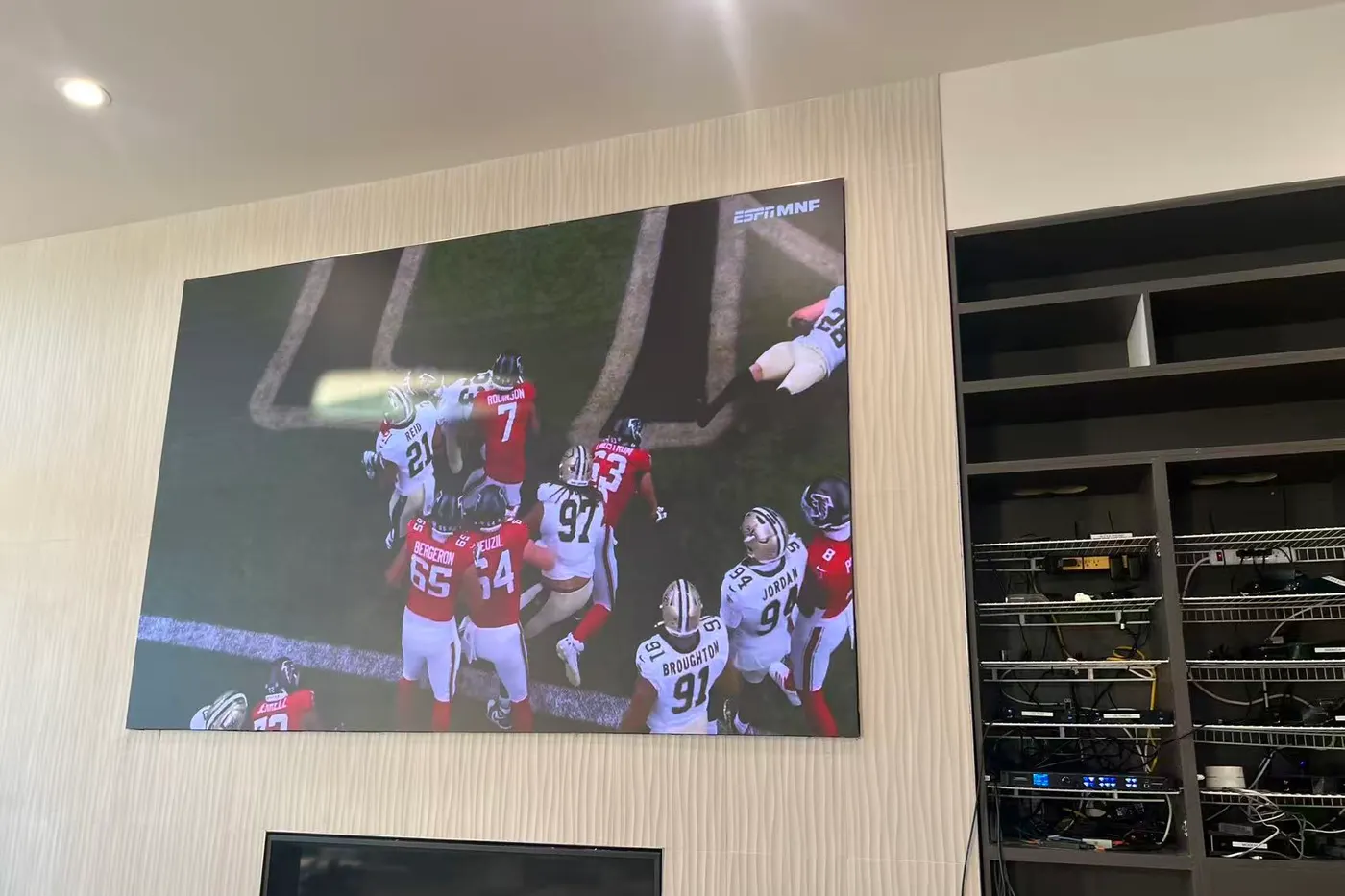
In October 2026 PixelPro Productions replaced the TV in a living room in Redondo Beach, California with a 142-inch P1.25 COB LED wall: 3 × 2 m (about 9.8 × 6.6 ft), 2400 × 1600 pixels. The living room is bright and the owner wanted a bigger picture than a TV, so LED was the choice. We reopened the wall to the size of the screen; the cabinets are about 1.2 inches (3 cm) deep, about the thickness of the wall board, so the finished screen sits flush with the wall. The hard part was the wood studs behind it, which were not flat: plywood over them would have pushed the screen out past the wall, so each cabinet was fixed to the studs and adjusted one by one until the whole surface was flat. A NovaStar VX600 Pro drives it from an Apple TV over HDMI, and the Apple TV feeds the home’s existing sound system. Power is the outlet that served the TV plus one new dedicated 120 V, 15 A circuit from the panel. The work took one day on site and was finished on October 5, 2026.
At a glance
- Where
- A private home, Redondo Beach, California (Los Angeles South Bay)
- Completed
- October 5, 2026
- Screen
- About 142 inches diagonal: 3 × 2 m (9.8 × 6.6 ft), P1.25 COB
- Resolution
- 2400 × 1600
- Mounting
- Set into the reopened wall; 1.2-inch (3 cm) cabinets, flush with the wall board
- Processor
- NovaStar VX600 Pro
- Source
- Apple TV over HDMI, into the existing sound system
- Power
- The TV’s existing 120 V 15 A outlet, plus a new dedicated 120 V 15 A circuit
- Time on site
- One day
- Our scope
- LED wall and connecting the Apple TV to the existing sound system
The brief
The wall above the fireplace carried a TV. The living room gets a lot of daylight, and the owner wanted a picture far bigger than any TV on that wall.
The new screen also had to look like part of the room, not a box hung in front of the wall.
Have a project in mind? Send us the details, or call.
Challenge 01
Flat on studs that were not
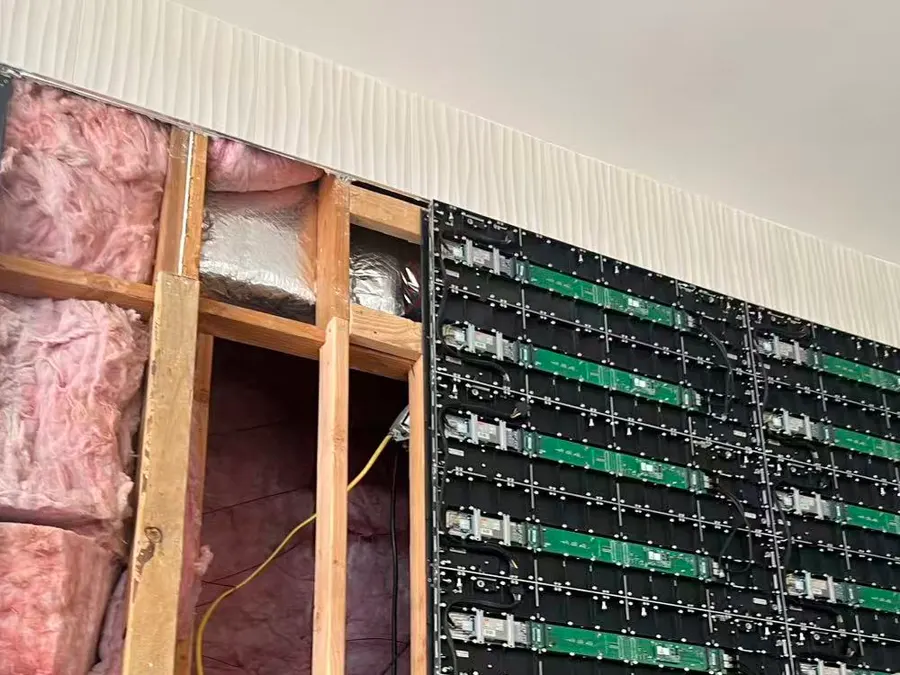
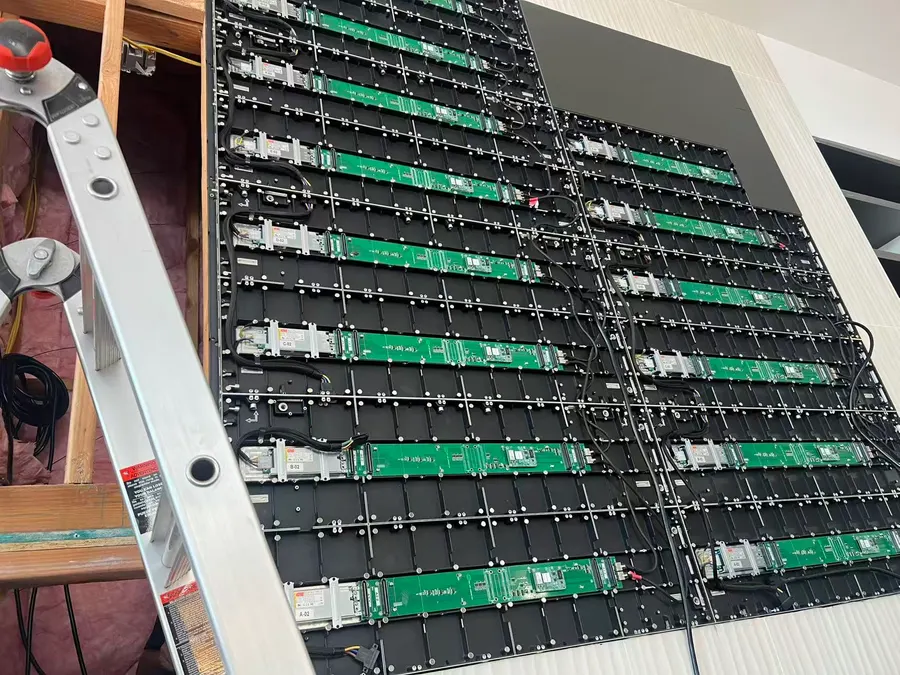
An LED wall hung on brackets in front of finished drywall stands out from it. We took the TV down and reopened the wall to the exact size of the screen instead. The cabinets are about 1.2 inches (3 cm) deep, about the same as the wall board, so in the opening the face of the screen can sit level with the wall around it.
Behind the wall board, the wood studs were not flat. The textbook fix is a layer of plywood over the studs to give a true surface, but that would have pushed the screen out past the wall and lost the flush look the owner wanted.
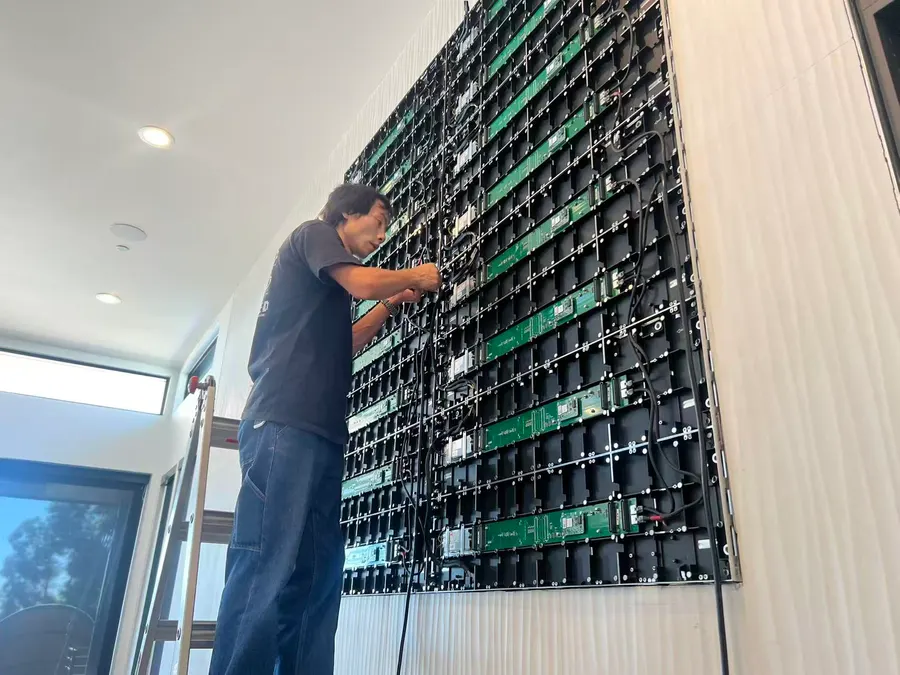
So the cabinets went straight onto the studs. Each one was positioned against where the studs actually fell and adjusted individually, cabinet by cabinet, until the whole screen face was flat. It is slower and fussier than mounting on plywood, and it is the reason the screen looks like part of the wall.
No plywood, no step: flat, and flush with the wall.
Challenge 02
142 inches, and fine up close
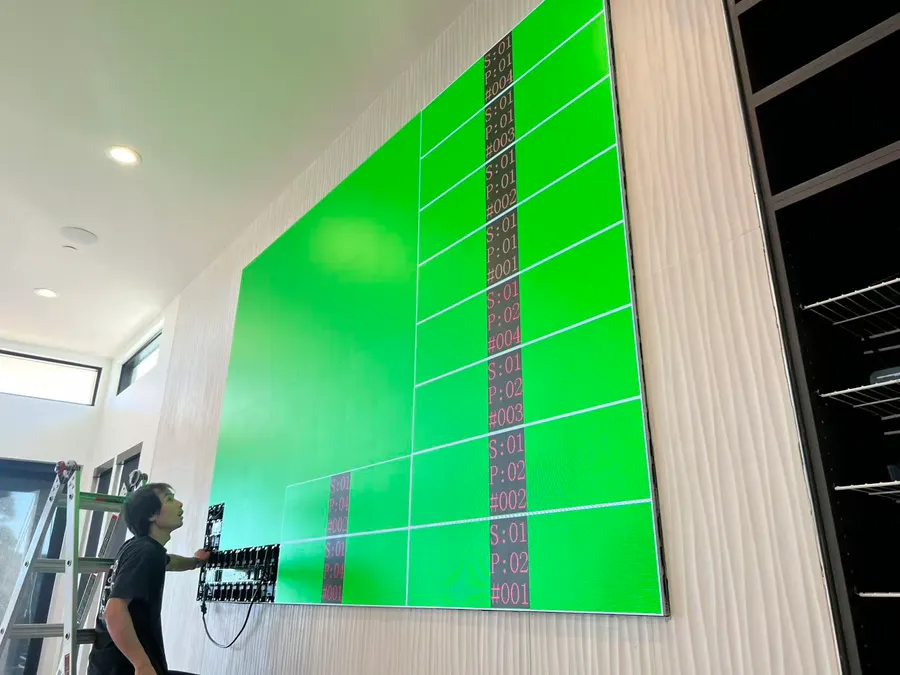
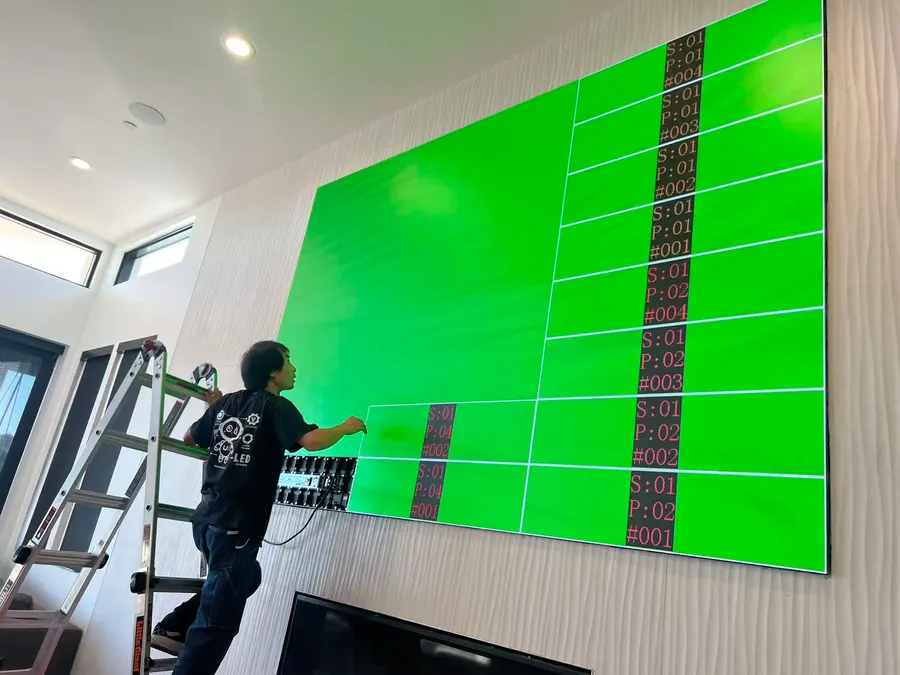
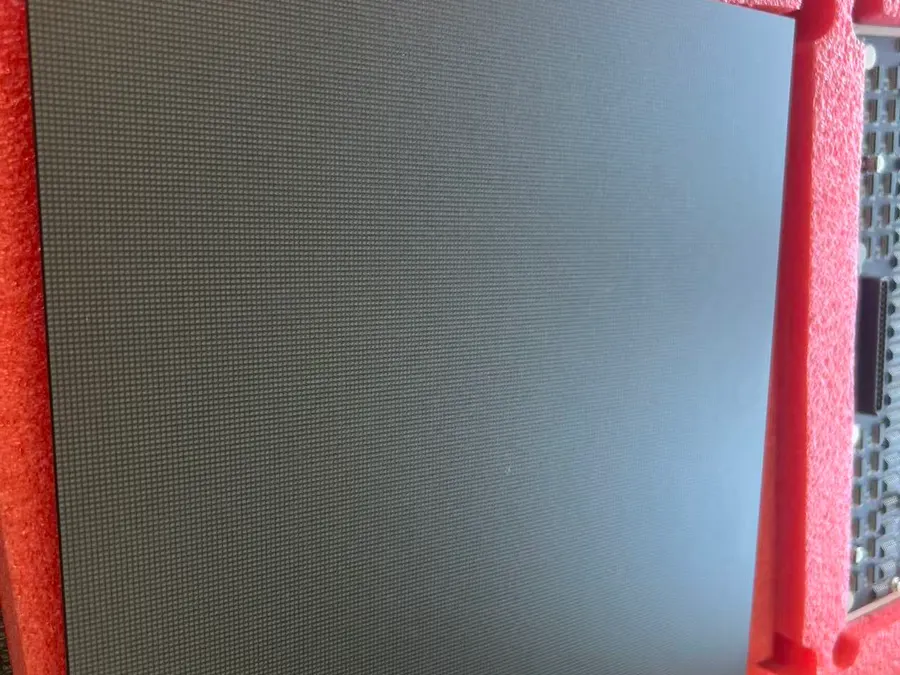
People sit much closer to a living-room screen than to a stage. At 1.25 mm between pixels the wall holds 2400 × 1600 pixels across 3 meters, so up close it reads as a picture, not a grid of dots.
The modules are COB: the LEDs are sealed under one continuous matte surface, which in a home is easier to live with than individually mounted LEDs.
Challenge 03
Power, and the sound the house already had
The outlet that powered the TV stayed, and we ran one new dedicated 120 V, 15 A circuit from the panel for the wall.
The owner’s sound system stayed as it was: we connected the Apple TV to it, so picture and sound come from the same source.
One day on site, finished October 5, 2026.
The result
- A 142-inch picture where a TV used to be, bright enough for a sunny room.
- A flat screen face, flush with the wall, on studs that were not flat.
- Apple TV on the wall and through the existing speakers.
- Done in one day on site.
How we survey a wall, design the structure and power and install LED is on our LED wall installation page.
Questions about an LED wall at home
Can an LED wall replace a TV in a living room?
Yes. In Redondo Beach, California, PixelPro Productions replaced a living-room TV with a 142-inch P1.25 COB LED wall, 3 × 2 m (about 9.8 × 6.6 ft) and 2400 × 1600 pixels, driven by a NovaStar VX600 Pro from an Apple TV over HDMI. The room is bright and the owner wanted a bigger picture than a TV, which is where LED makes sense.
Can an LED wall sit flush with the wall?
Yes, if the wall is reopened to the screen size. In Redondo Beach the cabinets were about 1.2 inches (3 cm) deep, about the thickness of the wall board, so once set into the opening the screen sits level with the wall around it.
What if the studs behind the wall are not flat?
Plywood over the studs gives a flat surface but pushes the screen out past the wall. In the Redondo Beach living room PixelPro Productions kept the screen flush instead: each cabinet was fixed directly to the studs and adjusted individually until the whole screen face was flat.
Does a home LED wall need its own circuit?
It depends on the size. The 3 × 2 m P1.25 wall in Redondo Beach runs on the outlet that powered the old TV plus one new dedicated 120 V, 15 A circuit from the panel.
How long does a home LED wall installation take?
The 142-inch Redondo Beach living-room wall, 3 × 2 m, took one day on site, from taking the TV down to a working screen, with the Apple TV connected to the existing sound system.
We design and install LED walls like this across Southern California: structure, power and control, from one licensed contractor. LED video wall design and installation →